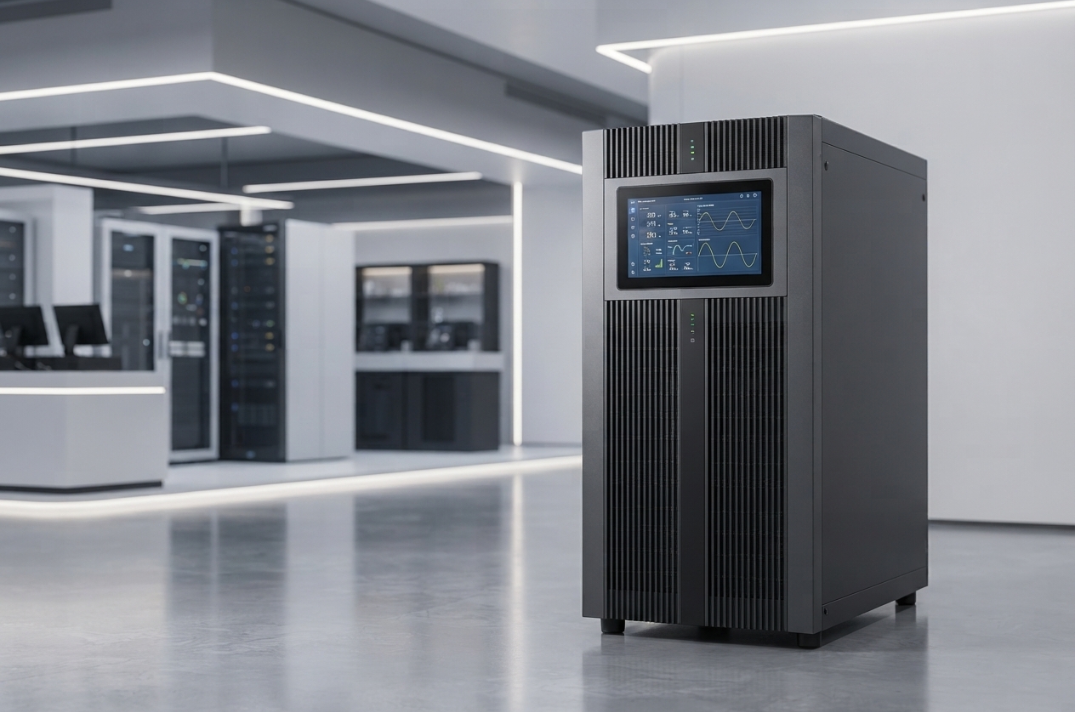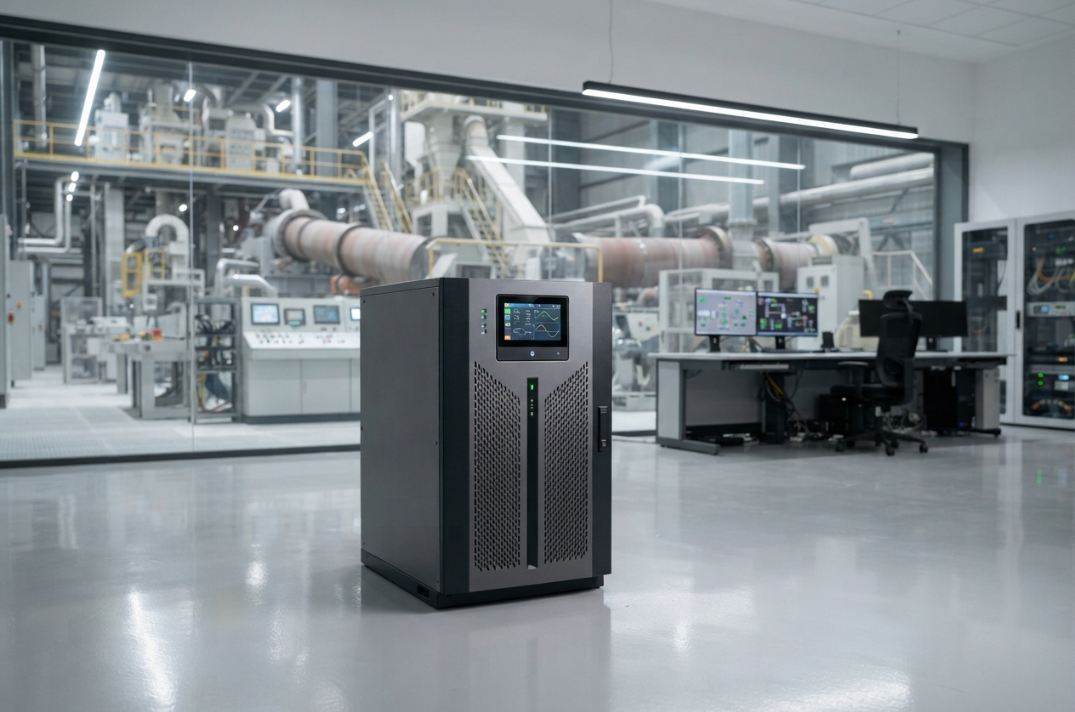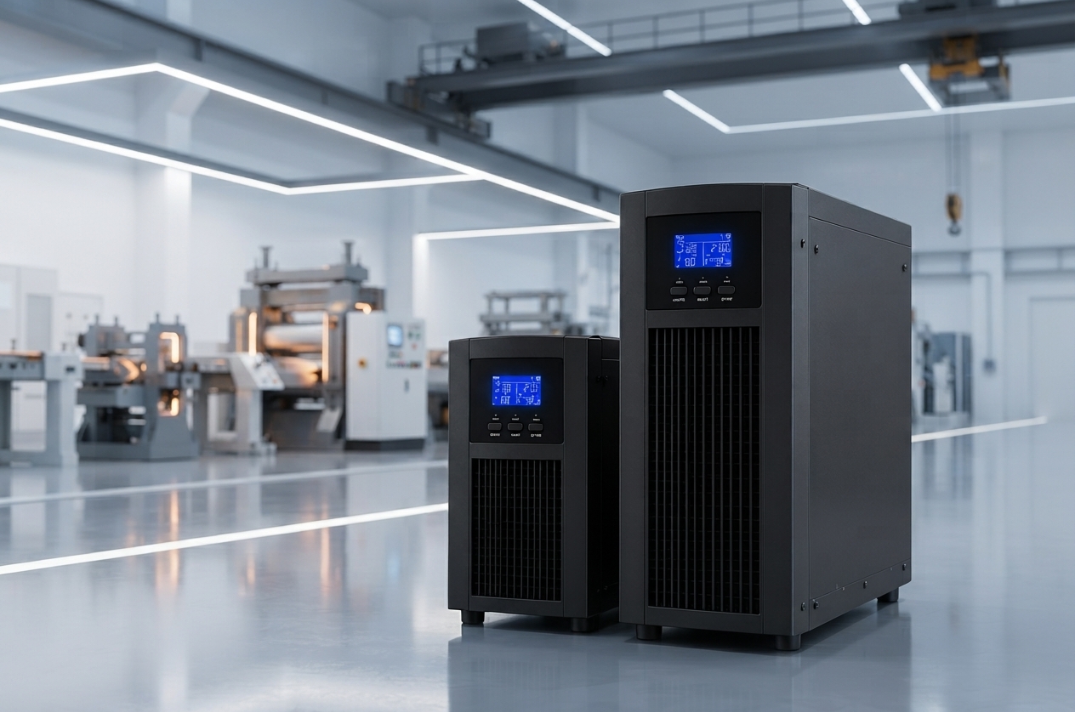
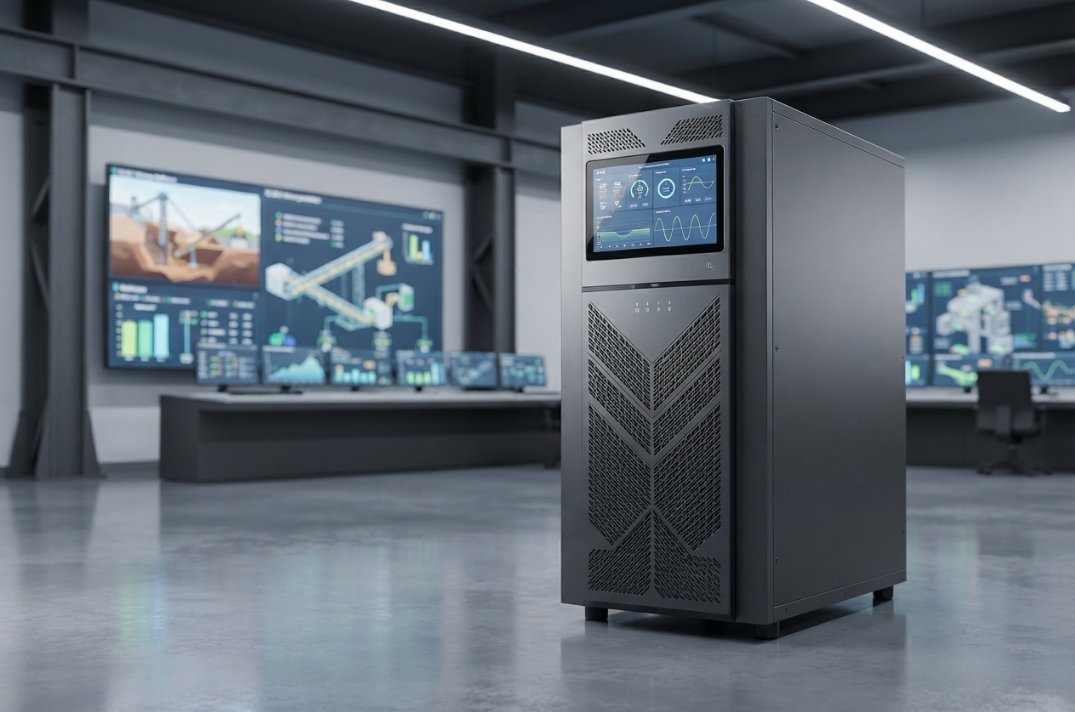
The mining industry depends on reliable power to operate monitoring systems, control equipment, communication networks, and safety infrastructure. However, voltage fluctuations and unexpected power failures can interrupt essential operations. These disruptions may affect equipment monitoring, data collection, communication, and worker safety.
A 3 Phase Online UPS in the Mining Industry helps protect critical electrical and electronic equipment by providing a stable power supply during power disturbances. It can support selected loads in mining control rooms, processing facilities, underground operations, laboratories, and administrative infrastructure.
Mining environments also present specific challenges, including dust, vibration, temperature variations, and remote operating locations. Therefore, businesses must select power protection equipment according to their site conditions, connected loads, and backup requirements.
In this article, we explore 10 important applications of a three-phase online UPS in mining operations and explain how reliable backup power supports operational continuity.
What Is a 3 Phase Online UPS in the Mining Industry?
A three-phase online uninterruptible power supply (UPS) is a power protection system designed to support compatible equipment that requires three-phase power. It continuously supplies connected loads through its conversion stages, helping protect them from many incoming power disturbances.
In mining facilities, a UPS is commonly considered for critical electronic systems rather than heavy machinery that requires substantial operating power. These systems may include industrial controllers, monitoring equipment, communication devices, servers, and selected safety infrastructure.
A properly designed installation can help keep these systems operational during short power interruptions or provide time for an orderly shutdown. Actual backup duration depends on the connected load, battery configuration, and system design.
Businesses can explore three-phase online UPS solutions to understand the available system options for suitable applications.
1. Supports Mining Control Rooms
Mining control rooms coordinate important activities such as equipment monitoring, production supervision, process management, and operational communication. Operators rely on control screens, industrial computers, and monitoring software to understand what is happening across a site.
A sudden power interruption can affect these systems and reduce operators’ visibility into ongoing operations. A three-phase online UPS can support selected control room equipment, helping maintain access to essential information during a power disturbance.
For example, a processing facility may use UPS protection for control workstations, operator terminals, communication equipment, and selected supervisory control systems.
The UPS capacity should reflect the actual electronic load. Large motors, crushers, conveyors, and other high-power machinery generally require separate power arrangements and must not be assumed to operate from the same UPS.
Mining operators evaluating their requirements can review online UPS systems as part of a wider power protection assessment.
2. Protects Industrial Automation and Control Systems
Modern mining operations use automation to monitor and control processes across extraction, material handling, and mineral processing. Programmable logic controllers (PLCs), remote input/output modules, industrial computers, and supervisory control systems help coordinate these activities.
An unexpected power interruption can stop controllers or interrupt communication between connected devices. Depending on the process, this may require equipment checks, system recovery, or controlled restarting.
A properly configured three-phase online UPS can support selected automation controllers and associated electronic equipment. This helps maintain their power supply during short interruptions and can reduce unnecessary resets.
However, the UPS does not replace machine-level safety controls, emergency shutdown systems, or appropriate power engineering. The control system must be designed to move equipment into a safe state when required.
For larger installations, a suitable UPS configuration should be selected after reviewing load characteristics, control architecture, and operational requirements. The HPI 33 EVO three-phase UPS is one product range that businesses can evaluate against their specific needs.
3. Maintains Communication Networks
Reliable communication is essential across mining sites. Surface offices, underground work areas, control rooms, maintenance teams, and security personnel may depend on interconnected communication infrastructure.
Network switches, routers, communication servers, and selected radio communication equipment can require continuous power. If these systems lose power, teams may experience interruptions in information exchange and coordination.
A three-phase online UPS can support compatible central communication equipment and network infrastructure. As a result, critical network devices may remain operational during short outages, provided their complete power path is protected.
Mining companies should also assess the backup requirements of remote network cabinets and underground communication equipment. Protecting the central network alone will not maintain communication if remote devices lose their own power supply.
Businesses planning these systems can assess their networking and IT infrastructure alongside the requirements of their mining communication network.
4. Supports Environmental and Equipment Monitoring
Mining sites use monitoring equipment to measure operating conditions and identify potential hazards. Depending on the operation, this may include environmental sensors, equipment condition monitoring, temperature measurements, and systems that track conditions in confined or underground areas.
These devices help operators collect information and respond to changes in working conditions. However, their effectiveness depends on reliable power, functioning sensors, communication links, and properly configured monitoring software.
A UPS can support selected monitoring computers, data acquisition systems, network equipment, and compatible electronic instruments. This helps maintain power to the supported equipment during supply disturbances.
Safety-critical gas detection, ventilation monitoring, and emergency systems require dedicated engineering and compliance with applicable safety standards. A general-purpose UPS installation should not be treated as a substitute for certified safety systems or their specified backup arrangements.
Mining businesses should identify essential monitoring loads and verify the backup requirements of each device before selecting a UPS.
5. Protects Mineral Processing Control Systems
Mineral processing facilities use interconnected equipment to separate, crush, screen, grind, and process extracted materials. These operations may rely on electronic control systems to monitor process conditions, equipment status, and production data.
A power disturbance can interrupt the computers and controllers that supervise these activities. Depending on the process, this can complicate recovery and require operators to verify equipment status before restarting operations.
A three-phase online UPS can provide backup power to selected process controllers, operator stations, monitoring systems, and supporting electronics. This helps protect critical control functions without attempting to power the entire processing plant.
For example, a processing facility may prioritise its control network and monitoring equipment while using separate electrical systems for crushers, grinding mills, pumps, and conveyors.
Businesses evaluating higher-capacity power protection may consider the Keor HPE three-phase UPS range, subject to the actual application, verified specifications, and engineering assessment.
6. Supports Weighing, Sampling, and Laboratory Equipment
Mining operations depend on measurement and testing to assess ore quality, material composition, product consistency, and process performance. Weighing systems, laboratory computers, analytical instruments, and sample tracking applications may all require a stable power supply.
An unexpected shutdown can interrupt a measurement or test. Depending on the instrument, staff may need to repeat a procedure, verify recorded data, or restart the equipment.
A UPS can support selected laboratory electronics, sample management computers, weighing system controllers, and associated network devices. This helps reduce interruptions caused by short power failures.
However, the power requirements of laboratory instruments vary considerably. Equipment with heating elements, large motors, or specialised startup requirements may need a dedicated solution.
Mining facilities should assess instrument specifications and prioritise the equipment whose interruption would have the greatest effect on testing, reporting, or quality control.
7. Helps Maintain Servers and Production Data
Mining companies increasingly rely on digital systems to store production records, equipment information, maintenance logs, operational reports, and other business data. Servers and storage systems may also support planning, reporting, and communication between departments.
A sudden power failure can interrupt active computing tasks and, in some circumstances, increase the risk of data corruption or incomplete transactions. A UPS can provide temporary power to selected servers, storage devices, and supporting network equipment.
This backup may allow systems to continue operating for a limited period or shut down in a controlled manner. However, a UPS alone does not protect against every form of data loss, cyberattack, hardware failure, or site-wide disaster.
Mining businesses should combine power protection with appropriate data backups, monitoring, access controls, and recovery procedures. Facilities that depend on centralised computing may also review data centre solutions when planning their wider IT resilience strategy.
8. Supports Security and Access Control Systems
Mining facilities may cover extensive areas, including entrances, equipment yards, warehouses, control rooms, and restricted operating zones. Security systems help monitor these locations and control access to sensitive areas.
Selected CCTV recording equipment, surveillance servers, access control panels, network switches, and security workstations can benefit from backup power. This helps maintain the availability of supported security equipment during electrical interruptions.
The actual coverage depends on the system design. Cameras, access readers, remote cabinets, and field devices must each have suitable power arrangements. A central UPS cannot keep a remote device operating if its local power supply is interrupted and not backed up.
Mining operators should therefore identify which security functions must remain active during an outage and design the UPS distribution system accordingly.
9. Improves Power Continuity for Remote Mining Facilities
Mining operations may be located far from major urban centres, with some sites relying on complex distribution systems or local generation. Power interruptions can create additional operational challenges when technical support and replacement equipment are not immediately available.
A properly sized UPS can support selected critical electronics at remote control rooms, monitoring stations, communication shelters, and administrative facilities. It provides a defined period of backup power while the site responds to an interruption.
The duration depends on the connected load, battery capacity, battery condition, and environmental factors. A UPS should not be assumed to provide extended autonomy without a suitable battery design.
Where generators are used, the UPS and generator should be assessed together to confirm compatibility and dependable transfer arrangements. Businesses should also establish maintenance schedules and battery inspection procedures suited to remote site conditions.
For temporary installations, commissioning work, or short-term infrastructure needs, online UPS rental services may be worth evaluating, depending on availability and the technical requirements of the site.
10. Supports Scalability and Planned Maintenance
Mining infrastructure often changes as operations expand, processing capacity increases, or new monitoring systems are installed. These changes can increase the number of controllers, servers, communication devices, and other critical loads that require backup power.
A UPS selected with realistic capacity planning can help accommodate future requirements. However, businesses should avoid oversizing or undersizing the system without considering efficiency, redundancy, load growth, and battery runtime.
Some mining facilities may benefit from a modular configuration or a system designed to support maintenance while reducing disruption to critical loads. The appropriate design depends on the required availability, installation conditions, and service strategy.
For example, businesses can evaluate the Easy UPS 3-Phase Modular range when considering suitable modular power protection. Product capacity, redundancy options, and regional specifications should be confirmed before selection.
A planned maintenance programme is equally important. Regular inspections, battery checks, alarm reviews, and functional testing help identify problems before they affect supported equipment.
How to Choose the Right 3 Phase Online UPS for Mining Operations
Mining environments require careful assessment before a UPS is selected. The correct system depends on the connected equipment, operating conditions, safety requirements, and expected response to a power failure.
1. Calculate the Critical Electrical Load
Prepare a list of equipment that must remain operational during an interruption. Include relevant controllers, servers, communication devices, monitoring equipment, and selected safety-related electronics.
Calculate the combined load and account for power factor, startup characteristics, future expansion, and manufacturer recommendations. Do not automatically include heavy machinery such as crushers, conveyor drives, or grinding mills in the UPS load calculation.
2. Establish the Required Backup Duration
Determine whether the UPS needs to support equipment during brief disturbances, allow time for a controlled shutdown, or bridge the period until another power source becomes available.
Battery runtime depends on the load, battery configuration, age, temperature, and discharge characteristics. Use manufacturer data and a qualified load assessment rather than relying on a generic runtime estimate.
3. Assess Environmental Conditions
Mining environments may expose equipment to dust, heat, vibration, humidity, and restricted installation space. Select a suitable installation location and verify the UPS enclosure, ventilation, cooling, and environmental ratings.
Where equipment operates underground or in hazardous areas, additional site-specific requirements may apply. Confirm that the chosen installation is suitable for its location and complies with applicable regulations.
4. Review Redundancy and Maintenance Needs
Consider the operational consequences of losing the UPS itself. Critical sites may require redundancy, bypass arrangements, or a maintenance strategy that reduces the impact of servicing.
The correct approach depends on the importance of the supported loads and the site’s recovery procedures. A single UPS may be sufficient for some applications, while other installations need a more resilient design.
5. Check Generator Compatibility and Recovery Procedures
If the mining site uses a generator, confirm that the generator and UPS can operate together under the expected load conditions. The design should account for transfer behaviour, load changes, and the recovery process following an outage.
Also establish procedures for battery testing, alarm response, equipment shutdown, and restart. These procedures help staff respond consistently when a power interruption occurs.
6. Evaluate Technical Support and Product Suitability
Mining operators should compare capacity, electrical specifications, service requirements, battery options, monitoring features, and support arrangements before purchasing a system.
Businesses operating in the Delhi NCR region can review three-phase online UPS solutions in Gurgaon as one starting point for exploring relevant power protection options. For remote sites, the availability of qualified service support and replacement components may be particularly important.
Frequently Asked Questions
1. Why is a 3 phase online UPS important in the mining industry?
A three-phase online UPS can provide backup power and power conditioning for critical electronic systems such as controllers, monitoring equipment, servers, and communication infrastructure. This helps reduce interruptions caused by power disturbances when the system is correctly selected and installed.
2. Can a three-phase UPS power mining machinery?
Not automatically. Heavy equipment such as crushers, conveyors, pumps, and grinding mills may require substantial power and specialised electrical arrangements. A UPS is often used for critical control and electronic loads; machinery should only be connected when the system has been specifically engineered and rated for that purpose.
3. Which mining systems should receive UPS backup first?
Priority is usually determined by operational risk. Control systems, critical communications, essential monitoring equipment, servers, and selected safety-related systems may require particular attention. The final priorities should follow the mine’s risk assessment and applicable safety requirements.
4. How long can a UPS support mining equipment?
Runtime depends on the connected load, battery capacity, battery condition, ambient temperature, and UPS configuration. Mining operators should calculate the required backup duration based on operational needs and verified manufacturer data.
5. Can a UPS work with a generator at a mining site?
Yes, a suitably selected UPS can be designed to operate alongside a generator. However, the two systems must be compatible, and the installation should be checked for appropriate transfer behaviour, load characteristics, and recovery procedures.
6. What maintenance does a mining UPS require?
Maintenance may include visual inspections, battery condition checks, alarm monitoring, ventilation checks, and functional testing. The schedule should follow the manufacturer’s instructions and account for the site’s environmental conditions and operational criticality.
Conclusion
A 3 Phase Online UPS in the Mining Industry can help protect critical control rooms, automation systems, communication networks, monitoring equipment, servers, and other essential electronic loads. By maintaining power to selected systems during disturbances, it can support safer responses, better information availability, and more consistent operations.
However, reliable protection requires more than choosing a UPS with a suitable capacity rating. Mining companies must consider load requirements, battery runtime, environmental conditions, generator compatibility, redundancy, and maintenance arrangements.
Bansal Hi-Tech can be considered when evaluating three-phase UPS options for suitable applications. Before making a decision, mining operators should obtain a technical assessment and confirm that the selected equipment meets the electrical and environmental requirements of the site.