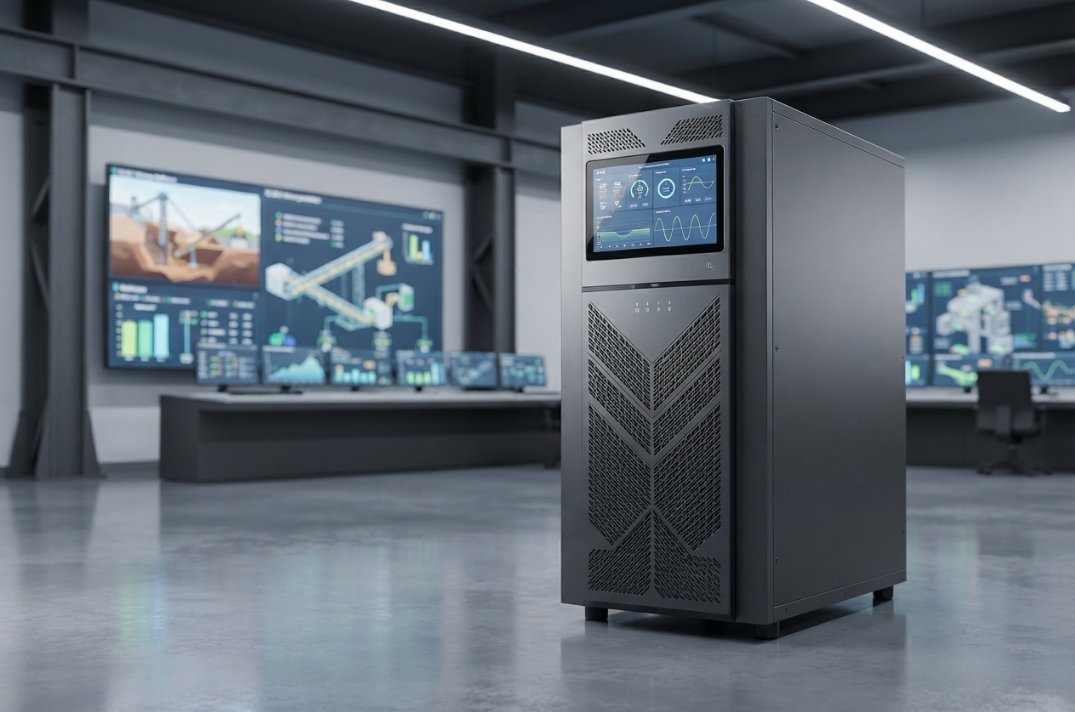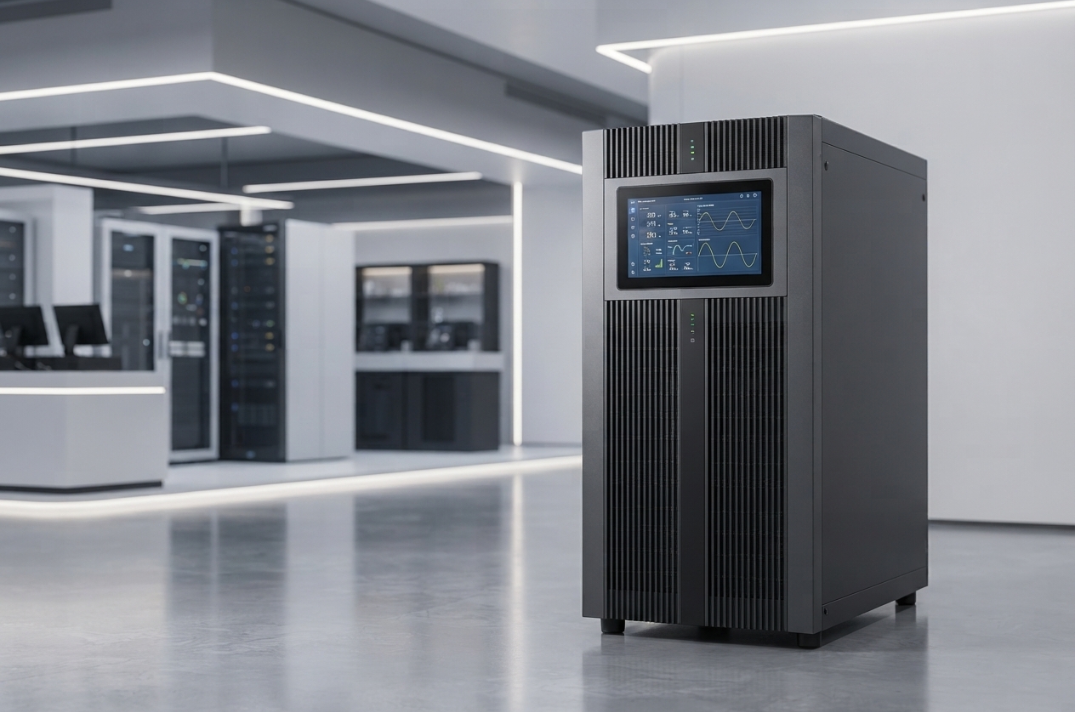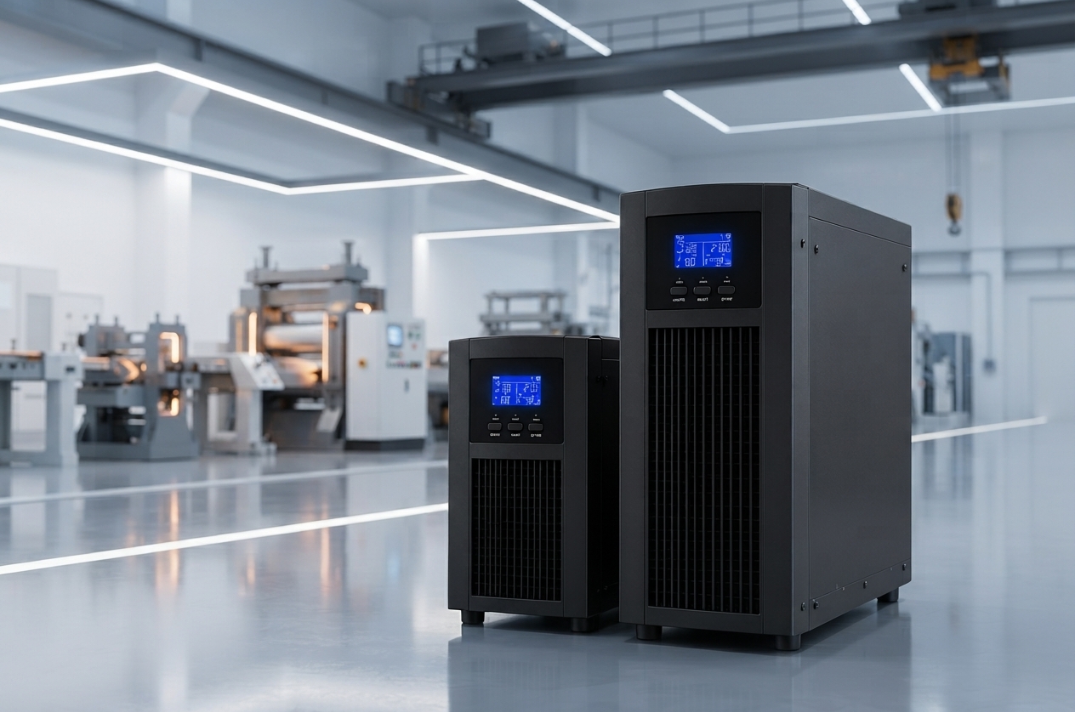
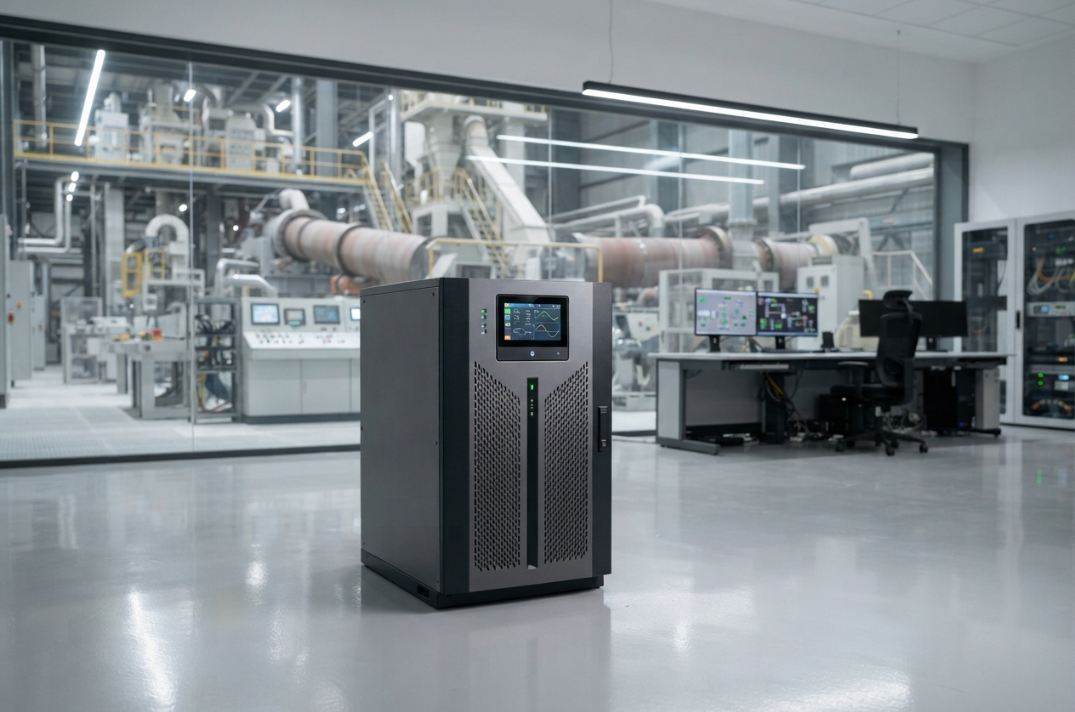
Cement manufacturing depends on coordinated industrial processes, reliable automation, and continuous monitoring. From raw-material handling and kiln operations to cement grinding and packaging, each stage relies on equipment that must operate according to carefully controlled parameters.
A 3 Phase Online UPS in Cement Plants helps protect critical electronic equipment against power interruptions and electrical disturbances. It can support process control systems, instrumentation, industrial computers, communication networks, laboratory equipment, and essential IT infrastructure.
However, cement plants also use high-power equipment such as crushers, kilns, mills, conveyors, and large motors. These loads require appropriate primary power infrastructure and separate backup planning. A three-phase online UPS is generally intended to protect selected critical loads rather than run the entire production facility.
In this guide, we explore nine important applications of a three-phase online UPS in cement plants, along with selection criteria, installation considerations, and maintenance practices.
Why Is Power Protection Important in Cement Manufacturing?
Cement manufacturing involves multiple interconnected processes. A typical facility may handle limestone, clay, additives, raw meal, clinker, and finished cement through different production stages.
Many of these processes depend on industrial control systems, sensors, communication networks, and monitoring equipment. A power disturbance affecting these systems can interrupt monitoring, disrupt control functions, or delay production recovery.
A suitable online UPS system can provide regulated power to selected critical equipment during qualifying electrical disturbances.
Power protection can help cement manufacturers:
- Maintain power to essential process-control electronics.
- Support monitoring and instrumentation systems.
- Protect selected automation and communication equipment.
- Reduce interruptions to critical IT systems.
- Support controlled responses to power disturbances.
- Improve continuity for essential electronic operations.
The actual benefits depend on the equipment connected to the UPS, its capacity, battery runtime, redundancy, and integration with the plant’s electrical system.
9 Key Applications of a 3 Phase Online UPS in Cement Plants
1. Protecting Kiln Monitoring and Control Systems
The kiln is one of the most important parts of a cement manufacturing facility. It supports the high-temperature processing required to produce clinker.
Kiln operations depend on monitoring and control systems that track operating conditions, temperatures, process parameters, and equipment status. These systems help operators assess the process and respond to changing conditions.
A three-phase online UPS can supply protected power to selected kiln control electronics, monitoring equipment, industrial computers, and operator interfaces.
This helps maintain access to critical process information during short power interruptions. It can also support the plant’s response procedures when the main electrical supply becomes unstable.
However, the kiln’s primary heating and drive loads require separate engineering consideration. A UPS should be sized for the specific electronic and control equipment it is intended to protect.
2. Supporting Raw-Material Handling and Process Automation
Cement production begins with raw materials such as limestone, clay, and other additives. These materials move through crushing, conveying, storage, proportioning, and preparation stages before entering subsequent processing operations.
Automation systems coordinate conveyors, control panels, sensors, and material-handling sequences. Their electronic components need reliable power to maintain monitoring and control functions.
A suitable UPS can support selected PLCs, HMIs, industrial computers, and communication equipment used in these operations.
As a result, the control layer can remain powered during qualifying electrical disturbances, provided the protected loads remain within the UPS’s design limits.
It is important to distinguish control-system protection from backup power for conveyor motors and crushers. Those high-power loads may require separate electrical arrangements.
3. Maintaining Raw-Mill and Grinding Process Monitoring
Raw mills process raw materials into a suitable meal for cement production. Grinding operations depend on coordinated control systems and monitoring equipment.
Depending on the installation, these systems may monitor operating temperatures, pressure, material flow, equipment status, and other process variables.
A power interruption affecting critical monitoring electronics can reduce process visibility and complicate troubleshooting.
A three-phase online UPS can protect selected control panels, industrial computers, monitoring devices, and communication equipment associated with grinding operations.
This helps operators retain access to important information during electrical disturbances. Nevertheless, the UPS should not be assumed to power the grinding mill’s main motor unless the system has been specifically engineered for that purpose.
4. Supporting Clinker Cooler Monitoring
After leaving the kiln, clinker passes through a cooling process before moving to storage or further processing. Cooler performance and material movement are important parts of plant operations.
Monitoring systems may track temperatures, equipment status, cooling conditions, and process parameters. These measurements help operators assess the condition of the process and identify abnormal operating conditions.
A properly configured UPS can supply protected power to selected sensors, monitoring electronics, control panels, and operator interfaces.
This helps maintain process visibility when the incoming power supply experiences a disturbance.
The protected equipment should be identified through a load assessment, and the required runtime should be based on the plant’s operating and shutdown procedures.
5. Protecting Cement Grinding and Packing Controls
Cement grinding converts clinker and other approved constituents into finished cement. After grinding, the product may move through storage, weighing, bagging, and dispatch systems.
These stages rely on control electronics, instrumentation, weighing systems, operator interfaces, and communication devices.
A UPS can protect selected electronic controls and monitoring equipment used in grinding and packing operations. This may help reduce power-related interruptions to the systems responsible for monitoring product flow and coordinating automated sequences.
For example, an interruption affecting a weighing controller or an industrial computer can disrupt access to operating data. Protecting the appropriate electronics helps maintain their power supply during qualifying disturbances.
However, grinding mills, packaging machinery, and large motors must be assessed separately when designing the facility’s power protection strategy.
6. Maintaining Instrumentation and Quality-Control Systems
Quality control is essential in cement manufacturing because the final product must meet the required specifications.
Plant laboratories and production areas may use instruments to assess raw materials, clinker, cement composition, fineness, strength-related properties, and other quality parameters.
These instruments often depend on sensitive electronics and computer systems. Unexpected power loss can interrupt testing or affect access to measurement data.
A suitable UPS can protect selected laboratory instruments, analytical equipment, workstations, and associated data systems when their electrical requirements permit.
This helps reduce interruptions during testing and supports more consistent access to quality records.
The laboratory team should identify which instruments need uninterrupted power, as not every device requires the same capacity or backup duration.
7. Supporting Plant Communication and Industrial Networks
Cement plants use communication networks to connect control rooms, production areas, monitoring equipment, maintenance teams, and central systems.
Network switches, communication devices, and selected industrial networking equipment need dependable power to maintain connectivity.
If these devices shut down during a power event, operators may lose access to important information or communication channels.
A three-phase online UPS can protect selected network equipment and support communication continuity for the connected systems.
For businesses planning broader digital infrastructure, Bansal Hi-Tech’s networking and IT infrastructure solutions can be evaluated alongside the site’s power-protection requirements.
The UPS load plan should account for the power consumption and runtime requirements of the networking equipment that needs protection.
8. Protecting Servers, Production Data, and Business Applications
Modern cement manufacturers may rely on digital platforms for production planning, inventory, maintenance, quality management, procurement, dispatch, and enterprise resource planning.
These applications depend on servers, storage devices, network equipment, and other IT infrastructure. Unexpected shutdowns can interrupt access to applications and create operational challenges.
A UPS can supply protected power to selected IT equipment. Depending on the design, it can help maintain operation during short disturbances or provide time for an orderly shutdown.
For larger computing environments, Bansal Hi-Tech’s data centre solutions may be relevant to broader infrastructure planning.
The required UPS capacity should account for actual server loads, power-supply characteristics, future expansion, and the runtime needed by the organisation.
9. Supporting Environmental Monitoring and Plant Safety Systems
Cement manufacturing facilities may use environmental monitoring equipment to measure dust emissions, process conditions, and other parameters required for operational oversight.
Selected monitoring, alarm, communication, and control systems may need dependable power to continue providing information during electrical disturbances.
A UPS can protect designated electronic equipment where uninterrupted power is required by the facility’s operating procedures and applicable requirements.
The system design must distinguish between ordinary monitoring equipment and safety-critical systems with specific power, redundancy, and certification requirements. A general-purpose UPS should not automatically be assumed suitable for every safety-related application.
Engineers should verify the applicable system requirements and coordinate UPS selection with the plant’s electrical, instrumentation, and safety teams.
How Does a Three-Phase Online UPS Work in a Cement Plant?
A three-phase online UPS supplies regulated power to connected equipment through its power-conversion system. In a typical double-conversion design, incoming AC power is converted to DC and then converted back to AC.
This helps isolate protected loads from many common variations in the incoming supply.
During normal operation, the power path is generally:
Utility Supply → UPS Power Conversion → Regulated Output → Critical Equipment
When the utility supply fails, the battery supplies energy to the UPS:
Utility Failure → Battery Support → Regulated Output → Critical Equipment
The connected equipment can continue receiving power within the system’s rated capacity and available battery runtime.
For longer interruptions, a UPS may operate alongside generator-backed electrical infrastructure. However, the UPS, generator, transfer arrangements, and connected loads must be engineered to work together.
How to Select the Right 3 Phase Online UPS for Cement Plants
Choosing the correct UPS requires more than comparing product capacities. The selection should reflect the facility’s critical loads, power-quality conditions, backup objectives, and operating environment.
1. Identify Critical Equipment
Prepare a list of the equipment that must remain powered during an interruption. This may include PLCs, control panels, monitoring systems, industrial computers, network switches, servers, instrumentation, and selected laboratory equipment.
Separate these loads from large motors, kilns, crushers, and grinding machinery. These systems may need different backup arrangements.
2. Calculate kW and kVA Requirements
UPS sizing must account for both real power and apparent power.
Review the following factors:
- Total connected load in kW and kVA.
- Power factor and load characteristics.
- Peak demand and transient requirements.
- Harmonic characteristics where applicable.
- Required operating margin.
- Expected future expansion.
A qualified engineer should complete a load study before the final rating is selected.
3. Calculate the Required Battery Runtime
The required runtime depends on the purpose of the UPS.
For example, a system intended to bridge generator start-up may need a different runtime from one intended to support an orderly shutdown or maintain selected equipment for a longer period.
Battery capacity should be calculated using the actual load, UPS efficiency, battery configuration, operating conditions, and appropriate design margins.
4. Assess Redundancy and Availability
Some cement plant applications may require redundancy to reduce the risk of a single component failure.
Depending on the criticality of the load, engineers may consider N+1 configurations, parallel UPS systems, or modular designs.
For suitable higher-capacity applications, the Keor HPE 60–500 kW three-phase UPS can be evaluated against the required capacity and system architecture.
The final configuration should reflect the actual application and the manufacturer’s specifications.
5. Consider Scalability and Future Requirements
Cement plants may expand capacity, add instrumentation, modernise control systems, or introduce additional digital applications.
Therefore, assess whether the proposed UPS can accommodate realistic future critical loads. Modular or parallel arrangements may be worth evaluating where they align with the site’s operational and maintenance needs.
Three-Phase Online UPS Options for Industrial Applications
Different cement plants have different requirements. A smaller facility may need protection for a limited group of control and IT loads, while a larger operation may require greater capacity or a redundant system design.
Bansal Hi-Tech offers product categories that can be assessed against suitable applications:
- HPI 33 EVO 10–40 kW three-phase UPS: Consider for applications that fit its rated capacity and electrical specifications.
- Keor T Evo 15–60 kVA three-phase UPS: Evaluate for suitable critical loads within its specified operating range.
- Easy UPS 3-Phase Modular 50–250 kW: Assess where modularity and capacity planning suit the facility’s requirements.
- Galaxy VS 20–150 kW UPS: Evaluate for applications that match its rated capacity and electrical requirements.
These products are not automatically interchangeable. Before selecting a model, confirm the input and output voltage, kW and kVA ratings, battery runtime, overload capability, environmental limits, and redundancy options.
Environmental and Installation Considerations
Cement plants can expose electrical equipment to dust, heat, vibration, humidity, and other challenging conditions. These factors can affect cooling performance, electrical connections, and battery life.
Whenever possible, install the UPS in a suitable electrical or equipment room that meets the manufacturer’s requirements.
The installation plan should account for:
- Adequate ventilation and temperature control.
- Protection against dust and contamination.
- Sufficient clearance for maintenance.
- Safe battery placement and access.
- Suitable earthing and electrical protection.
- Monitoring and alarm integration.
- Compliance with applicable safety requirements.
Battery systems may have additional environmental and safety requirements. Therefore, the installation design should consider the complete UPS and battery arrangement rather than the UPS unit alone.
Why UPS Efficiency Matters in Cement Manufacturing
Cement plants often operate for extended periods. Consequently, UPS efficiency can influence energy losses and heat generation over time.
A higher-efficiency system can reduce conversion losses under the operating conditions specified by its manufacturer. However, efficiency should not be the only selection criterion.
Manufacturers should also compare reliability, battery performance, redundancy, maintainability, scalability, service requirements, and total cost of ownership.
For a broader energy-management approach, organisations can review the ISO 50001 energy management standard and consider how electrical infrastructure fits within their overall energy-management objectives.
UPS Maintenance in Cement Plants
Preventive maintenance helps maintain availability and identify potential issues before they affect critical equipment.
A maintenance programme may include:
- Visual inspection of the UPS and battery equipment.
- Battery health and runtime checks.
- Inspection of electrical connections.
- Cooling and ventilation checks.
- Alarm and communication testing.
- Bypass operation checks.
- Review of system events and performance records.
- Load testing where appropriate.
Battery condition is particularly important because ageing and environmental conditions can reduce available backup runtime.
Maintenance procedures should follow the manufacturer’s recommendations and the criticality of the protected loads. Where testing could affect production, schedule it with the relevant plant teams.
Temporary UPS Requirements During Plant Maintenance
Cement plants may require temporary power protection during equipment commissioning, electrical maintenance, production-line upgrades, or infrastructure changes.
In such cases, online UPS rental services may be considered when a temporary arrangement is more practical than installing a permanent system.
Rental equipment must still be sized correctly and integrated with the site’s electrical infrastructure. Battery runtime, compatibility, installation conditions, and safety requirements remain important.
Building a Complete Power Protection Strategy
A UPS should form part of a wider power-continuity plan. Depending on the plant, this plan may include utility power, generators, electrical distribution, surge protection, earthing, battery systems, monitoring, redundancy, and preventive maintenance.
The design should identify which systems require uninterrupted power and how each load should respond during an electrical disturbance.
Bansal Hi-Tech’s IT infrastructure solutions can also be considered when planning the wider technology environment supporting plant operations.
For organisations operating in the NCR region, three-phase online UPS solutions in Gurgaon are another option to evaluate against the facility’s requirements.
The goal is to build a power-protection strategy around the plant’s actual operating needs rather than selecting equipment based on capacity alone.
Why Consider Bansal Hi-Tech for Cement Plant UPS Solutions?
Selecting a UPS for cement manufacturing requires a clear understanding of the facility’s electrical and operational requirements.
Businesses should evaluate load capacity, battery runtime, power quality, redundancy, installation conditions, scalability, maintenance, and service support before making a decision.
Bansal Hi-Tech provides UPS and technology infrastructure solutions for businesses evaluating their power-protection needs. Its three-phase UPS portfolio includes different capacity ranges that can be assessed for suitable applications.
Before purchasing, confirm that the proposed system matches the critical load study and site conditions. Technical documentation, commissioning, maintenance arrangements, and support requirements should also be part of the evaluation.
Frequently Asked Questions
Is a 3 phase online UPS suitable for cement plants?
Yes. A three-phase online UPS can protect selected control systems, instrumentation, automation electronics, communication networks, servers, and laboratory equipment. The suitability depends on the connected load and electrical design.
Can a UPS power an entire cement plant?
A conventional UPS is not generally selected to power every load in a cement plant. Kilns, crushers, grinding mills, conveyors, and large motors have different electrical requirements and need appropriate primary power and backup arrangements. UPS systems are commonly designed around selected critical electronic loads.
Why do cement plants need power protection for control systems?
Control systems monitor operating conditions and support automated processes. Protecting their power supply can help maintain access to process information and reduce interruptions caused by electrical disturbances.
Can a three-phase online UPS work with a generator?
Yes, provided the UPS and generator are correctly engineered to work together. The UPS can supply battery power while the generator starts and stabilises. Compatibility and transfer arrangements must be verified before commissioning.
How long can a cement plant UPS provide backup?
Backup time depends on the protected load, battery capacity, UPS configuration, battery condition, and operating requirements. A load study is necessary to determine the appropriate runtime.
What should be checked before buying a cement plant UPS?
Review kW and kVA requirements, input and output voltage, load characteristics, battery runtime, redundancy, operating environment, generator compatibility, monitoring features, maintenance, and service support.
Does every cement plant require a three-phase online UPS?
Not necessarily. The requirement depends on the facility’s critical loads, automation systems, electrical architecture, power-quality conditions, and business continuity objectives.
Conclusion
Cement manufacturing depends on coordinated production processes, automation, and reliable monitoring. From kiln controls and raw-material handling to grinding, packing, laboratories, and IT infrastructure, many essential electronic systems need dependable power.
A 3 Phase Online UPS in Cement Plants can provide an important layer of protection for selected critical loads during electrical disturbances. However, the right solution depends on accurate load assessment, adequate battery runtime, appropriate redundancy, suitable installation conditions, and correct integration with the plant’s electrical infrastructure.
Cement manufacturers should also consider environmental conditions, generator coordination, maintenance, and future expansion before selecting a system.
With proper engineering, installation, and maintenance, a three-phase online UPS can help reduce the operational impact of power interruptions and support greater continuity for critical cement manufacturing systems.