A reliable power supply is essential for environments where even a brief interruption can affect critical equipment, business operations, or production processes. Data centers, manufacturing facilities, IT infrastructure, telecommunications systems, and other critical installations often require more than ordinary electrical backup.
This is where a 3 Phase Online UPS becomes important.
A three-phase online UPS is designed to provide continuous, controlled power to critical equipment connected to a three-phase electrical system. It continuously processes the incoming electrical supply and maintains the required output while also keeping its energy-storage system ready for an interruption.
But how exactly does it work?
What happens when normal utility power is available?
What happens when the input supply fails?
How does the battery become involved?
What is the role of the bypass?
And how does the UPS protect the connected load?
Understanding these operating stages makes it easier to select, install, and maintain the right UPS system.
In this guide, we explain how a 3 Phase Online UPS works and cover 10 important facts that businesses should understand before deploying one.
Bansal Hi-Tech provides three-phase online UPS solutions for applications with different capacity and power-protection requirements.
What Is a 3 Phase Online UPS?
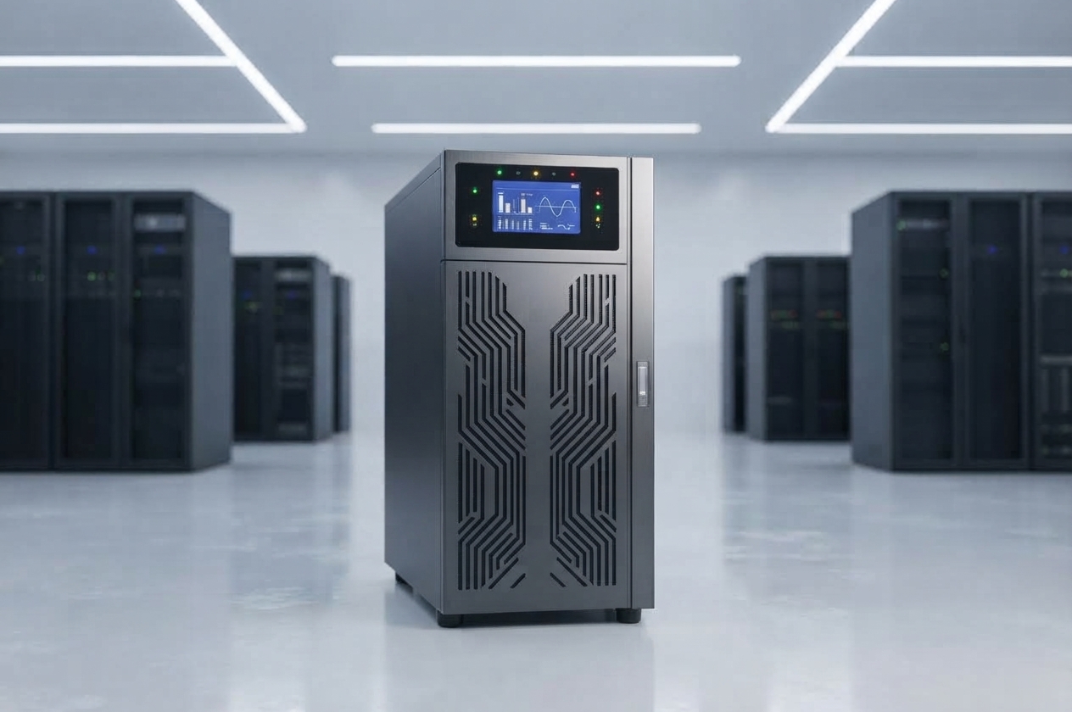
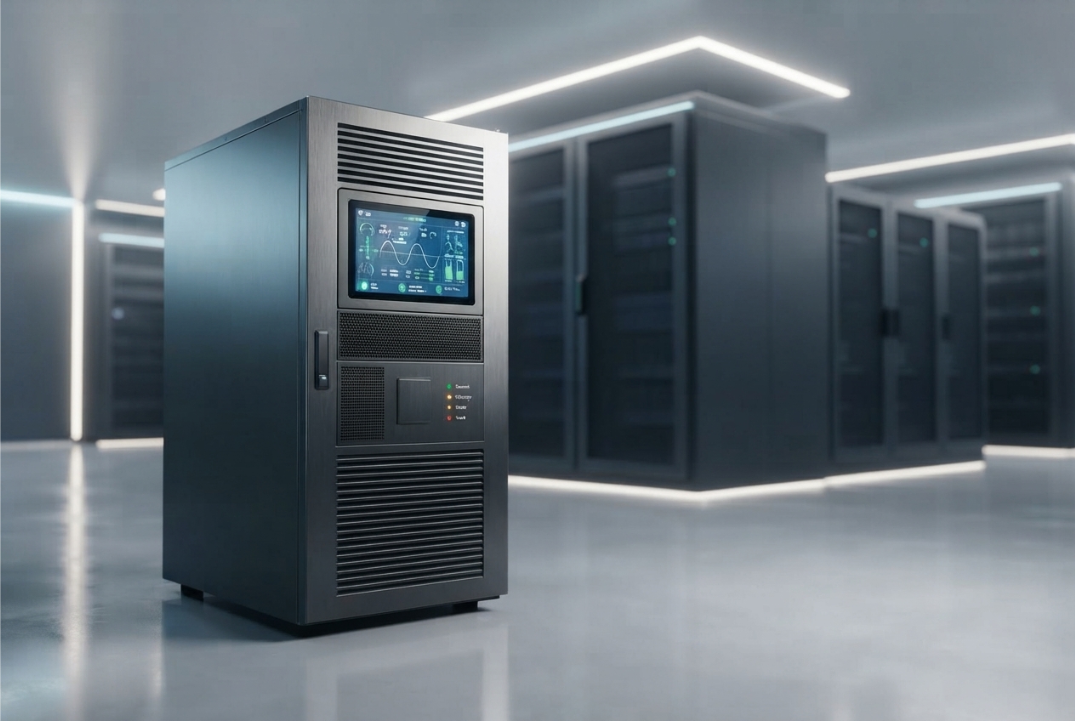
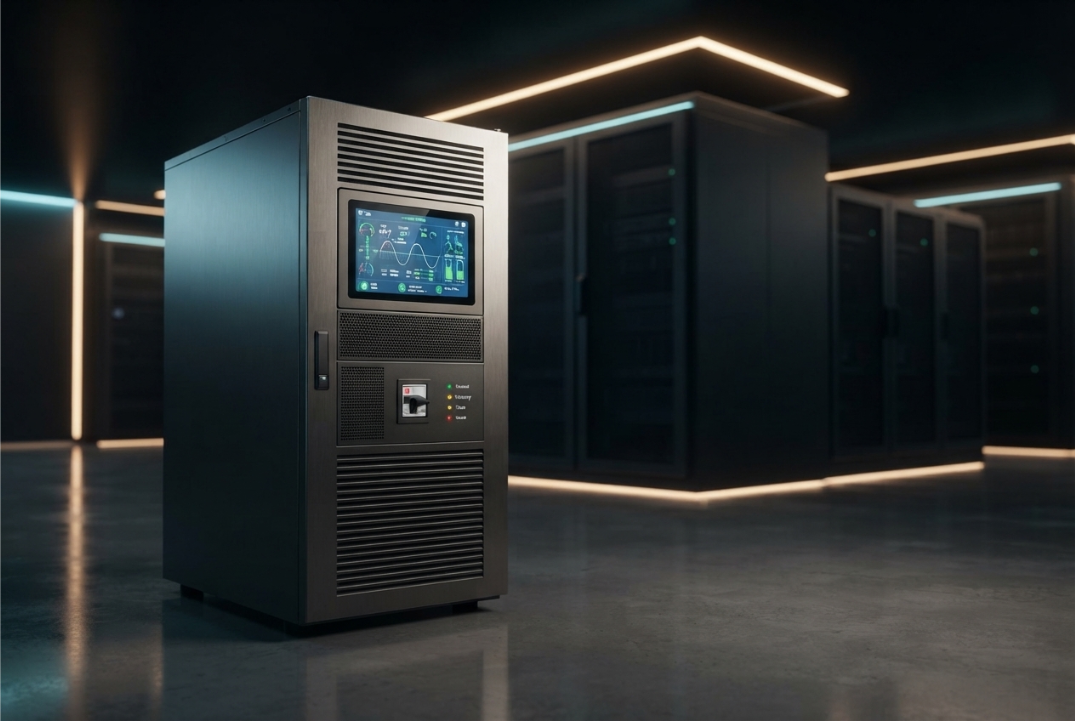
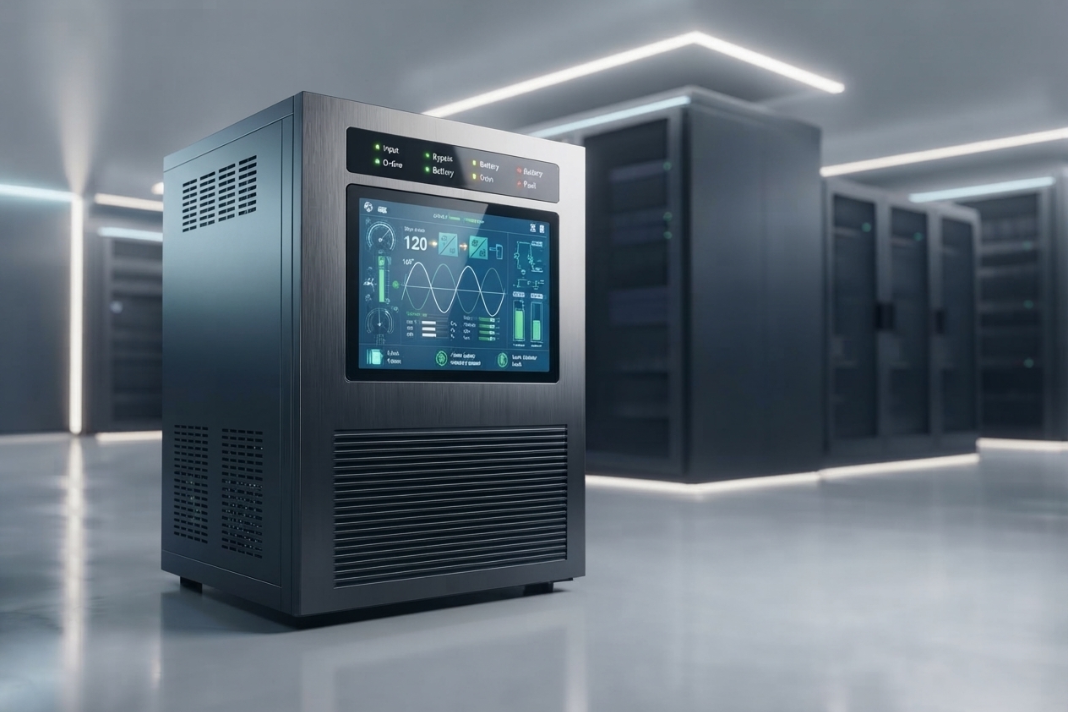
A 3 Phase Online UPS is an uninterruptible power supply designed to provide continuous power protection for equipment connected to a three-phase electrical system.
The word online describes how the UPS continuously manages the electrical power supplied to the connected load.
Instead of waiting for an interruption before becoming part of the power path, the UPS continuously operates between the incoming electrical supply and the protected output.
A typical system contains several functional sections, including:
- Three-phase input section
- Rectification and charging section
- Energy-storage system
- Output power section
- Static bypass
- Monitoring and control system
- Protection and switching components
These sections work together to maintain the required output and provide stored-energy backup when the normal input supply is unavailable.
How Does a 3 Phase Online UPS Work?
The basic operating sequence can be understood in four stages:
Three-Phase Input → Power Conversion & Conditioning → Protected Output
At the same time, the UPS maintains its battery/energy-storage system in a charged and ready condition.
When the normal input supply becomes unavailable:
Stored Battery Energy → Power Conversion → Protected Output
This allows the connected critical equipment to continue receiving power during the available battery-autonomy period.
The exact architecture, efficiency, voltage levels, and operating characteristics vary by UPS model.
Stage 1: Three-Phase Power Enters the UPS
The process begins when the facility’s three-phase electrical supply reaches the UPS input.
The UPS monitors the incoming supply according to its operating specifications.
Important electrical parameters can include:
- Input voltage
- Input frequency
- Phase condition
- Current
- Power quality
The UPS is designed to operate within specified input limits.
If the incoming supply remains within the acceptable range, the UPS continues normal operation while simultaneously maintaining the energy-storage system.
The input stage is therefore the first point at which the UPS evaluates the electrical supply before delivering controlled power to the critical load.
Stage 2: Input Power Is Processed
The incoming electrical power is processed by the UPS’s internal power-conversion stages.
The rectification and charging section performs important functions within the system, including supporting the DC link and maintaining the battery charging process.
Power conversion and conditioning allow the UPS to control the electrical output supplied to the connected load.
This is one of the fundamental characteristics of online UPS operation.
The output is not simply dependent on the instantaneous condition of the incoming utility supply.
Instead, the UPS continuously manages the power path according to its design.
Stage 3: The Energy-Storage System Remains Ready
While normal electrical power is available, the UPS maintains its battery system in an appropriate charged condition.
The batteries represent stored electrical energy that can be used when the normal input supply is interrupted.
The required battery arrangement depends on:
- UPS capacity
- Required backup time
- Connected load
- Battery technology
- Battery configuration
- Operating temperature
Battery autonomy is therefore a separate design consideration from UPS capacity.
A high-capacity UPS does not automatically provide a long backup duration.
The battery configuration must be designed according to the required runtime.
Stage 4: Controlled Power Reaches the Critical Load
The UPS supplies the connected equipment through its output section.
The protected load can include:
- Servers
- Storage systems
- Networking equipment
- Industrial control systems
- Communication equipment
- Critical electronic equipment
- Other essential loads
The objective is to maintain a controlled output within the UPS’s specified performance range.
This continuous operating arrangement is what makes an online UPS suitable for applications where power continuity and power quality are important.
What Happens During a Power Failure?
This is one of the most important parts of understanding an online UPS.
When the normal input supply is interrupted or falls outside the UPS’s specified operating conditions, the UPS uses stored energy from its battery system.
The energy stored in the batteries is supplied through the UPS’s internal power-conversion system to maintain the required output.
The critical load therefore continues receiving power without depending on the failed incoming supply.
The duration of this operation depends primarily on:
- Battery capacity
- Connected load
- Battery condition
- UPS efficiency
- Operating conditions
If standby generation is available, the UPS may operate as part of a larger power-continuity system until the alternate source becomes available.
10 Key Facts About How a 3 Phase Online UPS Works
1. The UPS Continuously Processes Power
The first important fact is that an online UPS is continuously active in the power path.
The system does not simply remain idle until a power failure occurs.
It continuously manages the incoming electrical supply and provides controlled power to the connected load.
This operating architecture is one of the primary reasons online UPS systems are used for critical applications.
The exact level of power conditioning depends on the UPS design and technical specifications.
2. Three-Phase Input and Output Must Match the Application
A three-phase UPS is designed for a three-phase electrical environment, but that does not mean every three-phase UPS is automatically compatible with every installation.
The electrical characteristics must be checked carefully.
These may include:
- Input voltage
- Output voltage
- Frequency
- Phase configuration
- Neutral arrangement
- Earthing
- Distribution requirements
A proper electrical assessment should therefore be completed before installation.
The UPS must work correctly with both the upstream electrical system and the downstream critical-load distribution.
Bansal Hi-Tech also provides IT infrastructure solutions where power protection can form part of a wider infrastructure requirement.
3. The Battery Does Not Define the UPS’s Power Rating
UPS capacity and battery autonomy are different specifications.
The UPS’s power rating determines how much electrical load it can support.
The battery configuration determines how much stored energy is available for backup.
For example, two systems could have a similar power rating but different battery configurations and therefore different backup durations.
This distinction is important when planning a UPS system.
A proper specification should therefore state both:
Required UPS capacity
and
Required battery autonomy
4. The UPS Continuously Maintains Battery Readiness
The battery system needs to be ready before an interruption occurs.
During normal operation, the UPS charging section maintains the battery system according to the manufacturer’s charging requirements.
Battery condition is therefore an important part of UPS reliability.
Battery performance can change with:
- Age
- Temperature
- Usage
- Charging conditions
- Maintenance
- Battery technology
A UPS can only provide the expected battery-backed operation if the energy-storage system remains in suitable condition.
5. The Bypass Provides an Alternative Power Path
A three-phase online UPS can include a bypass arrangement that provides an alternative path under specified conditions.
The bypass can be relevant during:
- UPS maintenance
- Servicing
- Certain overload conditions
- UPS fault conditions
- Commissioning
Depending on the system design, the UPS may transfer the critical load to bypass when particular conditions are met.
A maintenance bypass can also allow servicing activities to be carried out while maintaining an appropriate supply path to the load.
The exact bypass arrangement varies between UPS models, so it should be checked in the manufacturer’s technical documentation.
6. UPS Capacity Is Measured in More Than One Way
UPS systems are commonly specified in kVA, while connected loads are frequently discussed in kW.
The relationship is:
kW = kVA × Power Factor
Therefore:
kVA = kW ÷ Power Factor
For example, if a critical load is 90 kW and the applicable power factor is 0.9:
90 ÷ 0.9 = 100 kVA
This is a simplified calculation and does not by itself determine the final UPS size.
Future growth, operating headroom, peak demand, redundancy, and other design requirements must also be considered.
Bansal Hi-Tech offers different three-phase UPS capacities, including the HPI 33 EVO 10–40 kW Three Phase UPS.
7. Battery Runtime Depends on the Load
Battery autonomy is not a fixed number for every operating condition.
If the connected load increases, the available runtime generally decreases for a given battery configuration.
Similarly, battery condition and environmental conditions can affect available runtime.
This means battery autonomy should always be specified alongside the expected load.
A facility might require:
- A few minutes of backup
- Enough time for controlled shutdown
- Enough time for standby generation to become available
- Longer-duration backup
The appropriate battery configuration should be designed around the actual requirement.
8. Monitoring Helps Identify Operating Conditions
Modern UPS systems can provide information about the condition of the power system and UPS itself.
Depending on the model, monitoring may include:
- Input voltage
- Output voltage
- Frequency
- Load percentage
- Battery status
- Alarms
- Fault conditions
- Operating mode
Monitoring is particularly useful in critical environments where operators need visibility into UPS performance.
It can help maintenance teams identify abnormal conditions and respond before a minor issue develops into a larger operational problem.
9. Efficiency Changes With Operating Conditions
A UPS consumes some energy while performing its power-conversion functions.
Its efficiency can vary depending on:
- Load level
- Operating mode
- UPS architecture
- System design
Therefore, when evaluating a UPS, it is better to examine efficiency at the expected operating load rather than focusing only on the maximum efficiency figure.
For a continuously operating installation, even relatively small differences in efficiency can influence long-term energy consumption and heat generation.
This is particularly relevant for larger installations such as data centers.
Bansal Hi-Tech provides data center solutions where reliable power infrastructure can form part of the overall facility design.
10. Maintenance Is Part of UPS Operation
Installing a UPS does not eliminate the need for maintenance.
A reliable UPS system requires appropriate inspection and servicing throughout its operating life.
Maintenance can include:
- Battery inspection
- Battery testing
- Electrical connection checks
- Cooling inspection
- Alarm verification
- Operating parameter checks
- Preventive servicing
- Component replacement when required
Battery maintenance is especially important because battery degradation can reduce available backup time.
The UPS may continue to operate normally during everyday conditions while its batteries gradually lose capacity.
For this reason, maintenance should be included in the UPS lifecycle plan from the beginning.
Bansal Hi-Tech provides client support for organizations managing technology and infrastructure requirements.
How Does a 3 Phase Online UPS Respond to Different Conditions?
Understanding the operating modes provides a clearer picture of the complete system.
Normal Power Condition
When the incoming electrical supply is available and within the specified operating range:
- The UPS processes the incoming supply.
- The critical load receives controlled output power.
- The battery system remains charged.
- Monitoring systems track operating conditions.
This is the normal operating state.
Input Power Interruption
When the normal input supply is interrupted:
- The UPS detects the abnormal condition.
- Stored battery energy becomes the energy source.
- The power-conversion system maintains the output.
- The critical load continues operating for the available battery autonomy.
The objective is to maintain continuity without requiring the critical equipment to wait for the utility supply to return.
Standby Power Available
If the facility has a generator or another standby source, the UPS can form part of the overall power-continuity architecture.
The standby source can restore the facility’s electrical supply while the UPS bridges the interruption.
The exact sequence depends on the electrical design and UPS configuration.
UPS Maintenance
When planned maintenance is required, bypass functionality may allow the critical load to receive power through an alternative path, depending on the system architecture.
This is why bypass design is an important part of a critical UPS installation.
Where Are 3 Phase Online UPS Systems Used?
Data Centers
Data centers depend on continuous operation of servers, storage, networking, and associated infrastructure.
A properly specified UPS can provide an important layer of power continuity.
Bansal Hi-Tech’s data center solutions are relevant to organizations planning critical infrastructure.
Manufacturing Facilities
Manufacturing systems can depend on electronic controls, automation, monitoring, and other critical equipment.
Unexpected power interruptions can affect production processes.
A suitable three-phase UPS can therefore form part of the facility’s power-protection architecture.
Bansal Hi-Tech provides manufacturing industry solutions for infrastructure requirements in this sector.
IT and ITES
IT environments can contain servers, storage, networking, communication equipment, and other critical electronic systems.
Power continuity is therefore an important consideration.
Bansal Hi-Tech’s IT & ITES industry solutions provide additional infrastructure context.
What Determines How a 3 Phase Online UPS Should Be Configured?
The UPS should be configured according to the actual application.
Important considerations include:
Load
Determine the equipment that requires protected power.
Capacity
Calculate the required kW and kVA.
Battery Autonomy
Determine how long the load needs to remain supported during an interruption.
Electrical Compatibility
Verify input and output characteristics.
Future Expansion
Consider expected growth.
Environment
Evaluate temperature, ventilation, humidity, dust, and installation conditions.
Maintenance
Plan for battery inspection, servicing, and replacement.
Availability Requirements
Determine whether redundancy, bypass, or other availability features are required.
A proper UPS design considers all of these factors together rather than treating capacity as the only requirement.
Why Correct Installation Matters
Even a correctly selected UPS can perform poorly if the installation is not properly designed.
The installation should consider:
- Cable sizing
- Electrical protection
- Earthing
- Ventilation
- Ambient temperature
- Battery placement
- Distribution
- Bypass arrangements
- Maintenance access
- Safety requirements
The physical environment is particularly important for battery systems and power electronics.
A suitable installation environment helps support reliable operation and appropriate equipment life.
Final Takeaway
A 3 Phase Online UPS works by continuously managing the incoming electrical supply and providing controlled power to the critical load.
During normal operation, it processes the incoming supply while maintaining the battery system in a charged and ready condition.
When the normal supply is interrupted, stored battery energy supports the UPS output so that connected critical equipment can continue operating for the available autonomy period.
The 10 key facts to remember are:
- The UPS continuously processes power.
- Input and output characteristics must match the application.
- UPS capacity and battery autonomy are different requirements.
- The battery must remain properly maintained and ready.
- Bypass provides an alternative power path under specified conditions.
- Both kVA and kW matter when evaluating capacity.
- Battery runtime depends on load and battery configuration.
- Monitoring provides visibility into UPS operation.
- Efficiency varies with operating conditions.
- Maintenance is essential for long-term reliability.
The right UPS is therefore not simply a backup device.
It is an important part of the facility’s overall power-protection architecture.
Before selecting a system, evaluate the critical load, capacity, battery autonomy, electrical configuration, bypass requirements, operating environment, scalability, monitoring, and maintenance plan.
Organizations evaluating different three-phase requirements can explore Bansal Hi-Tech’s three-phase online UPS range and match the available systems to their actual electrical requirements.
Frequently Asked Questions
1. How does a 3 Phase Online UPS work?
A 3 Phase Online UPS continuously processes incoming three-phase electrical power and supplies controlled output power to the connected critical load. During an input interruption, stored battery energy supports the output.
2. What happens when the power fails?
The UPS detects the interruption and uses stored energy from its battery system to maintain the required output for the available battery-autonomy period.
3. Does a 3 Phase Online UPS always use its battery?
No. During normal operation, the battery system is maintained in a charged and ready state. Stored battery energy is used when the normal input supply is unavailable or outside specified operating conditions.
4. What is the purpose of bypass in a UPS?
Bypass provides an alternative power path under specified conditions, such as certain overload, fault, maintenance, or servicing situations, depending on the UPS design.
5. What is UPS autonomy?
UPS autonomy is the period for which the UPS can support the connected load using its available stored battery energy under specified operating conditions.
6. Does a higher kVA UPS provide more battery backup?
Not automatically. UPS power capacity and battery autonomy are separate specifications. Runtime depends on the battery configuration, connected load, and other operating conditions.
7. Why is three-phase power used for larger UPS systems?
Three-phase electrical systems are commonly used for higher-power commercial, industrial, IT, and critical infrastructure applications because they are suitable for distributing larger electrical loads.
8. Can a 3 Phase Online UPS work with a generator?
Yes, a UPS can form part of a facility’s power-continuity architecture with a standby generator, provided the generator, UPS, and electrical distribution system are properly designed and compatible.
9. Why does UPS efficiency matter?
Efficiency affects energy consumption and heat generation. This becomes particularly important for systems that operate continuously and at substantial loads.
10. Why does a 3 Phase Online UPS require maintenance?
Maintenance helps identify battery degradation, electrical issues, cooling problems, alarms, and other conditions that could affect system reliability and available backup performance.