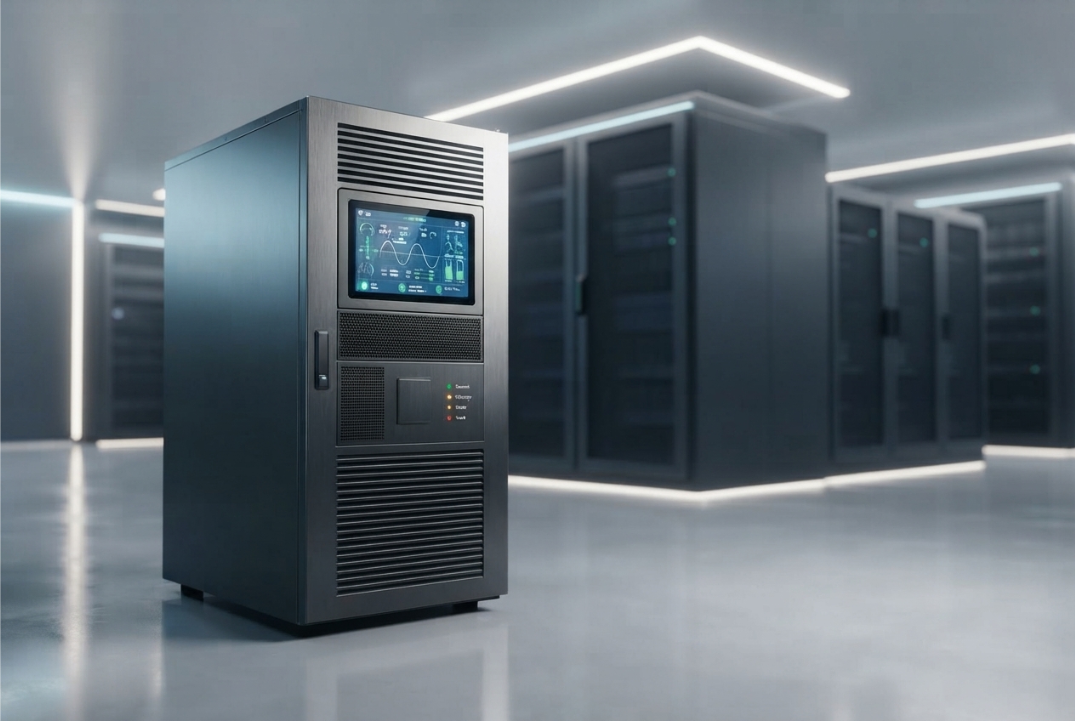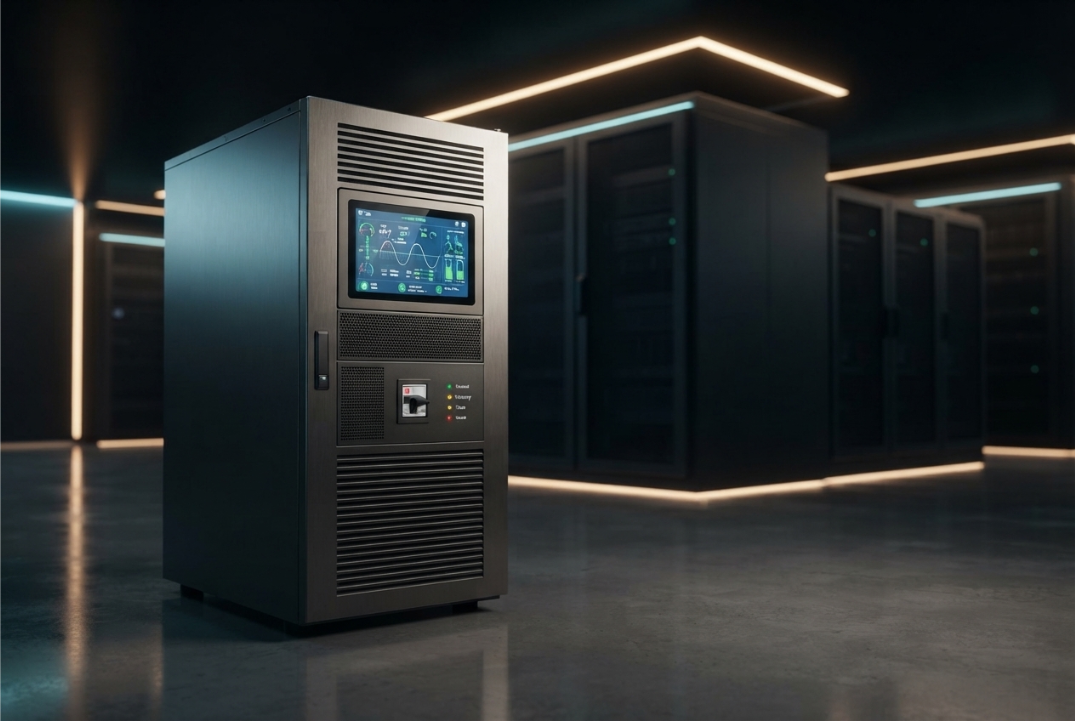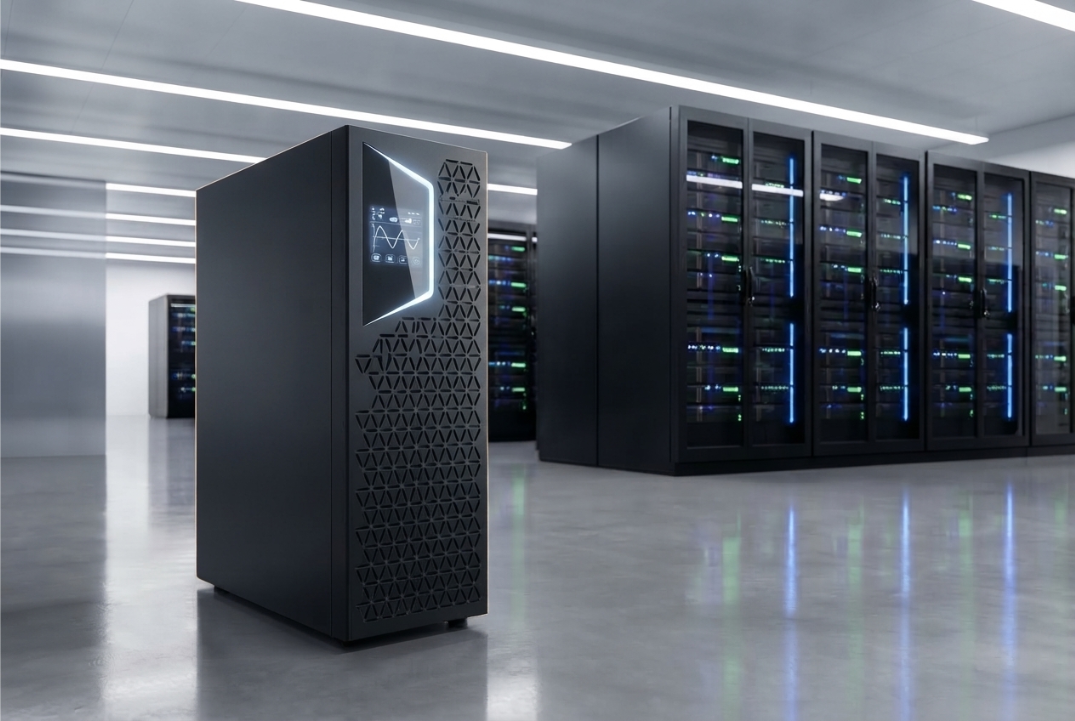
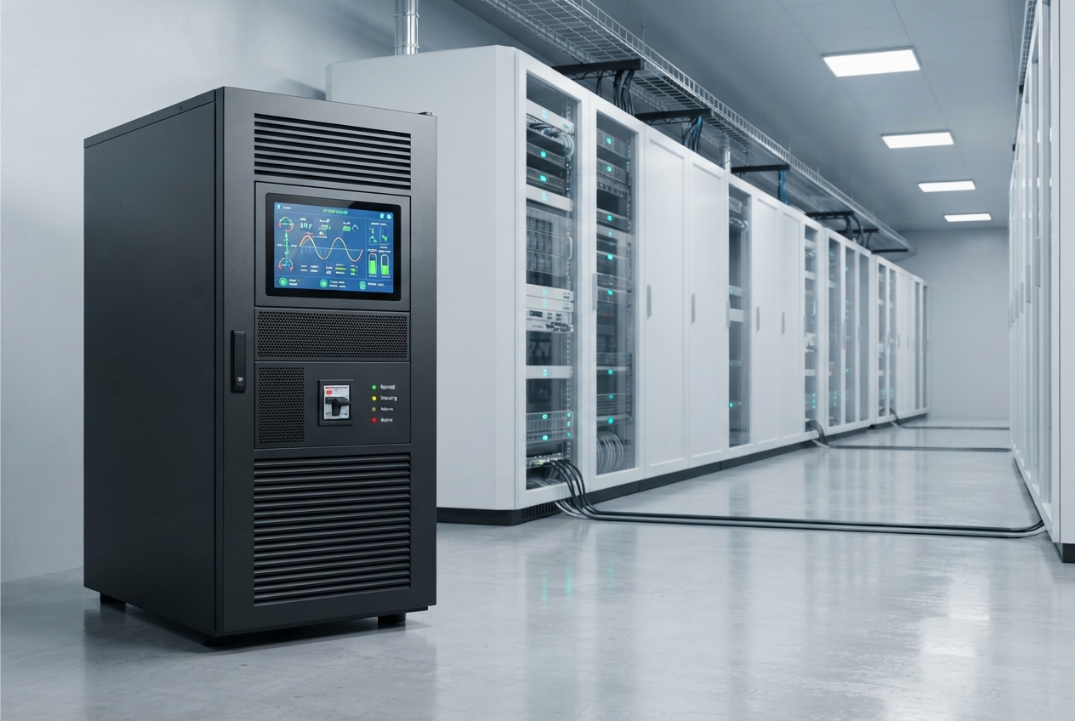
Reliable power is not optional for facilities that depend on servers, networking systems, industrial equipment, communication infrastructure, data centers, and other critical electrical loads. Even a short interruption or significant fluctuation in the power supply can affect equipment operation, interrupt processes, and potentially lead to downtime.
This is where a 3 Phase Online UPS becomes an important part of a critical power system.
A three-phase online UPS is designed to provide continuous and conditioned power to equipment connected to a three-phase electrical system. Unlike basic backup arrangements, an online UPS continuously manages the incoming electrical supply and maintains a controlled output for the connected load.
But what exactly is a 3 Phase Online UPS?
How does it operate?
Why is three-phase power important?
What is the difference between UPS capacity and battery backup time?
And what should businesses understand before selecting one?
This guide explains the fundamentals of a 3 Phase Online UPS and covers seven important points that can help businesses understand the technology, applications, sizing considerations, and long-term requirements.
For organizations looking for dedicated power-protection solutions, Bansal Hi-Tech provides three-phase online UPS solutions for different applications and capacity requirements.
What Is a 3 Phase Online UPS?
A 3 Phase Online UPS is an uninterruptible power supply designed to protect critical equipment operating on a three-phase electrical system.
The primary purpose of the UPS is to maintain a reliable power supply to connected equipment when the incoming electrical supply experiences an interruption or unacceptable variation within the system’s operating range.
An online UPS continuously processes the incoming electrical power before supplying it to the connected load. This operating principle allows the system to provide a regulated and controlled output rather than simply relying on the incoming utility supply.
A typical online UPS system consists of several important functional sections, including:
- Input power section
- Rectification and charging section
- Energy storage system
- Output power section
- Static bypass
- Monitoring and control system
- Protection and switching components
The battery system stores energy that can be used when the normal incoming supply is unavailable.
The complete system is designed to work together so that critical equipment can continue operating during a power interruption, subject to the UPS capacity and available battery autonomy.
How Does a 3 Phase Online UPS Work?
Understanding the basic operating sequence makes the technology much easier to understand.
Step 1: Incoming Three-Phase Power
The UPS receives electrical power from the facility’s three-phase supply.
The system continuously monitors the incoming electrical conditions according to its design specifications.
These conditions can include:
- Voltage
- Frequency
- Phase condition
- Current
- Input power quality
If the incoming supply remains within the acceptable operating range, the UPS continues normal operation.
Step 2: Power Conditioning
The UPS processes the incoming electrical power before delivering it to the protected load.
This allows the system to provide a controlled output and helps protect connected equipment from specified input disturbances.
The exact level of regulation, filtering, harmonic performance, and protection depends on the particular UPS model.
Therefore, businesses should always examine the technical specifications of the individual system rather than assuming that every online UPS provides identical performance.
Step 3: Battery Charging and Energy Storage
While the normal power supply is available, the UPS maintains the battery system in a charged condition.
The battery is the stored-energy source used during an interruption.
The required battery configuration depends on factors such as:
- UPS capacity
- Required backup duration
- Connected load
- Battery technology
- Installation conditions
- Required autonomy
Battery selection should therefore be treated as an important part of UPS planning rather than as an afterthought.
Step 4: Continuous Supply to the Critical Load
The online UPS continuously supplies the connected critical equipment according to its operating architecture.
If the incoming power supply becomes unavailable or moves outside the acceptable operating conditions, the UPS uses stored battery energy to maintain the output supply.
The transition is designed to keep the critical load powered without relying on a conventional manual changeover.
The actual performance depends on the UPS design, configuration, load, and operating conditions.
7 Things to Know About a 3 Phase Online UPS
1. Three-Phase Configuration Is Designed for Higher-Power Electrical Systems
The first thing to understand is that three-phase refers to the electrical configuration of the system.
It does not automatically indicate a particular capacity.
Three-phase power is widely used in:
- Industrial facilities
- Data centers
- Manufacturing plants
- Large commercial buildings
- IT infrastructure
- Telecommunications facilities
- Critical infrastructure
A three-phase UPS can therefore be integrated into facilities where the electrical distribution and critical loads are designed around three-phase power.
However, simply choosing a three-phase UPS does not guarantee compatibility.
The input and output characteristics must match the facility’s electrical infrastructure.
Bansal Hi-Tech’s IT infrastructure solutions provide relevant context for organizations where power protection forms part of a wider technology infrastructure.
2. Online Operation Provides Continuous Power Protection
The defining characteristic of an online UPS is its operating method.
The connected critical load is continuously supplied through the UPS’s controlled power path.
This means the system is designed to manage the incoming power and maintain the required output for connected equipment.
The benefits can include protection against specified electrical disturbances such as:
- Voltage fluctuations
- Frequency variations
- Electrical interruptions
- Certain forms of electrical noise
- Other input disturbances within the system’s specified operating range
The exact protection capabilities vary between models.
For this reason, businesses should compare actual technical specifications rather than relying only on the general term “online UPS.”
3. Battery Backup and UPS Capacity Are Different Things
This is one of the most important concepts for anyone evaluating a UPS.
UPS capacity tells you how much electrical load the system is designed to support.
Battery autonomy tells you how long the battery system can support the required load during an interruption.
These are not the same specification.
For example, two UPS systems could have similar power ratings but different battery configurations.
Their backup durations could therefore be completely different.
Battery runtime is affected by:
- Actual connected load
- Battery capacity
- Number of batteries
- Battery voltage
- Battery condition
- Battery technology
- Operating temperature
- UPS efficiency
A business should therefore determine both its power requirement and its required backup duration before finalizing a UPS configuration.
4. Both kVA and kW Should Be Considered
UPS systems are commonly specified using kVA, while electrical equipment is also frequently described in terms of kW.
These measurements are related but they are not identical.
The relationship can be represented as:
kW = kVA × Power Factor
For example, if a system has a 100 kVA rating and a power factor of 0.9:
100 × 0.9 = 90 kW
This is why selecting a UPS purely by its kVA number can be misleading.
A proper sizing exercise should consider:
- Total connected load
- Critical load
- Current operating load
- Maximum expected load
- Power factor
- Future expansion
- Required operating margin
Bansal Hi-Tech offers different three-phase UPS systems for different capacity requirements. For example, the HPI 33 EVO 10–40 kW Three Phase UPS falls within a defined power range.
The appropriate model should always be selected according to the actual application.
5. Bypass Operation Is an Important Part of a UPS System
A UPS is not designed only for power outages.
Maintenance and abnormal operating conditions also need to be considered.
A bypass arrangement can provide an alternative power path under specified operating conditions.
Depending on the system design, bypass operation can be relevant during:
- UPS maintenance
- Certain overload conditions
- UPS faults
- Commissioning
- Servicing
The exact bypass architecture differs between UPS models.
Businesses should therefore understand:
- Whether static bypass is available
- How bypass operation works
- What conditions can initiate bypass
- Whether maintenance bypass is provided
- How the critical load is affected during bypass operation
Bypass functionality is particularly important for critical facilities where planned maintenance should not unnecessarily interrupt the connected load.
6. Efficiency and Scalability Affect the Total Cost of Ownership
The purchase price is only one part of the cost of operating a UPS.
A UPS continuously handles electrical power, so efficiency can affect energy consumption and heat generation.
When comparing systems, businesses should examine efficiency at the load levels they actually expect to operate.
A system that performs efficiently at one operating point may not provide exactly the same efficiency at another load level.
Scalability is also important
Power requirements can increase as a facility grows.
A data center may add servers.
A manufacturing plant may add production equipment.
An organization may expand its IT infrastructure.
A UPS that can accommodate future requirements can potentially reduce the need for a complete replacement.
Bansal Hi-Tech’s Easy UPS 3 Phase Modular 50–250 kW is an example of a modular three-phase UPS solution that can be considered when scalability is an important requirement.
The right choice depends on the facility’s present and projected electrical demand.
7. Maintenance Is Essential for Long-Term Reliability
A UPS is a critical electrical system, not a device that can simply be installed and ignored.
Its batteries, electrical connections, cooling arrangements, monitoring systems, and other components require appropriate inspection and maintenance.
A maintenance program may include:
- Battery condition checks
- Electrical connection inspection
- Alarm verification
- Cooling-system inspection
- Operating parameter checks
- Battery testing
- Preventive servicing
- Replacement of ageing components
Battery maintenance deserves particular attention because battery degradation can reduce the available backup duration even when the UPS itself appears to be operating normally.
Organizations should also consider the availability of technical assistance and servicing when selecting a supplier.
Bansal Hi-Tech provides client support for organizations requiring assistance with their technology and infrastructure requirements.
Where Are 3 Phase Online UPS Systems Used?
A three-phase online UPS can be relevant in many environments where electrical continuity is important.
Data Centers
Data centers operate large quantities of servers, storage systems, network equipment, cooling infrastructure, and other critical systems.
A power interruption can affect multiple systems simultaneously.
This makes power protection an important part of data-center planning.
Bansal Hi-Tech also provides data center solutions for infrastructure requirements.
Manufacturing Facilities
Manufacturing operations can depend on automation systems, industrial controls, electronic monitoring, and production equipment.
Unexpected power interruptions can affect production processes and may require equipment to be restarted or processes to be repeated.
A suitable UPS configuration can help maintain power continuity for selected critical loads.
Bansal Hi-Tech’s manufacturing industry solutions provide additional infrastructure context for this sector.
IT and ITES
IT environments can contain servers, storage systems, networking equipment, communication systems, and other electronic infrastructure.
Power instability can affect these systems and potentially result in downtime.
Bansal Hi-Tech provides IT & ITES solutions for organizations operating in this environment.
Telecommunications
Telecommunications infrastructure depends heavily on electrical continuity.
A properly designed UPS system can form part of the overall power-protection strategy for communication equipment.
Large Commercial Facilities
Large offices, commercial facilities, and institutions can also require three-phase UPS systems where critical electrical loads need protected power.
The appropriate capacity and configuration depend entirely on the facility’s electrical requirements.
How Do You Determine the Right UPS Capacity?
Selecting a UPS should begin with the load rather than the product catalogue.
Start by identifying all equipment that actually requires protected power.
Then determine:
1. Current Load
Measure the present electrical demand.
2. Critical Load
Separate equipment that absolutely requires UPS protection from non-critical equipment.
3. Maximum Load
Consider the highest expected operating demand.
4. Future Growth
Account for planned expansion.
5. Power Factor
Check the characteristics of the connected equipment and UPS.
6. Required Headroom
Avoid designing the UPS to operate continuously at its absolute limit.
This approach gives a more realistic basis for selecting UPS capacity.
What Determines Battery Backup Time?
Backup time cannot be determined from UPS capacity alone.
Consider a simplified example.
A facility may have a UPS capable of supporting a particular load, but the battery configuration can be designed for different autonomy requirements.
One installation might require only a few minutes to allow equipment to shut down safely.
Another may need substantially longer runtime while standby power is restored.
Therefore, the battery system should be designed around the required operating objective.
Important factors include:
- Critical load
- Required runtime
- Battery capacity
- Battery age
- Battery temperature
- UPS efficiency
- Battery configuration
The required runtime should be specified before finalizing the battery arrangement.
What Happens During a Complete Power Failure?
When the normal electrical supply becomes unavailable, the UPS detects the interruption according to its control and monitoring system.
The battery system then provides stored energy to maintain the UPS output.
The connected critical equipment continues receiving power for as long as the available battery autonomy permits.
If a generator or other standby power source is part of the facility’s electrical design, the UPS can form part of a broader power-continuity strategy.
When the normal or standby supply becomes available again, the UPS returns to the applicable operating condition and the battery can be recharged.
The exact sequence depends on the UPS configuration and the wider electrical system.
What Should You Look for in a 3 Phase Online UPS?
Before selecting a system, evaluate the following:
Electrical Compatibility
- Input voltage
- Output voltage
- Frequency
- Phase configuration
- Earthing requirements
- Distribution arrangement
Capacity
- kVA
- kW
- Power factor
- Current load
- Future load
Battery
- Required autonomy
- Battery technology
- Battery capacity
- Battery configuration
- Replacement requirements
Performance
- Efficiency
- Output regulation
- Input power factor
- Harmonic performance
- Overload capability
Availability
- Bypass
- Monitoring
- Redundancy
- Scalability
- Maintenance support
For larger capacity requirements, Bansal Hi-Tech also lists the KEOR HPE 60–500 kW Three Phase UPS.
The objective should not be to choose the biggest system available. It should be to select a system that properly matches the facility’s electrical requirements.
3 Phase Online UPS vs. Basic Power Backup
A three-phase online UPS is intended for applications where power continuity and electrical protection are important.
A basic backup arrangement may primarily focus on keeping equipment powered during an outage.
An online UPS provides a broader power-protection architecture, including continuous power management, battery-backed operation, monitoring, protection features, and controlled output.
The appropriate solution depends on the criticality of the load.
For example:
- A basic office device may not require a large three-phase UPS.
- A server environment may require dedicated power protection.
- A manufacturing process may require carefully coordinated three-phase power protection.
- A data center may require a more complex power architecture involving redundancy and standby generation.
The UPS should therefore be selected based on the consequences of power interruption and the characteristics of the protected equipment.
Why Proper Installation Matters
Even a technically suitable UPS can perform poorly if the installation is not properly designed.
Installation planning should consider:
- Electrical connections
- Cable sizing
- Earthing
- Ventilation
- Ambient temperature
- Battery placement
- Distribution
- Bypass arrangements
- Maintenance access
- Safety requirements
The physical environment matters as well.
A UPS installed in an unsuitable temperature or ventilation environment may experience reduced component life or performance problems.
This is why UPS installation should be treated as an engineering requirement rather than simply positioning the equipment and connecting cables.
Final Takeaway
A 3 Phase Online UPS is a power-protection system designed for facilities where reliable electrical supply is critical.
Its purpose goes beyond simply providing backup during a power cut.
It can provide continuous power management, controlled output, battery-backed operation, monitoring, and protection features according to its design.
The seven most important things to remember are:
- Three-phase refers to the electrical configuration of the UPS.
- Online operation continuously manages the power supplied to the critical load.
- Battery autonomy and UPS capacity are two different requirements.
- Both kVA and kW must be considered during UPS sizing.
- Bypass functionality is important for maintenance and certain abnormal conditions.
- Efficiency and scalability affect long-term operating costs and future expansion.
- Battery maintenance and regular servicing are essential for dependable operation.
The correct UPS should therefore be selected by evaluating the complete requirement rather than looking at capacity alone.
Consider the load, electrical configuration, required autonomy, future expansion, operating environment, maintenance requirements, and availability objectives before making the final decision.
Bansal Hi-Tech’s three-phase online UPS range can be evaluated according to these requirements to identify a suitable power-protection solution.
Frequently Asked Questions
1. What is a 3 Phase Online UPS?
A 3 Phase Online UPS is an uninterruptible power supply designed to provide continuous and protected power to equipment connected to a three-phase electrical system.
2. How does a 3 Phase Online UPS work?
It continuously manages the incoming electrical supply and provides a controlled output to the connected load. During an interruption, stored battery energy maintains the output for the available autonomy period.
3. Why is an online UPS different from basic backup equipment?
An online UPS continuously manages the power supplied to the critical load and provides additional power-protection functions rather than only responding when an outage occurs.
4. Does a higher UPS capacity mean longer backup?
No. UPS capacity determines the load the system can support, while battery configuration largely determines available backup duration in combination with load and other operating factors.
5. What is UPS autonomy?
UPS autonomy is the amount of time the UPS can continue supporting the connected load using its available stored battery energy under specified operating conditions.
6. Why are kVA and kW both important?
kVA represents apparent power, while kW represents real power. The relationship between them depends on power factor, so both values should be considered when evaluating UPS capacity.
7. Where are 3 Phase Online UPS systems commonly used?
They can be used in data centers, manufacturing facilities, IT and ITES environments, telecommunications, and large commercial or critical infrastructure installations.
8. What factors affect UPS battery runtime?
Battery capacity, connected load, battery condition, battery technology, temperature, UPS efficiency, and the overall battery configuration can affect runtime.
9. Why is UPS maintenance necessary?
Maintenance helps identify battery degradation, electrical issues, cooling problems, alarms, and other conditions that could affect UPS availability and performance.
10. How should I select a 3 Phase Online UPS?
Start by calculating the critical load and required autonomy. Then evaluate electrical compatibility, kVA/kW capacity, battery requirements, efficiency, bypass, scalability, monitoring, installation conditions, and service support.