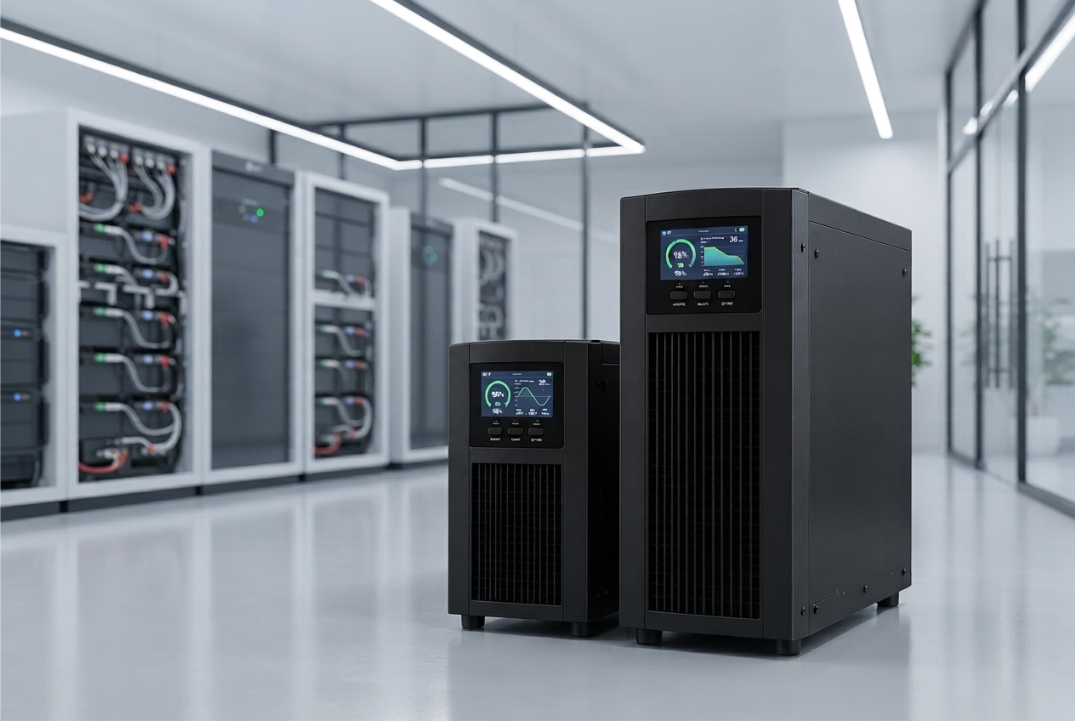
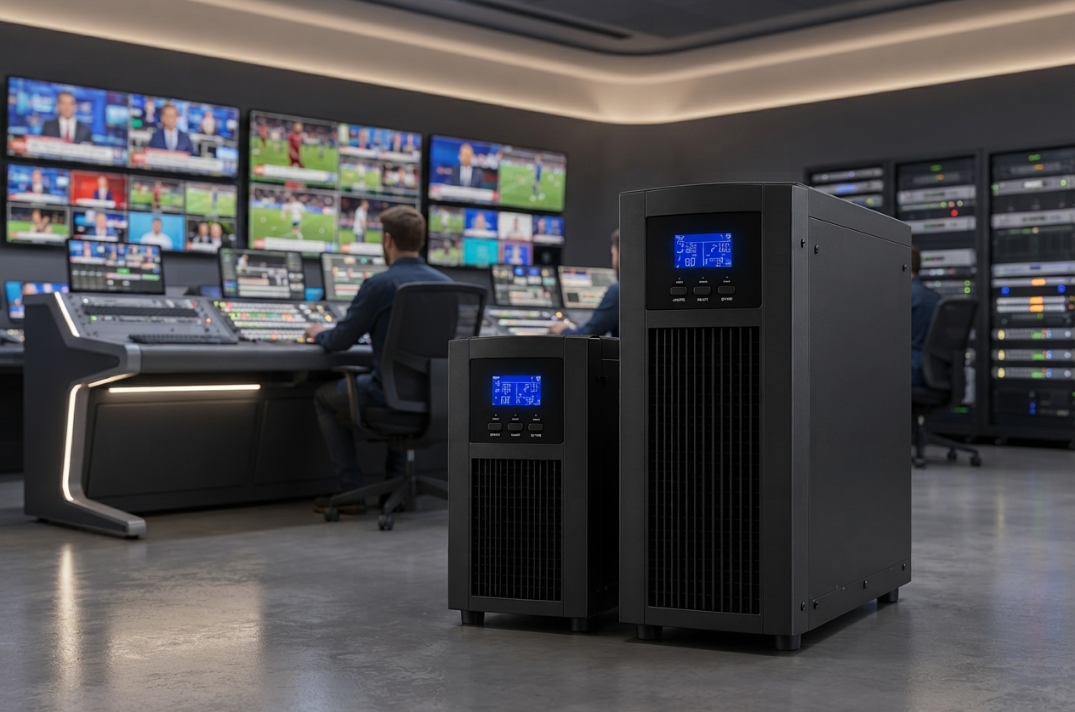
The media and broadcasting industry depends on uninterrupted power to produce, process, store, and transmit audio and video content. Television studios, radio stations, production houses, newsrooms, and broadcast facilities use interconnected electronic systems to manage live programmes, edit footage, control transmission equipment, and deliver content to audiences.
However, power interruptions, voltage fluctuations, and electrical disturbances can disrupt these activities. Even a brief outage may interrupt a live production, stop a video server, affect recording equipment, or disconnect essential communication systems.
A 3 Phase Online UPS in the Media & Broadcasting Industry helps protect critical electronic equipment by providing a stable power supply and backup power during interruptions. When correctly designed, it can support essential studio systems, production servers, networking equipment, and selected broadcast infrastructure.
In this article, we explore 10 important applications of a three-phase online UPS and explain how it can help media organisations improve power reliability and operational continuity.
What Is a 3 Phase Online UPS in Media and Broadcasting?
A three-phase online uninterruptible power supply (UPS) is a power protection system designed for compatible electrical loads that require three-phase power. In an online UPS, the connected load normally receives power through the UPS’s conversion stages. This helps isolate supported equipment from many incoming power disturbances.
Media and broadcasting facilities may use three-phase UPS systems to protect groups of critical electronic loads, particularly where several production, IT, and communication systems operate together.
These systems do not automatically power every device in a broadcast facility. Large air-conditioning units, studio lighting installations, elevators, and other high-power loads may require separate electrical arrangements. The UPS must be sized according to the equipment it is intended to protect.
Businesses can explore three-phase online UPS solutions to understand the options available for different power protection requirements.
1. Maintains Continuity in Television and Radio Studios
Television and radio studios rely on electronic equipment to produce programmes, manage audio, switch video sources, and coordinate live broadcasts. Production control desks, audio consoles, video processors, monitoring displays, and studio computers may all require a stable power supply.
A sudden power failure can interrupt a recording or disrupt a live programme. Depending on the equipment involved, staff may also need time to restore settings and restart production systems.
A properly sized three-phase online UPS can support selected critical studio electronics. This helps maintain their operation during short power interruptions and provides time for an orderly shutdown if the outage continues.
For example, a television studio may prioritise its production control equipment, audio processing systems, and essential network devices rather than connecting every electrical load to the same UPS.
The exact configuration depends on the studio’s power requirements and continuity objectives. Reviewing suitable online UPS systems can help facilities begin their power protection assessment.
2. Protects Live Broadcasting and Production Control Rooms
Live broadcasting leaves little room for unexpected equipment downtime. News programmes, sports coverage, interviews, and special events depend on coordinated production systems that process signals and manage programme output in real time.
Production control rooms may contain video switchers, signal converters, graphics workstations, monitoring systems, intercom equipment, and other critical electronics. If these devices lose power, the production team may lose visibility or control over parts of the broadcast workflow.
A three-phase online UPS can support selected control room equipment and help maintain a stable supply during electrical disturbances. This is particularly relevant when several interconnected systems need coordinated backup.
However, power continuity depends on the entire signal chain. Protecting a control console alone will not prevent a broadcast interruption if an unprotected camera, remote contribution link, or downstream transmission device loses power.
Broadcast engineers should therefore identify critical signal paths and prioritise the devices whose failure would have the greatest operational impact.
For facilities evaluating different capacities, the HPI 33 EVO three-phase UPS is one product range that may be assessed against the site’s actual load and technical requirements.
3. Supports Broadcast Transmission and Signal Processing Equipment
Broadcast transmission infrastructure helps deliver audio and video signals to their intended destinations. Depending on the facility, the equipment may include signal processors, encoders, multiplexing systems, monitoring units, and associated control electronics.
Power disturbances can interrupt signal processing or cause equipment to restart. Such interruptions may affect programme delivery and require technical teams to investigate the source of the problem.
A suitably configured UPS can provide backup power to compatible signal processing and control equipment. It can also support selected electronic devices involved in the preparation and monitoring of broadcast signals.
The design must reflect the facility’s actual architecture. High-power radio-frequency transmission amplifiers and other specialised transmission equipment may have different electrical requirements from conventional IT and studio electronics. They should not be connected to a UPS without confirming compatibility, load characteristics, and manufacturer specifications.
Broadcast operators should distinguish between the critical signal-processing electronics and the main transmission power loads before deciding on a UPS configuration.
4. Protects Video Servers and Media Storage Systems
Modern media facilities create and manage large volumes of digital content. Video servers, network-attached storage, media asset management platforms, and editing storage systems may hold raw footage, finished programmes, graphics, and archived material.
An unexpected power interruption can stop file transfers, interrupt active workflows, or increase the risk of data corruption in certain circumstances. It may also make important media temporarily unavailable to editors and production teams.
A three-phase online UPS can support selected servers, storage systems, and related network equipment. Depending on the load and battery capacity, it may allow operations to continue briefly or provide time for a controlled shutdown.
However, a UPS is not a substitute for backups, redundant storage, or a disaster recovery plan. Media organisations should combine power protection with appropriate data replication, backup schedules, access controls, and recovery procedures.
Facilities with substantial server and storage requirements can assess data centre solutions as part of their wider infrastructure planning.
5. Keeps Video Editing and Post-Production Workstations Operational
Post-production teams use powerful computers and specialised software to edit video, mix audio, create visual effects, render projects, and prepare content for distribution. These workflows may involve large files and time-consuming processing tasks.
A sudden shutdown can interrupt an editing session or stop a rendering job. Depending on the software and file state, it may also result in lost unsaved work or require project recovery.
A UPS can protect selected editing workstations, media storage devices, network switches, and other compatible equipment. This provides backup power during short interruptions and may give users time to save their work or shut down their systems properly.
The required capacity depends on the number of workstations and their combined power consumption. High-performance computers with graphics processors can draw substantial power, so facilities should calculate their actual loads instead of estimating capacity from the number of computers alone.
Media organisations should also assess whether their UPS needs to protect individual workstations, shared storage, or the central infrastructure supporting the post-production workflow.
6. Supports Newsroom Systems and Digital Publishing Operations
Newsrooms operate under tight deadlines. Journalists, editors, producers, and digital publishing teams depend on computers, shared content platforms, newsroom management software, communication systems, and internet connectivity to prepare and distribute information.
A power failure can interrupt content preparation, delay internal coordination, or make important files temporarily inaccessible. During breaking news, these interruptions can create additional pressure on editorial teams.
A three-phase online UPS can support selected newsroom servers, network equipment, shared workstations, and other essential IT systems. It helps maintain power to supported equipment during short outages and can reduce avoidable interruptions to digital workflows.
The network connection itself must also remain available. If internet routers, access equipment, or remote communication devices are not protected, newsroom systems may still lose connectivity even when their central servers continue running.
Facilities can assess their wider networking and IT infrastructure to identify the equipment that needs backup power and the network dependencies that affect newsroom operations.
7. Protects Audio Mixing, Recording, and Processing Systems
Audio production involves mixing consoles, digital audio workstations, processors, recording systems, monitoring equipment, and connected computers. These systems are used in radio stations, recording studios, dubbing facilities, podcast production rooms, and television studios.
Unexpected power loss may interrupt recording sessions, stop processing tasks, or disrupt the equipment used to manage sound during a programme. In a live environment, even a short interruption can affect the production workflow.
A properly designed UPS can support selected audio processing systems, recording computers, and related electronic equipment. This helps maintain their power supply during brief electrical interruptions.
Nevertheless, the complete audio chain must be considered. Microphones, powered speakers, audio interfaces, networked audio devices, and other connected equipment may have separate power requirements. Protecting only the central workstation may not keep the entire recording setup operational.
Media engineers should calculate the load for each critical group of devices and define how long each group must remain available during a power failure.
8. Maintains Broadcast Networking and Communication Systems
Broadcast facilities depend on communication networks to move audio and video files, connect production departments, manage IP-based workflows, and coordinate equipment across studios and technical rooms.
Network switches, routers, communication servers, and monitoring systems may form part of this infrastructure. If these devices lose power, media teams may experience interrupted file transfers, disconnected systems, or reduced visibility into network performance.
A three-phase online UPS can support suitable groups of networking equipment, particularly where several devices are installed in a central technical room. It can help maintain power to critical connections during a supply interruption.
However, network resilience also depends on network design, redundant connections, protected remote devices, and the availability of external services. A UPS cannot independently prevent failures caused by damaged cables, software issues, or an internet service outage.
Facilities should assess the complete network path, including switches, routers, servers, and remote technical equipment, to determine where backup power is most valuable.
9. Supports Broadcast Graphics, Automation, and Playout Systems
Many television and radio operations use automation to schedule content, manage playlists, display graphics, and coordinate programme output. These systems may include playout servers, graphics workstations, automation controllers, and monitoring interfaces.
A power interruption can affect scheduled operations or require technical staff to restart equipment and verify system status. The operational impact depends on the automation design and the level of redundancy available.
A three-phase online UPS can protect selected automation servers, graphics systems, control workstations, and related electronics. This helps maintain power during short disturbances and may support a controlled transition to another operating arrangement when necessary.
Facilities should also consider redundant playout servers, backup content paths, and failover procedures where uninterrupted output is important. UPS protection complements these measures but does not replace them.
For systems with specific capacity and configuration requirements, the Keor T EVO three-phase UPS can be evaluated alongside other suitable products. Confirm the product’s current specifications and compatibility before selection.
10. Improves Operational Continuity and Planned Maintenance
Media and broadcasting facilities often operate on fixed schedules, and some provide continuous services. Unexpected downtime can delay production, interrupt transmission, or require technical staff to perform urgent recovery work.
A well-planned UPS installation can reduce the effect of certain power interruptions on critical equipment. It can also support a more structured maintenance approach when the system is selected with the facility’s availability requirements in mind.
Some facilities may benefit from modular designs, suitable bypass arrangements, or redundant configurations. The right approach depends on the criticality of the load, maintenance procedures, installation conditions, and available budget.
For example, the Easy UPS 3-Phase Modular range may be worth evaluating where a modular approach matches the facility’s requirements. Modularity does not automatically guarantee uninterrupted maintenance; the specific configuration and redundancy design must support the intended outcome.
Media organisations should also establish a maintenance plan covering battery condition, system alarms, ventilation, inspections, and functional testing. These measures help identify potential problems before they affect important production systems.
How to Choose the Right 3 Phase Online UPS for Media and Broadcasting
Selecting a UPS requires a clear understanding of the facility’s technical architecture and operational priorities. A system that suits a small production studio may not meet the requirements of a large broadcast centre.
Consider these factors before making a decision.
1. Identify Critical Equipment
List the systems that must remain operational during a power interruption. These may include production control equipment, video servers, networking devices, editing storage, newsroom applications, and selected audio or transmission electronics.
Separate essential loads from equipment that can safely shut down. This makes capacity planning more accurate and helps avoid connecting unnecessary loads to the UPS.
2. Calculate the Required Capacity
Determine the actual power consumption of the equipment that needs backup. Consider power factor, startup characteristics, expected load growth, and manufacturer recommendations.
Do not assume that every device in a broadcast facility should run from one UPS. Large studio lighting systems, cooling equipment, and specialised transmission loads may require separate engineering.
3. Define Backup Runtime
Decide whether the UPS must support equipment through brief interruptions, maintain critical systems during a generator transfer, or provide time for a controlled shutdown.
Runtime depends on the connected load, battery capacity, battery condition, temperature, and system configuration. Use verified specifications and a qualified load assessment rather than assuming a standard backup duration.
4. Assess Redundancy Requirements
Some facilities can tolerate a short interruption, while others need a more resilient arrangement. Assess whether critical systems require redundant UPS modules, bypass arrangements, backup servers, or alternative signal paths.
Redundancy should be designed around the operational risks of the facility. Simply installing a larger UPS does not eliminate every single point of failure.
5. Check Installation and Environmental Conditions
Technical rooms may have limited space and specific cooling requirements. Check ventilation, ambient temperature, equipment dimensions, cable routing, battery placement, and access for maintenance.
The installation should also meet applicable electrical safety requirements and the manufacturer’s recommendations.
6. Plan Maintenance and Technical Support
Battery inspections, alarm reviews, system testing, and preventive maintenance help keep the installation reliable. Facilities operating continuously should define how maintenance will take place without creating unacceptable risks to production or transmission.
Organisations considering different configurations can compare suitable systems such as the Galaxy VS three-phase UPS against their load profile and installation requirements.
Businesses that need temporary backup during a studio upgrade or infrastructure project may also explore online UPS rental services, subject to availability and technical suitability.
Conclusion
A 3 Phase Online UPS in the Media & Broadcasting Industry can support essential studio electronics, live production control rooms, video servers, editing systems, newsroom infrastructure, audio processing, and broadcast networking equipment. By maintaining power to selected critical loads, it can help media organisations reduce avoidable interruptions and improve operational continuity.
However, effective power protection requires careful planning. Facilities should identify critical equipment, calculate actual electrical loads, define backup duration, evaluate redundancy, and establish regular maintenance procedures.
Bansal Hi-Tech can be considered when evaluating three-phase UPS options for suitable media and broadcasting applications. Before selecting a system, confirm product specifications and obtain a technical assessment to ensure that the solution meets the facility’s power and operational requirements.