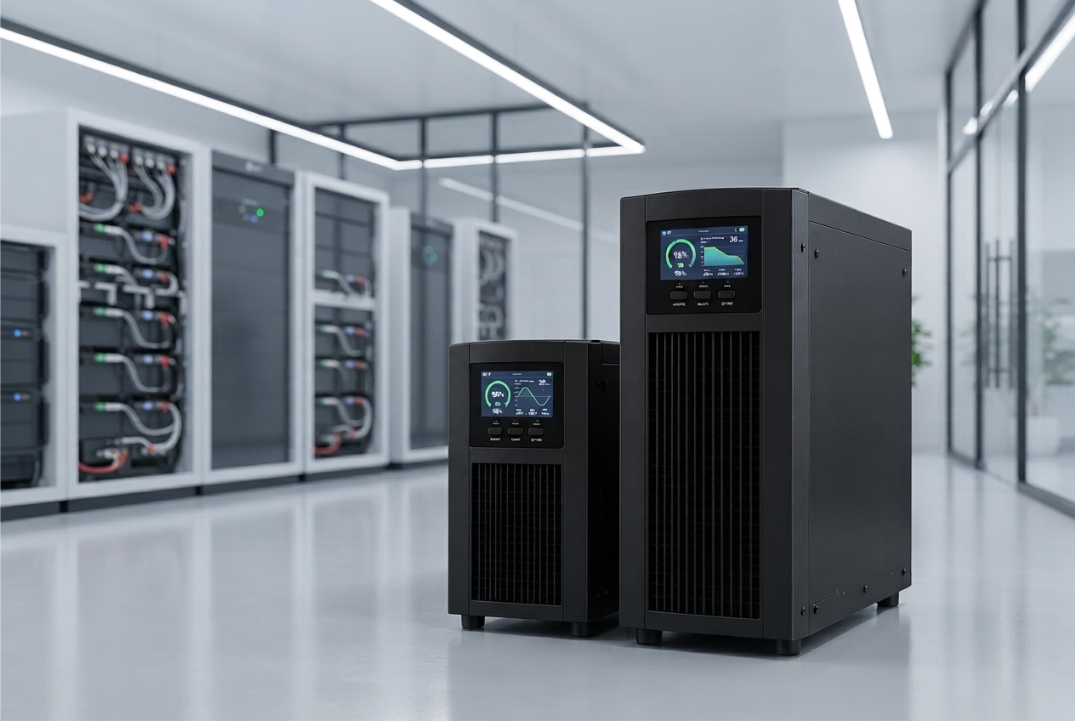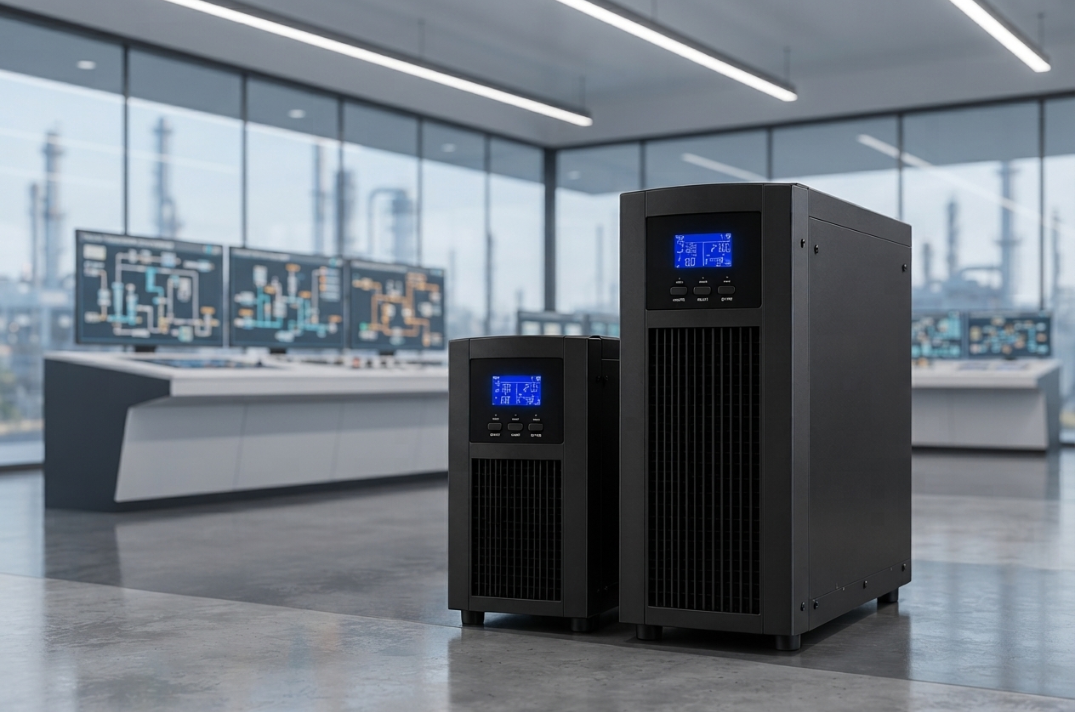
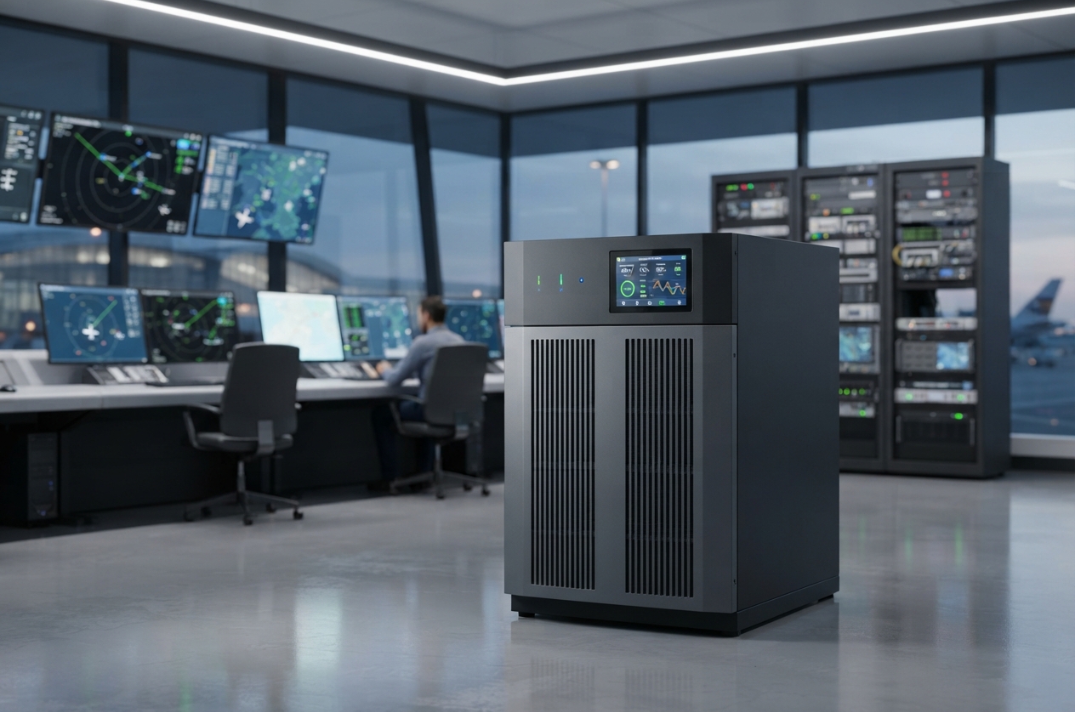
The aviation industry depends on reliable power to maintain airport operations, protect critical electronic equipment, and support passenger services. A 3 Phase Online UPS for Aviation helps protect selected airport IT systems, communication equipment, security infrastructure, and operational control electronics from power interruptions. With the right configuration, aviation facilities can maintain essential functions during short outages and reduce avoidable equipment disruptions.
Airports use interconnected systems to manage passenger information, baggage handling, communication, surveillance, and operational data. However, voltage fluctuations and unexpected power failures can interrupt these activities. Therefore, reliable power protection is an important part of airport infrastructure planning.
In this guide, we explain seven benefits of a three-phase online UPS for aviation, its key applications, and the factors airport operators should consider when selecting a suitable system.
What Is a 3 Phase Online UPS for Aviation?
A three-phase online uninterruptible power supply (UPS) is designed to provide conditioned power and battery backup to compatible electrical loads. Its power-conversion process helps protect connected equipment from many incoming power disturbances.
A 3 Phase Online UPS for Aviation may support selected servers, communication systems, control workstations, monitoring equipment, and other critical electronics. The required capacity depends on the connected load, backup duration, and operational importance of each system.
However, a UPS does not automatically power an entire airport. Runway lighting, large HVAC equipment, aircraft systems, and high-power ground machinery may require separate electrical arrangements and specialised engineering.
Airport operators can review three-phase online UPS solutions to understand the available options for suitable power protection applications.
1. Improves Reliability for Critical Airport Systems
Airports depend on interconnected electronic systems to coordinate passenger movement, security, ground operations, and internal communication. These systems may include operational workstations, monitoring devices, controllers, and dedicated IT equipment.
A sudden power failure can interrupt access to important information or force staff to restart affected equipment. Consequently, reliable backup power can help reduce avoidable disruptions.
A properly sized three-phase online UPS can support selected critical loads during short power interruptions. It may also provide time for an orderly shutdown if the outage continues.
For example, airport operators can prioritise essential monitoring equipment and operational workstations instead of connecting every electrical load to the same UPS. This approach helps match the system capacity to actual operational needs.
Facilities evaluating their requirements can explore online UPS systems as part of their power protection planning.
2. Supports Air Traffic Control and Communication Infrastructure
Air traffic management depends on communication, monitoring, and information systems that help authorised personnel coordinate aircraft movements. Supporting infrastructure may include control workstations, communication servers, network devices, and monitoring electronics.
Power interruptions affecting these systems can create serious operational challenges. Therefore, critical aviation facilities require carefully engineered power protection arrangements.
A suitably designed UPS can support compatible electronic equipment within communication and control facilities. It helps maintain power to designated loads during disturbances and provides backup for a defined period.
However, safety-critical air traffic control, navigation, and surveillance systems must comply with applicable aviation standards and certification requirements. A general-purpose UPS should not be assumed suitable for these applications without technical approval.
For relevant regulatory context, consult the International Civil Aviation Organization (ICAO), which develops international standards and recommended practices for civil aviation.
3. Protects Airport IT Infrastructure and Data
Modern airports use IT infrastructure to manage passenger information, operational records, staff applications, databases, and internal communication. Servers and storage systems may support multiple departments simultaneously.
An unexpected shutdown can interrupt applications, stop active transactions, or increase the risk of data corruption in certain circumstances. It may also make important information temporarily unavailable.
A three-phase online UPS can support selected servers, storage equipment, network switches, and other critical IT loads. Depending on the load and battery capacity, it may keep systems running briefly or provide time for a controlled shutdown.
Nevertheless, UPS protection does not replace data backups, redundant servers, cybersecurity measures, or disaster recovery planning. Airports should combine power protection with appropriate IT resilience procedures.
For wider infrastructure planning, businesses can explore data centre solutions and identify which systems require dedicated backup power.
4. Helps Maintain Passenger Check-In and Information Systems
Passenger services rely on electronic systems for check-in, boarding information, flight updates, and coordination between airport departments. These systems may include workstations, servers, self-service kiosks, network switches, and passenger information displays.
A power interruption can disrupt access to these applications and delay routine passenger services. However, a UPS can help maintain power to supported equipment during short outages.
For example, an airport may prioritise check-in servers, selected workstations, and network equipment that support passenger processing. This can reduce interruptions while the main power supply is restored.
The complete system must be considered during planning. Protecting a server alone will not keep a kiosk running if its local power supply fails. Similarly, network availability depends on the routers, switches, and connections supporting the application.
Airport operators should identify critical passenger-facing systems and calculate the backup capacity required for each group of loads.
5. Supports Airport Security and Surveillance
Airport security infrastructure includes surveillance cameras, recording systems, access control equipment, monitoring workstations, and security servers. These systems help authorised personnel monitor designated areas and manage access to restricted locations.
If a power interruption affects essential security equipment, monitoring coverage or access management may be reduced. The impact depends on the equipment involved and the design of the security infrastructure.
A three-phase online UPS can support selected security servers, recording devices, network equipment, and control workstations. This helps maintain power to connected equipment during short interruptions.
However, the entire security chain must be considered. Cameras, access readers, and remote network cabinets also need suitable power arrangements. Protecting the central monitoring room alone will not guarantee that every field device remains operational.
Airport operators should prioritise security equipment according to operational risk and applicable safety requirements.
6. Supports Baggage Handling and Ground Operations Controls
Baggage handling facilities use conveyors, sorting systems, scanners, sensors, controllers, and monitoring applications to move luggage through airport operations. Ground handling teams also rely on digital systems to coordinate equipment and activities.
A power interruption can affect control electronics, interrupt system monitoring, or complicate recovery procedures. A UPS can support selected control equipment, industrial computers, network switches, and monitoring systems.
For example, an airport may prioritise programmable logic controllers (PLCs) and control workstations that monitor baggage handling processes. This can help maintain selected control functions during short interruptions.
However, a standard UPS should not be assumed capable of operating the entire baggage handling system. Conveyor motors, large mechanical equipment, and other high-power loads require separate assessment and appropriate electrical arrangements.
Facilities should identify which control functions need backup power and verify that the proposed system matches the equipment’s electrical requirements.
7. Supports Scalability and Planned Maintenance
Airport infrastructure changes as passenger volumes increase, terminals expand, and new digital services are introduced. These developments can increase demand for servers, networking equipment, security systems, and operational electronics.
A suitable three-phase online UPS can help protect critical loads as the infrastructure grows. Capacity planning should account for current demand, realistic future expansion, redundancy requirements, and battery runtime.
For larger installations, airport operators can evaluate the Keor HPE three-phase UPS range against their actual electrical requirements. The Keor T EVO three-phase UPS range may also be assessed for suitable applications.
Where a modular configuration is appropriate, the Easy UPS 3-Phase Modular range may be worth considering. However, modularity alone does not guarantee uninterrupted maintenance. The configuration must provide the required redundancy and operational availability.
Regular inspections, battery checks, alarm monitoring, and functional testing are equally important. A documented maintenance programme helps identify developing issues before they affect critical equipment.
How to Choose the Right 3 Phase Online UPS for Aviation
Selecting a 3 Phase Online UPS for Aviation requires a clear understanding of the facility’s equipment, operational priorities, and backup requirements.
Identify Critical Loads
List the systems that must remain operational during a power interruption. These may include selected servers, communication devices, monitoring equipment, control workstations, and security infrastructure.
Separate essential loads from equipment that can safely shut down. This makes capacity planning more accurate and prevents unnecessary loads from being connected to the UPS.
Calculate Capacity and Backup Runtime
Calculate the actual electrical demand of the equipment being protected. Consider power factor, load characteristics, future expansion, and manufacturer recommendations.
Next, establish the required backup duration. Runtime depends on the connected load, battery capacity, battery condition, ambient temperature, and UPS configuration.
Assess Redundancy Requirements
Some airport applications can tolerate a short interruption, while safety-critical systems may require highly resilient and redundant arrangements.
The design should reflect operational importance and applicable aviation requirements. A single UPS should not be assumed sufficient for every airport application.
Review Installation Conditions
Check the available installation space, ventilation, temperature, battery placement, cable routing, and maintenance access. The installation must comply with applicable electrical safety standards and manufacturer recommendations.
Plan Maintenance and Technical Support
Airport operators should establish procedures for battery inspection, alarm response, functional testing, and servicing. For temporary requirements during upgrades or maintenance projects, online UPS rental services may be worth evaluating, subject to availability and technical suitability.
Organisations assessing regional options can also review three-phase online UPS solutions in Gurgaon as part of their procurement research.
Frequently Asked Questions
1. Why is a 3 Phase Online UPS for Aviation important?
A three-phase online UPS can provide backup power and power conditioning for selected airport electronics, IT systems, communication equipment, and control infrastructure. It helps reduce power-related interruptions when correctly designed and installed.
2. Can a three-phase UPS power an entire airport?
No single standard UPS should be assumed capable of powering an entire airport. Airports contain diverse loads, including high-power mechanical systems, lighting, cooling equipment, and specialised aviation infrastructure. Each application requires appropriate electrical engineering.
3. Can a UPS support air traffic control equipment?
A suitably engineered UPS may support compatible equipment within an air traffic control facility. However, safety-critical systems must meet applicable certification, redundancy, and regulatory requirements. A general-purpose UPS should not be assumed suitable without technical approval.
4. How much backup time does an aviation UPS provide?
Backup time depends on the connected load, battery configuration, battery condition, ambient temperature, and system design. The required duration should be based on operational needs and verified manufacturer specifications.
5. How should an aviation UPS be maintained?
Maintenance frequency depends on the manufacturer’s recommendations, battery technology, installation conditions, and system criticality. Regular inspections, battery checks, alarm reviews, and functional testing should form part of a documented maintenance programme.
Conclusion
A 3 Phase Online UPS for Aviation can help protect critical airport IT infrastructure, passenger information systems, communication equipment, security devices, and selected operational control electronics. By maintaining power to designated loads during disturbances, it can support operational continuity and reduce avoidable equipment interruptions.
However, effective power protection requires more than choosing a suitable capacity rating. Airport operators must assess electrical loads, backup duration, redundancy, environmental conditions, and applicable aviation standards.
Bansal Hi-Tech can be considered when evaluating three-phase UPS options for suitable applications. Before selecting a system, confirm product specifications and obtain a qualified technical assessment to ensure the solution meets the facility’s electrical and operational requirements.