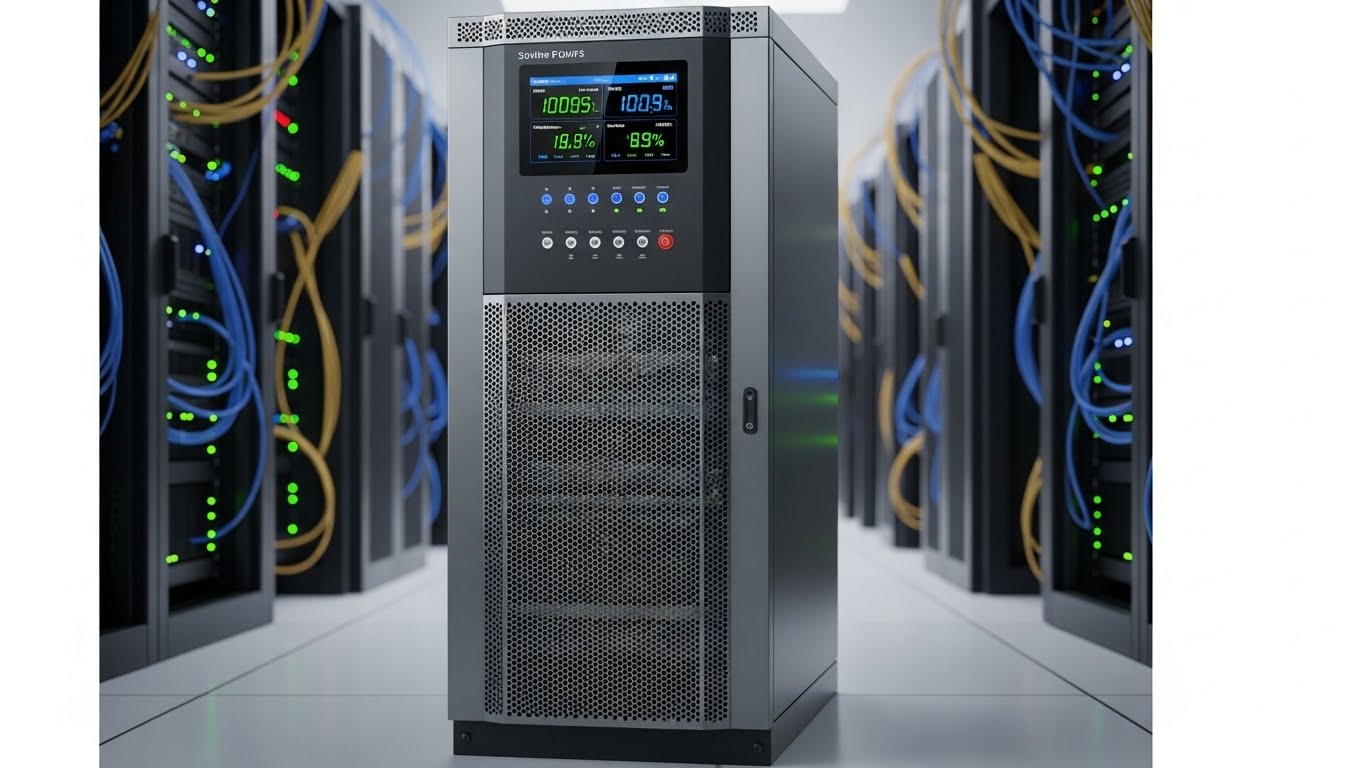
Small IT setups rely on stable power to keep workflows smooth. Even short power interruptions can stop operations, corrupt files, or damage devices. This is why many organisations choose Single Phase UPS for Small IT Infrastructure, as it offers efficient and reliable power protection. Its performance, simplicity, and cost-effectiveness make it ideal for offices, labs, retail units, and small server environments.
In this article, we explore 12 major advantages of Single Phase UPS, along with the tradeoffs, challenges, and key factors organisations should consider before making a decision.
1. Easy Installation for Quick Deployment
A major advantage of Single Phase UPS is its simple installation process.
It does not require complex wiring or advanced electrical configuration.
- Works with standard power outlets
- Allows quick setup even in small rooms
- Requires minimal technical expertise
Tradeoff:
It may not handle extremely high-capacity loads compared to three-phase UPS systems.
But for small IT infrastructure, its simplicity gives a clear advantage.
2. Cost-Effective Power Protection
Single Phase UPS systems usually cost less than three-phase models.
This makes them perfect for small companies that need reliable power backup without heavy investment.
- Lower purchase cost
- Reduced installation cost
- Less maintenance expense
Challenge:
While cost-effective, it still requires proper load assessment to avoid overload.
You can explore cost-friendly UPS options here:
https://bansalhitech.com/online-ups
3. Ideal for Workstations and Small Servers
Small IT environments usually have:
- A few computers
- Lightweight servers
- Wi-Fi routers
- Network switches
- POS devices
Single Phase UPS delivers stable backup for all these loads with ease.
Tradeoff:
It supports moderate power consumption, so large data centers may require three-phase systems.
4. High Energy Efficiency
Modern Single Phase UPS systems offer high operating efficiency.
Many models achieve 92% to 96% efficiency, helping reduce energy bills and heat output.
Benefits include:
- Lower electricity use
- Less stress on cooling systems
- Reduced carbon impact
Challenge:
Higher efficiency modes (like ECO mode) may react slower to sudden power failure.
So businesses must balance efficiency and protection.
5. Compact Size Saves Space
Space is always limited in small offices.
Single Phase UPS units come in small sizes and fit well in:
- Workstation areas
- Under desks
- Small IT racks
- Tight office corners
Advantage:
No need for separate UPS rooms or large battery cabinets.
6. Reliable Battery Backup for Critical Devices
Single Phase UPS systems provide smooth backup during outages.
They protect:
- Laptops and PCs
- Printers and scanners
- Modems and routers
- CCTV systems
- Small on-prem servers
Challenge:
Battery life depends on quality, temperature, and maintenance.
7. Smooth Voltage Regulation
Power fluctuations can damage IT hardware.
Single Phase UPS units stabilise voltage levels in real time.
They protect against:
- Overvoltage
- Undervoltage
- Spikes
- Surges
- Harmonic distortion
For additional protection, you may also check Servo Stabilizers:
https://bansalhitech.com/servo-stabilizer
8. Lower Heat Generation
Unlike large UPS systems that produce heavy heat, Single Phase UPS units generate minimal heat.
This reduces the need for:
- Extra cooling
- Air-conditioning load
- Ventilation support
This is especially helpful in small rooms or packed IT racks.
9. Easy Maintenance with Low Operational Cost
Routine maintenance for Single Phase UPS is easier and cheaper.
Maintenance tasks include:
- Battery check
- Dust cleaning
- Software updates
- Load inspection
Even small teams can handle maintenance with simple guidelines.
Challenge:
Battery replacement is still necessary every 3–5 years.
10. Supports Remote Monitoring
Many modern Single Phase UPS systems come with software for remote management.
You can monitor:
- Battery health
- Load levels
- Power events
- Runtime
- Temperature
This reduces downtime and ensures proactive troubleshooting.
11. Flexibility to Scale Small IT Setups
Small offices grow over time.
Single Phase UPS systems offer flexible options to add more battery backup or support additional devices.
Examples:
- Add external batteries to extend backup
- Upgrade UPS capacity as the load expands
- Add network management cards for monitoring
For rental-based scalability, check UPS rental services:
https://bansalhitech.com/ups-rental
12. Protects Data and Reduces Downtime
The biggest benefit of Single Phase UPS is protection against data loss and downtime.
It gives you time to:
- Save work
- Complete ongoing tasks
- Shut down systems safely
- Prevent file corruption
For small IT infrastructure, even 10 seconds of backup can save hours of recovery effort.
Key Factors That Impact Performance
Choosing a Single Phase UPS involves some important considerations.
Load Capacity
The UPS must support all devices connected to it.
Underestimating load can cause frequent shutdowns.
Battery Type
Options include:
- VRLA batteries
- Lithium-ion batteries
Lithium batteries last longer but cost more.
Backup Requirement
Decide whether you need backup for:
- 5–10 minutes
- 30 minutes
- 1 hour or more
Backup time depends on battery size.
Environmental Conditions
UPS performance changes with:
- Temperature
- Humidity
- Dust
Cool environments extend battery life.
Efficiency Mode
ECO mode saves power but may reduce response time.
Online double-conversion mode offers highest protection.
Total Cost of Ownership
Apart from purchase cost, consider:
- Battery replacement cost
- Installation
- Service
- Electricity usage
Challenges of Using Single Phase UPS
Despite many benefits, there are a few limitations:
1. Limited power output
Single Phase UPS is not suitable for heavy machines or large server racks.
2. Battery degradation
Batteries lose performance over time and need replacement.
3. Lower scalability compared to three-phase UPS
Big businesses eventually require a higher-capacity system.
4. Heat in small rooms
Although less heat than bigger systems, still needs ventilation.
How to Choose the Right Single Phase UPS for Small IT Infrastructure
Here are some simple steps:
1. Identify total load
Add the wattage of all devices.
2. Select runtime
Decide backup time based on business needs.
3. Evaluate future growth
Pick a UPS with additional capacity.
4. Compare efficiency
Higher efficiency cuts energy bills.
5. Check product reliability
Choose a trusted brand with strong service support.
6. Use internal resources
Explore technical details or contact specialists for recommendations:
👉 https://bansalhitech.com/contact-us
Conclusion
A Single Phase UPS for Small IT Infrastructure delivers powerful advantages such as efficiency, affordability, easy setup, and strong protection against outages. For small businesses, startups, schools, retail units, and local offices, it ensures that daily operations stay uninterrupted.
While it comes with some limitations in scalability and battery life, its value for small setups is unmatched. When selected properly, it can dramatically reduce downtime, extend device life, and improve IT stability.
If you want reliable UPS solutions, scalable power backup, or expert guidance, you can explore online UPS systems, stabilizers, and power protection services at:
https://bansalhitech.com/