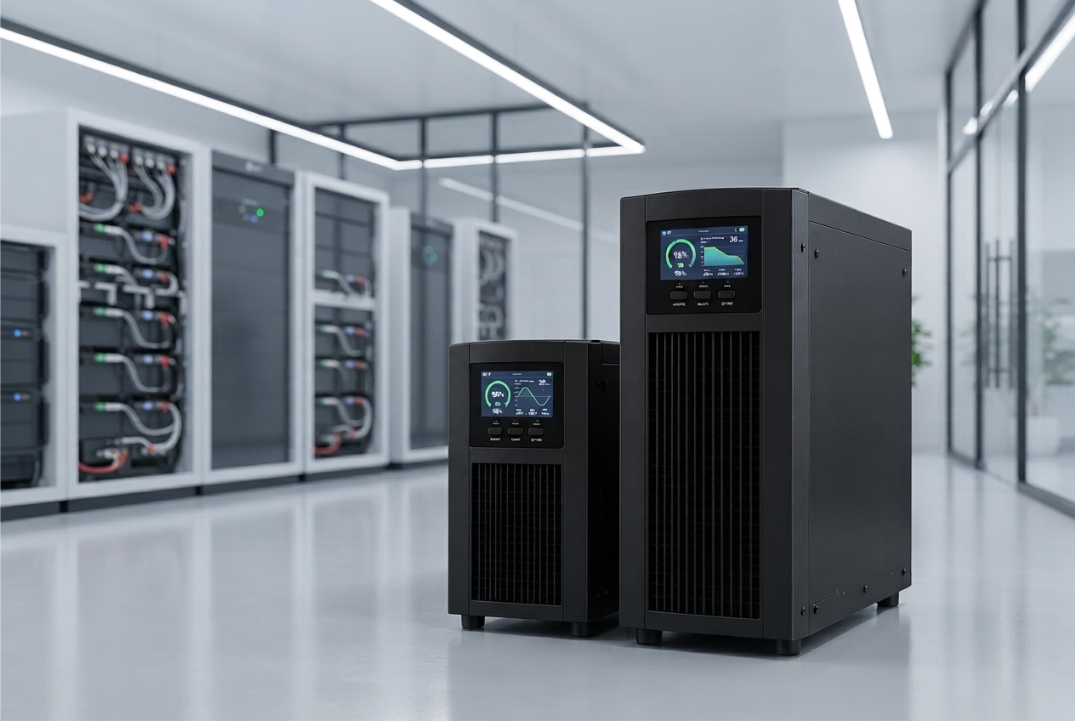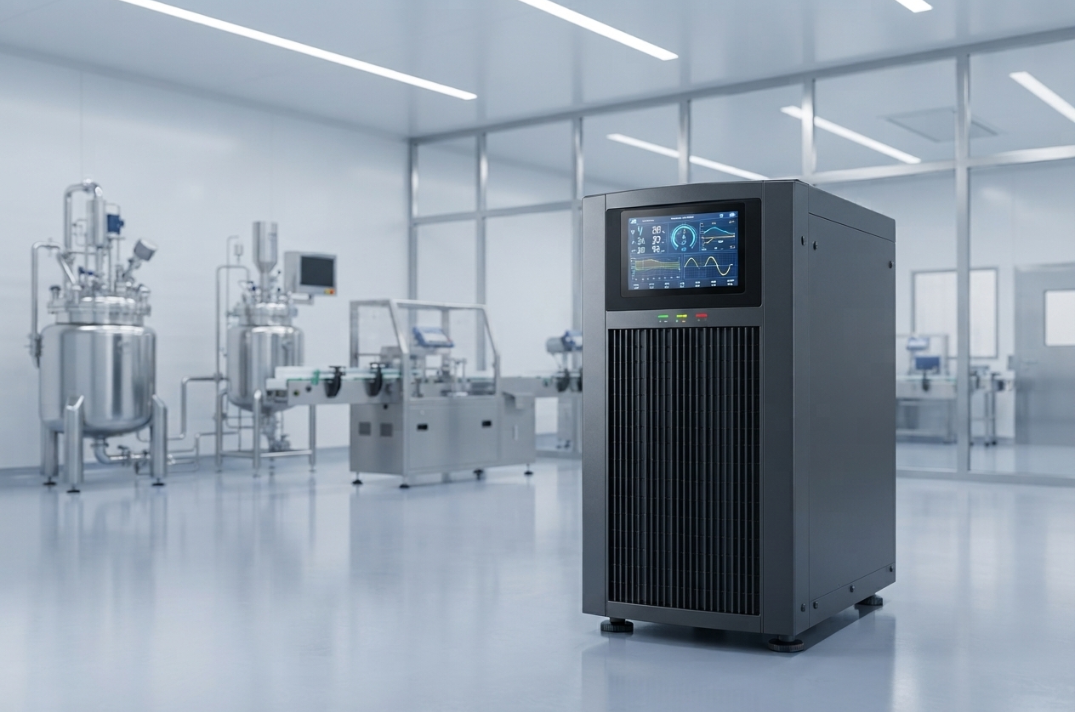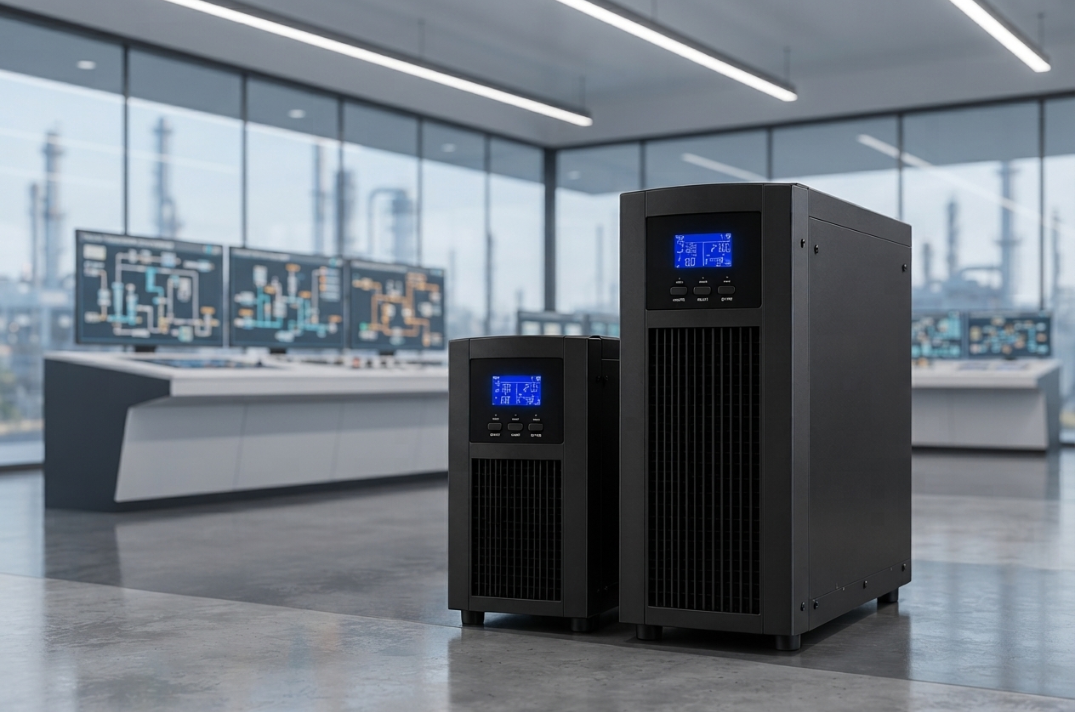
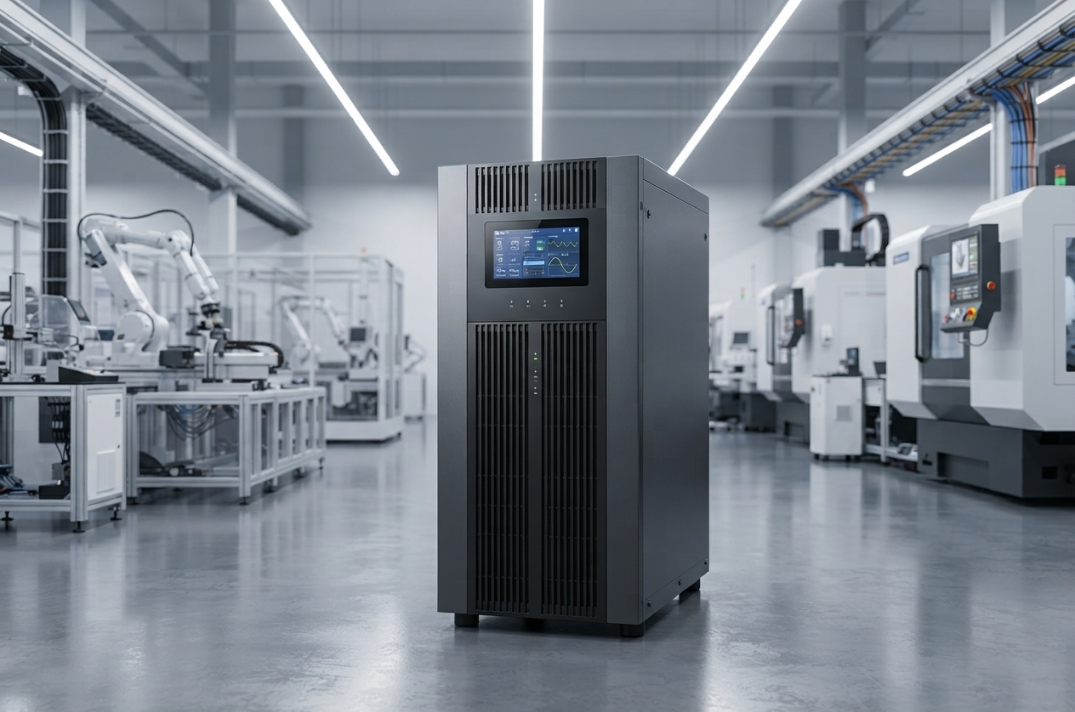
Manufacturing facilities depend on reliable electrical power to maintain production schedules, monitor industrial processes, and coordinate essential operations. Power interruptions can stop automated systems, disrupt production data, and delay activities across multiple departments. Therefore, a 3 Phase Online UPS for Manufacturing Efficiency can help protect selected critical equipment and reduce avoidable operational interruptions.
Modern factories use programmable logic controllers (PLCs), industrial computers, monitoring systems, communication networks, and quality-control equipment. These systems often require a stable power supply to operate reliably. A suitable uninterruptible power supply (UPS) can provide temporary power during electrical interruptions and help compatible equipment continue operating or shut down safely.
Bansal Hi-Tech offers power protection and IT infrastructure solutions that manufacturers can evaluate according to their operational requirements. The right configuration depends on the equipment being protected, the connected load, the required backup duration, and the facility’s electrical design.
What Is a 3 Phase Online UPS for Manufacturing Efficiency?
A three-phase online UPS is a power protection system that supplies compatible equipment through a continuously operating conversion process. In a typical double-conversion design, incoming AC power is converted to DC and then converted back to AC. This process helps isolate connected loads from many common input-power disturbances.
A 3 Phase Online UPS for Manufacturing Efficiency can be useful for selected industrial control systems, production monitoring equipment, manufacturing IT infrastructure, and other compatible critical loads. However, it should not be assumed that a standard UPS can power an entire production line or heavy industrial machinery.
Manufacturers can explore three-phase online UPS solutions when assessing power protection options for their facilities.
8 Ways a 3 Phase Online UPS Improves Manufacturing Efficiency
1. Reduces Interruptions to Industrial Control Systems
Industrial control systems coordinate machine operations, monitor process conditions, and manage production sequences. PLCs, control computers, and associated electronics can be essential to maintaining predictable manufacturing operations.
A suitably selected UPS can provide temporary power to compatible control electronics during a short interruption. This may give operators time to restore the incoming supply, transfer to an alternative power source, or execute a controlled shutdown.
However, protecting a controller does not mean the UPS can continue powering the motors, heaters, pumps, or other machinery controlled by that device. Each load requires an appropriate electrical assessment.
Manufacturers can evaluate the HPI 33 EVO 10–40 kW three-phase UPS against verified specifications when considering a suitable power protection configuration.
2. Supports Production Monitoring and Process Visibility
Manufacturing teams use monitoring systems to track operating conditions, production status, equipment alarms, and process information. A power interruption affecting these systems can reduce visibility into ongoing operations.
A UPS can support compatible industrial computers, monitoring terminals, communication gateways, and selected control electronics. This helps maintain access to essential information during short power disturbances.
For example, operators may be able to continue viewing system status or record relevant information while the facility addresses a supply problem. The exact outcome depends on which devices remain powered and whether the wider control system is still operational.
A broader assessment of IT infrastructure solutions can help manufacturers consider the supporting technology used to collect and manage production information.
3. Protects Manufacturing Data and Digital Records
Manufacturing operations increasingly rely on digital systems to store production records, quality reports, equipment logs, inventory information, and process data. An abrupt shutdown can interrupt data collection or leave some information unsaved.
A correctly sized UPS can keep compatible computers, servers, and storage systems operational during short outages. It can also provide time for a controlled shutdown when the interruption exceeds the available battery runtime.
Manufacturers should combine UPS protection with regular backups, appropriate access controls, and recovery procedures. A UPS helps reduce power-related risks, but it cannot replace data protection measures.
Facilities with centralised digital operations can review data centre solutions when planning power protection for servers and storage equipment.
4. Helps Maintain Communication Across Production Areas
Manufacturing facilities often use network switches, routers, industrial communication gateways, and supervisory systems to exchange information between production areas and management teams. If these components lose power, operators may lose access to important monitoring or coordination tools.
A UPS can protect compatible networking and communication equipment during short interruptions. This can help preserve communication between connected systems, provided the wider network and the required endpoints remain available.
Manufacturers should identify the communication devices that support essential production functions and include them in the critical-load assessment.
They can also explore networking and IT infrastructure when reviewing connectivity requirements across their facilities.
5. Supports Quality Control and Testing Systems
Quality-control departments use computers, inspection systems, measurement devices, and testing equipment to evaluate products and record results. Power interruptions can disrupt data capture or interrupt a test procedure.
A suitable UPS can support compatible testing computers, data acquisition systems, and selected electronic instruments. This can help preserve information and allow certain tasks to continue during short power disturbances.
Nevertheless, some testing equipment has specialised power requirements or high starting currents. Manufacturers should confirm equipment compatibility with the supplier and the instrument manufacturer before connecting these devices.
The objective is to protect the loads that need continuity rather than connect every machine to the same backup system.
6. Reduces Disruption During Power-Related Events
A sudden power interruption may require operators to pause production, inspect equipment, verify process conditions, and restart affected systems. These activities can consume time and disrupt planned schedules.
A UPS can reduce the impact of certain power-related events on protected control electronics and IT systems. Depending on the facility’s design, it may also provide time for a safe shutdown or transition to an alternative source.
However, a UPS does not eliminate all production downtime. The duration of an interruption, the type of machinery involved, and the recovery procedures all influence the final result.
For manufacturers assessing wider power protection requirements, online UPS systems can be considered alongside their existing electrical infrastructure.
7. Supports Scalable Manufacturing IT Infrastructure
As factories adopt additional monitoring tools, production software, connected devices, and digital reporting systems, their critical IT load may increase. Power protection should accommodate this growth without compromising reliability.
Manufacturers should consider current demand, expected expansion, redundancy, battery runtime, and equipment compatibility when selecting a UPS. They should also verify that the chosen configuration can support the planned load profile.
For larger applications, the Keor HPE 60–500 kW three-phase UPS range may be evaluated against verified technical specifications and site requirements.
Capacity should be based on a professional load assessment rather than the overall size of the factory.
8. Improves Operational Planning and Maintenance Readiness
Manufacturing efficiency depends on identifying problems early and preparing for equipment maintenance. A UPS with suitable monitoring and alarm features can help technical teams track system status and respond to power protection issues.
Depending on the model, available functions may include battery status indicators, alarms, event records, and remote monitoring interfaces. These features can help maintenance teams identify issues that need attention before an actual outage occurs.
Manufacturers should confirm the monitoring capabilities of the selected system and establish a documented maintenance schedule. Battery inspections, testing, alarm response procedures, and periodic load reviews are important parts of maintaining readiness.
For facilities that need temporary power protection or want to evaluate requirements before purchasing equipment, online UPS rental services may be worth considering, subject to availability and technical suitability.
Key Manufacturing Systems That May Need UPS Protection
Not every manufacturing load requires the same level of power protection. A facility should distinguish between critical control electronics, essential IT equipment, and high-power machinery.
| Manufacturing application | Potential role of a UPS |
|---|---|
| PLCs and control computers | Supports compatible control electronics during short interruptions |
| Production monitoring systems | Helps preserve access to process information |
| Manufacturing servers | Supports selected applications, records, and controlled shutdowns |
| Industrial networking equipment | Helps maintain communication between connected systems |
| Quality-control computers | Supports data collection and reporting |
| Inventory and production management systems | Helps maintain access to selected digital services |
| Equipment monitoring and alarms | Supports compatible monitoring devices and communication components |
This table provides general guidance. Motors, large pumps, furnaces, compressors, production machinery, and other high-power loads require separate engineering assessments and may need dedicated power arrangements.
How to Choose the Right Three-Phase UPS for a Manufacturing Facility
Selecting a suitable UPS requires a clear understanding of the loads that must remain operational.
Identify Critical Equipment
List the systems that need power during an interruption. Separate essential control electronics and IT equipment from machinery that can safely stop or use a different backup arrangement.
This step helps avoid connecting incompatible equipment and prevents unnecessary capacity costs.
Calculate the Required Capacity
Calculate the actual power demand in kilowatts (kW) and kilovolt-amperes (kVA). Consider power factor, load variation, inrush current, and future expansion.
The UPS must support the connected load within its specified ratings. Equipment count alone is not a reliable sizing method.
Determine the Required Runtime
Decide whether the UPS must support a short transition to another power source, maintain selected systems during a brief interruption, or allow a controlled shutdown.
Battery runtime depends on the connected load, battery configuration, battery condition, temperature, and operating environment. Confirm expected runtime using manufacturer information or a qualified sizing assessment.
Review Redundancy and Maintenance
Some facilities may require redundant UPS modules or alternative power paths for critical control and IT systems. Others may need a simpler arrangement for selected loads.
Review maintenance bypasses, battery replacement requirements, alarm monitoring, and service access before finalising the installation.
Manufacturers can also assess three-phase online UPS options against their load requirements and current product specifications.
Why Consider Bansal Hi-Tech for Manufacturing Power Protection?
Manufacturing facilities need power protection that reflects their control systems, IT infrastructure, production priorities, and maintenance requirements. Bansal Hi-Tech offers power-related products and IT infrastructure solutions that organisations can evaluate when planning their requirements.
A practical assessment should identify critical loads, verify electrical compatibility, estimate battery runtime, and establish a maintenance plan. It should also distinguish between systems that require temporary backup and machinery that needs a separate engineered power solution.
Organisations can explore three-phase online UPS products as part of their evaluation. Product specifications, availability, installation requirements, and service arrangements should be confirmed before making a purchase decision.
Frequently Asked Questions
1. How does a three-phase online UPS improve manufacturing efficiency?
It can help protect selected control systems, monitoring equipment, manufacturing IT systems, and communication devices from power interruptions. This may reduce avoidable disruptions to supported workflows, although overall production continuity depends on the wider facility design.
2. Can a three-phase UPS power an entire production line?
Not necessarily. A standard UPS should not be assumed capable of operating an entire production line or heavy industrial machinery. The system must be specifically designed and sized for its intended loads, and large machinery may require separate power protection arrangements.
3. Can a UPS protect PLCs and industrial control systems?
A suitably selected UPS can support compatible PLCs, control computers, and related electronics. The connected equipment’s electrical requirements must be checked, and protecting the controls does not automatically power the machinery they operate.
4. How long can a manufacturing UPS provide backup power?
Backup duration depends on the UPS capacity, battery configuration, connected load, battery condition, and operating environment. Facilities should determine the required runtime from their operational needs and confirm it with the manufacturer or supplier.
5. Does a UPS eliminate manufacturing downtime?
No. A UPS can reduce the impact of certain power interruptions on protected loads, but downtime can still result from machinery faults, process interruptions, network failures, or extended outages. Maintenance and recovery procedures remain essential.
6. What should manufacturers check before selecting a UPS?
They should assess critical load, kW and kVA requirements, phase configuration, equipment compatibility, runtime, redundancy, monitoring, maintenance, and future expansion. A qualified professional should validate the final configuration.
7. Is a three-phase UPS suitable for every factory?
No. Smaller facilities or individual devices may require a different configuration. The appropriate UPS depends on the electrical supply, protected equipment, operational priorities, and required backup duration.
Conclusion
A 3 Phase Online UPS for Manufacturing Efficiency can help protect selected industrial control systems, production monitoring equipment, manufacturing IT infrastructure, communication devices, and quality-control systems. By reducing the impact of power interruptions on these critical loads, it can support more predictable operations and better recovery planning.
The most effective solution begins with a clear understanding of the equipment that requires protection. Manufacturers should assess load capacity, runtime, compatibility, redundancy, and maintenance before choosing a system. Bansal Hi-Tech can be considered when evaluating UPS and related IT infrastructure options, with the final selection based on verified specifications and professional assessment.