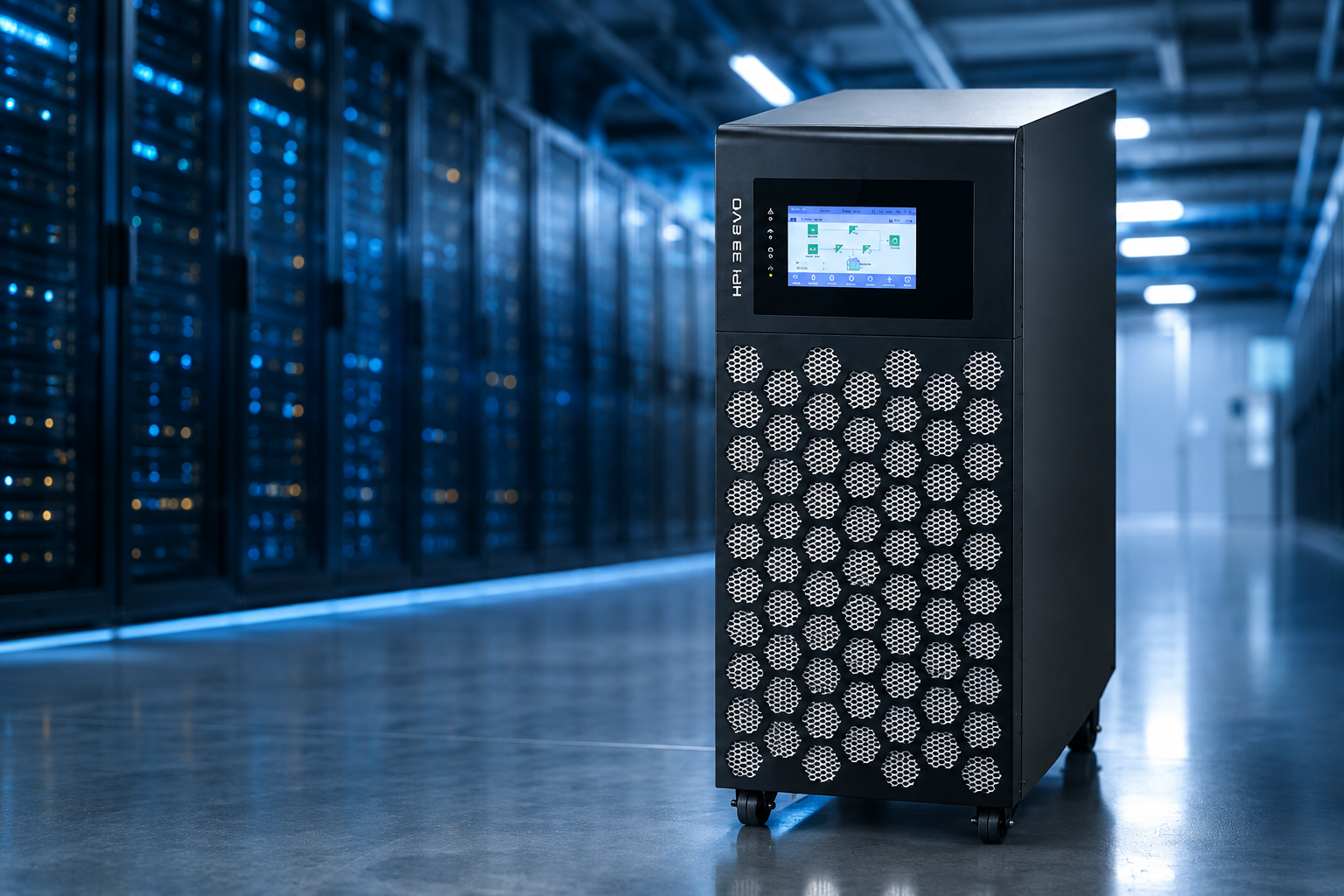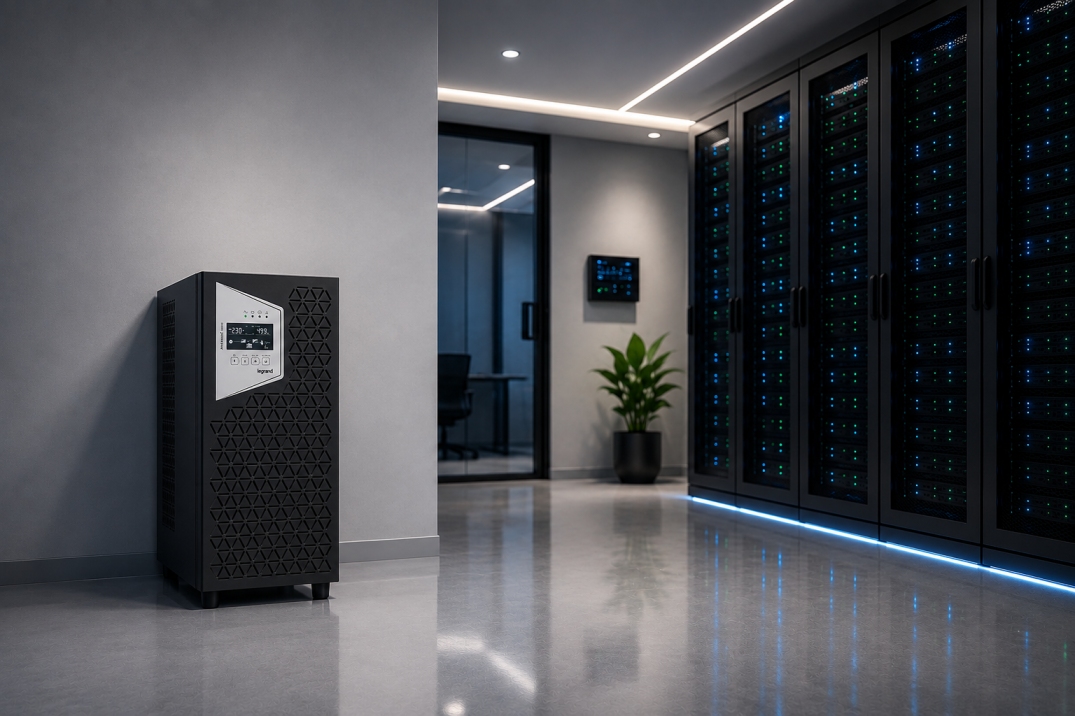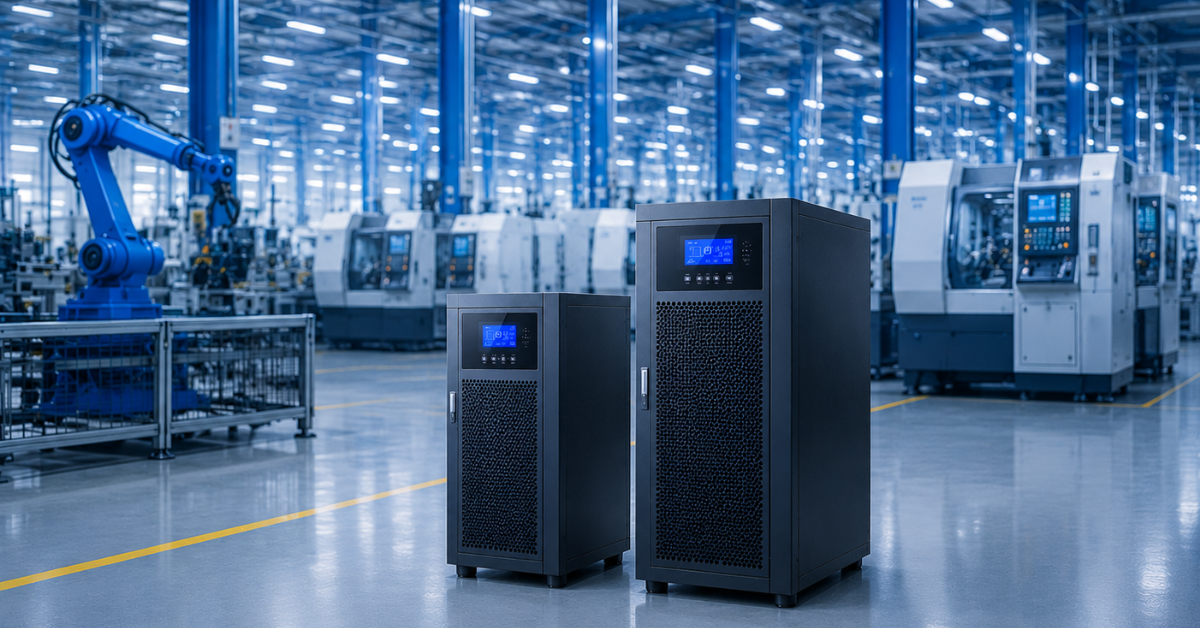
The demand for stable and clean power has grown sharply in IT and networking environments. Frequent power fluctuations can damage sensitive devices, slow operations, or even cause data loss. This is where a Single Phase Online UPS becomes essential. It ensures uninterrupted power and shields IT systems from deep voltage issues. In this article, we explore the 6 smart uses of Single Phase Online UPS for IT & Networking Systems, along with key factors that influence performance, challenges in implementation, and the tradeoffs involved.
This guide is designed for IT managers, system integrators, startups, data teams, and businesses that rely on continuous digital operations.
What Is a Single Phase Online UPS?
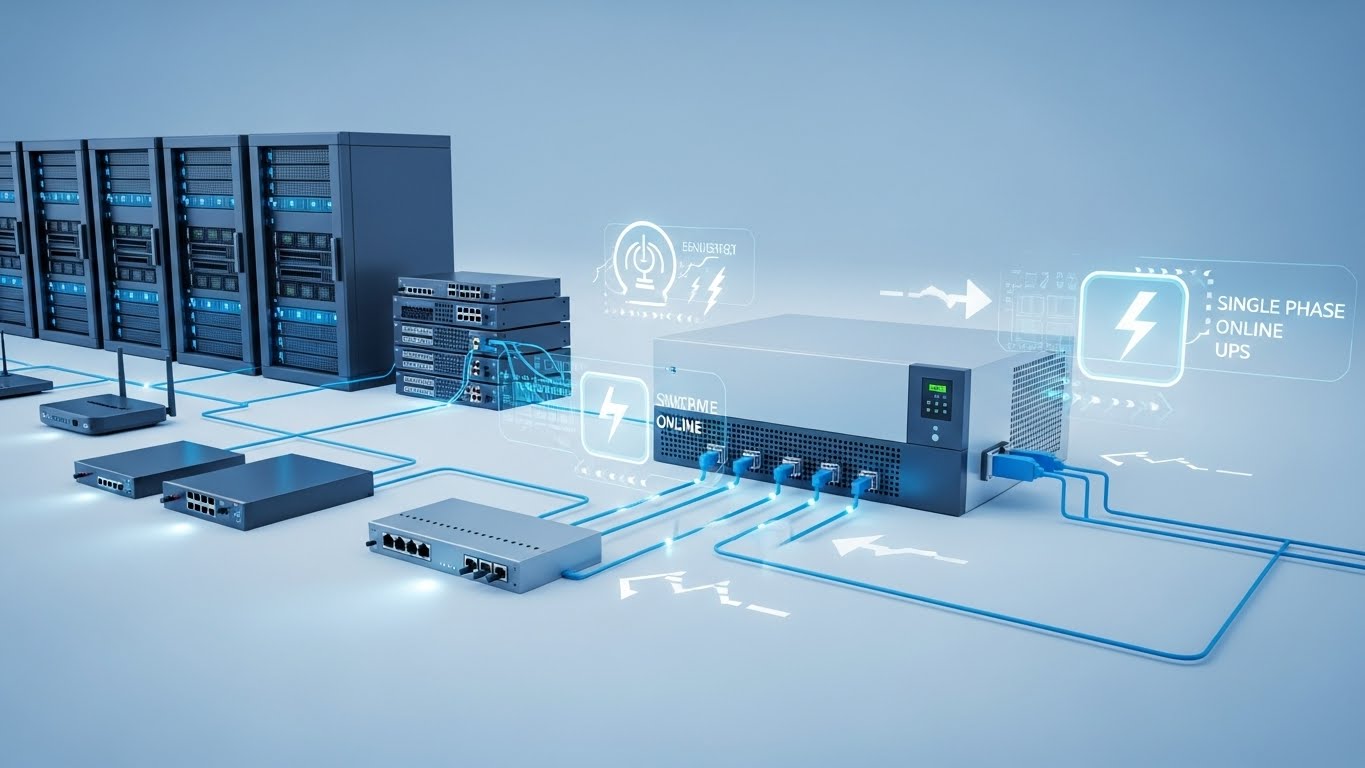
A Single Phase Online UPS is a double-conversion UPS that provides clean and stable AC power to connected equipment. It converts incoming AC to DC and then back to AC. This ensures zero transfer time during a power cut. The output remains consistent even during deep voltage drops and surges.
This makes it ideal for modern IT and networking setups where reliability is crucial.
6 Smart Uses of Single Phase Online UPS for IT & Networking Systems
Below are the most effective and practical applications.
1. Supporting Servers and Network Racks in Offices
Servers and network racks hold business-critical applications. Even minor power cuts can stop communication channels, cause data corruption, or break ongoing processes. A Single Phase Online UPS prevents such disruptions.
Why It Matters
- Zero transfer time ensures servers never shut down abruptly.
- Online power conditioning protects sensitive components.
- It supports long backup duration when paired with external battery banks.
Key Tradeoff
Higher initial cost compared to line-interactive UPS models.
But the long-term protection and stability offer greater value.
Internal Link Suggestion
Learn more about UPS solutions for businesses here:
➡️ https://bansalhitech.com/online-ups/
2. Protecting Routers, Switches & Access Points
Network devices ensure seamless communication and internet access. But these devices are highly sensitive to voltage issues. A Single Phase Online UPS keeps them active even during low voltage and brownouts.
Benefits
- Ensures stable network connectivity.
- Prevents reboot loops caused by voltage dips.
- Supports uninterrupted VOIP, cloud apps, and online meetings.
Challenge
Small offices may feel the cost is high, but the stability gained outweighs the investment.
3. Enabling Smooth IT Operations for Startups & SMBs
Small businesses depend heavily on cloud apps, CRMs, POS systems, and online transactions. A power failure can halt cash counters, billing systems, and customer service operations.
How It Helps
- Ensures active CRM and payment systems.
- Prevents downtime that affects customer experience.
- Helps maintain security systems running on the same network.
Tradeoff Consideration
A lower-capacity UPS may not support all devices. Proper load assessment is essential.
4. Powering NVRs, CCTV Cameras & Security Systems
Security systems cannot afford downtime. Most CCTV setups use NVRs, POE switches, LAN cables, and IP cameras. A Single Phase Online UPS ensures all these devices run continuously.
Advantages
- Prevents gaps in surveillance footage.
- Protects NVR storage from voltage spikes.
- Keeps POE switches running for all connected cameras.
Implementation Challenge
CCTV systems may require longer backup duration.
Choosing the right battery size becomes important.
Internal Link Suggestion
Explore long-backup UPS systems here:
➡️ https://bansalhitech.com/ups-systems/
5. Supporting Cloud Workstations & Remote Monitoring Systems
Cloud-based workstations and monitoring dashboards require nonstop power. Even a short power drop can disconnect remote sessions or corrupt files.
Why It Works
- Online UPS delivers pure sinewave output.
- Maintains stable voltage for graphic cards, processors, and high-load systems.
- Supports hybrid work setups with reliable connectivity.
Tradeoff
High-performance systems may need higher KVA rating.
Proper sizing ensures smooth operation without overload.
6. Ensuring Uptime for NAS Storage & Data Backup Systems
Data centers use large UPS solutions. But small offices and startups often rely on NAS storage for backups. Power instability can cause disk failures. A Single Phase Online UPS protects the storage environment.
Key Benefits
- Zero transfer time prevents hard-disk crashes.
- Clean, uninterrupted power ensures safe data syncing.
- Helps maintain automated daily or weekly backup routines.
Challenge
NAS systems often run 24/7.
Battery maintenance becomes essential for long-term use.
Internal Link Suggestion
Check compatible UPS options for storage systems:
➡️ https://bansalhitech.com/ups-backup-solutions/
Key Factors That Impact the Performance of Single Phase Online UPS
Here are the most important elements influencing performance and reliability.
1. Load Capacity & Power Rating
Choosing a UPS with the right KVA rating is essential.
Under-sizing leads to overloads.
Over-sizing increases investment unnecessarily.
Most IT setups require 1KVA–6KVA models.
2. Battery Capacity & Backup Duration
Battery size determines how long your systems stay active during a power cut.
Longer backup means more batteries and higher costs.
Tradeoff involves:
- Cost
- Maintenance
- Space requirement
3. Efficiency
Online UPS systems consume more energy due to double conversion.
However, newer models are highly efficient and reduce electricity costs.
4. Voltage Stability
Voltage fluctuations harm IT hardware.
Single Phase Online UPS stabilizes the output voltage completely.
5. Heat Management
IT setups generate heat.
UPS units also add thermal load.
Proper cooling is essential to maintain efficiency and battery life.
6. Maintenance & Battery Replacement
Regular battery health checks are necessary.
Ignoring maintenance leads to reduced backup time.
Internal link:
➡️ https://bansalhitech.com/battery-for-ups/
Challenges in Using Single Phase Online UPS for IT & Networking Systems
Every solution comes with limitations. Here are the major challenges:
1. Higher Cost Than Other UPS Types
Double-conversion technology increases cost.
But long-term protection makes it worth it.
2. Heat Generation
Online UPS generates more heat than line-interactive UPS.
Adequate ventilation is necessary.
3. Battery Lifecycle
Battery replacement every 3–4 years increases maintenance cost.
4. Noise
Some units generate fan noise.
This may affect silent office environments.
Balancing the Tradeoffs
Choosing the right Single Phase Online UPS requires balancing factors like cost, backup duration, space, and long-term usage.
The ideal approach is to:
- Identify the load.
- Calculate required backup time.
- Check space for batteries.
- Select a model that offers efficiency and long life.
This balance ensures stable power and protects your entire IT network.
Conclusion: Why Single Phase Online UPS Is Essential
The modern IT world depends on uninterrupted connectivity and data integrity. The Single Phase Online UPS provides the protection and stability needed for business continuity. By understanding the 6 smart uses of Single Phase Online UPS for IT & Networking Systems, organizations can make better decisions and avoid costly downtime.
For small businesses, startups, IT teams, and digital offices, this UPS is no longer optional — it is a smart investment in reliability.