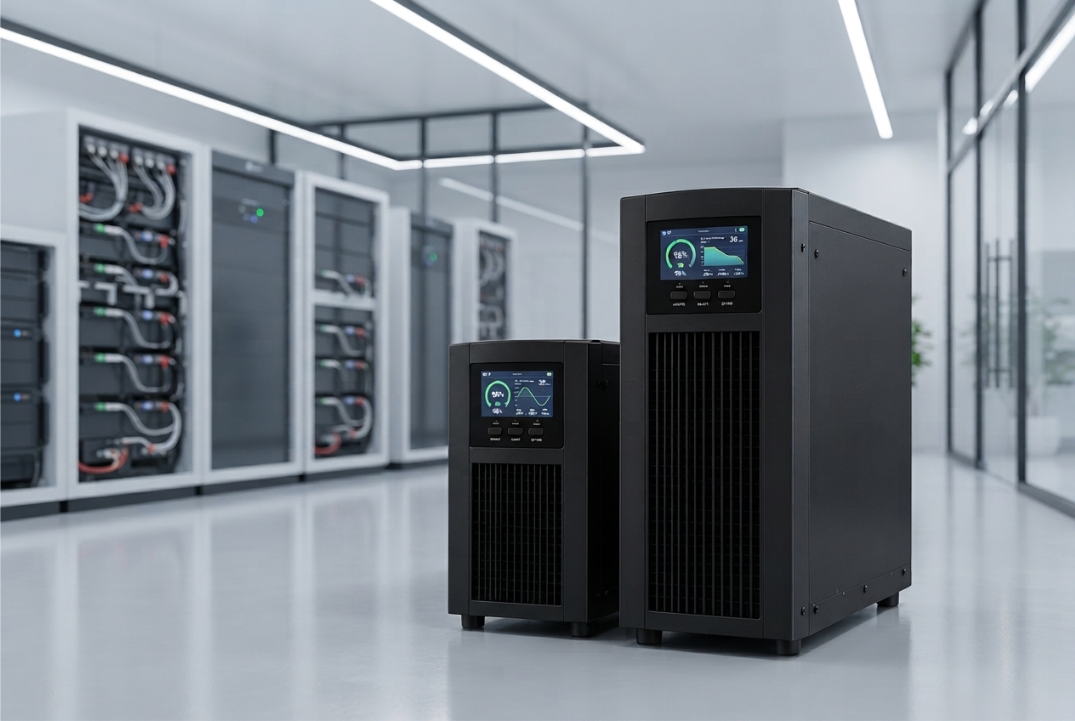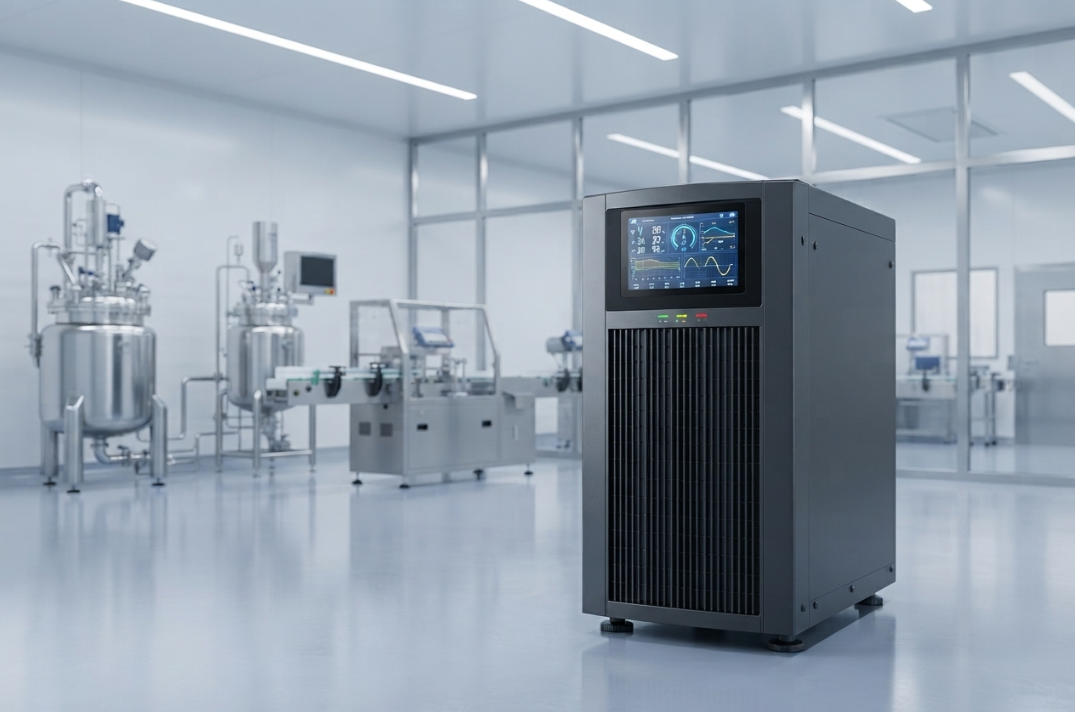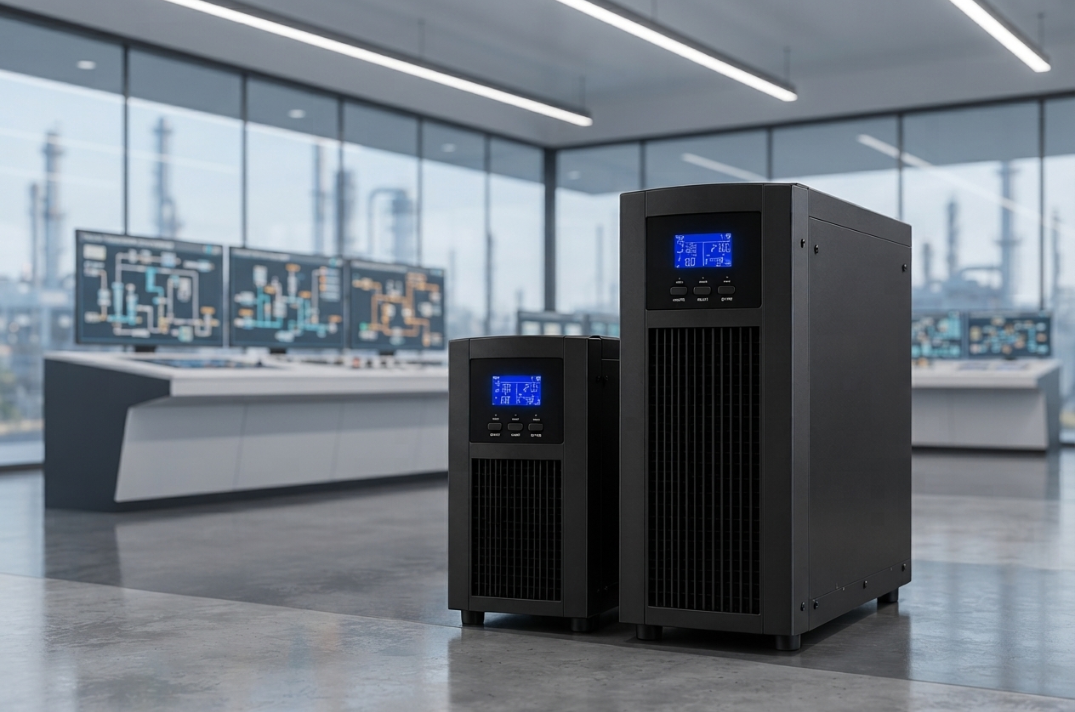

In an era where uninterrupted power is not just a convenience but a necessity, Single-Phase UPS (Uninterruptible Power Supply) systems play a vital role in ensuring reliability, safety, and performance for critical operations. Whether it’s an office, data center, or industrial site — every piece of equipment today demands stable and clean power.
While three-phase systems are often associated with large-scale industrial applications, single-phase UPS systems are the backbone of small and medium-sized businesses, server rooms, and office infrastructure. They ensure that even in the event of a power failure, your systems remain operational, data stays protected, and productivity continues seamlessly.
This article explores the five major technical benefits of Single-Phase UPS systems and how they serve as the foundation for reliable power protection.
1. Enhanced Power Stability and Voltage Regulation
One of the most critical technical advantages of a single-phase UPS lies in its ability to deliver constant and stable power output — even during irregularities like voltage dips, surges, or brownouts.
Why It Matters
Power instability can severely affect sensitive equipment such as computers, routers, and control systems. Fluctuations cause overheating, component stress, or even data corruption. A single-phase UPS acts as a buffer between your main power source and your equipment.
How It Works
The UPS continuously monitors input voltage levels. When a fluctuation occurs:
- It instantly switches to battery power, maintaining consistent voltage.
- Its Automatic Voltage Regulation (AVR) circuit ensures smooth, noise-free delivery.
- It filters out harmonic distortions — protecting sensitive electronics.
Technical Insight
A well-designed single-phase UPS system can maintain output voltage within ±1–2% of the nominal level, ensuring stable performance even when the main supply fluctuates significantly.
Key Takeaway:
Consistent voltage regulation helps prevent downtime, extends equipment life, and ensures that even the smallest voltage variations don’t interrupt your operations.
2. High Energy Efficiency and Power Factor Optimization
Energy efficiency is a technical and financial advantage that cannot be ignored. Single-phase UPS systems are known for their optimized power factor and reduced energy losses, making them ideal for cost-sensitive environments.
- Understanding Power Factor
Power factor measures how efficiently electrical power is converted into useful work. A UPS with a high power factor (close to 1.0) ensures that maximum power drawn from the source is effectively used.
Older UPS models often had a power factor of around 0.7 to 0.8, meaning 20–30% of power was wasted. However, modern single-phase UPS units from top manufacturers operate with power factors of 0.9 or higher — minimizing wastage and improving system performance.
Technical Advantages
- Reduced heat generation, lowering cooling requirements.
- Less strain on wiring and electrical infrastructure.
- Lower operational costs and improved overall system efficiency.
- Eco-Friendly Efficiency
Some advanced single-phase UPS systems offer ECO Mode, where the UPS intelligently bypasses unnecessary conversions during stable power conditions — saving up to 5–8% energy without compromising protection.
Key Takeaway:
High-efficiency single-phase UPS systems not only lower energy bills but also ensure greener operations — aligning with modern energy-saving initiatives.
3. Seamless Power Transition During Outages
One of the most crucial technical aspects of any UPS system is transfer time — the duration it takes to switch from mains to battery power during a failure.
In single-phase UPS systems, this transition is virtually instantaneous — ensuring your equipment doesn’t even notice the power cut.
- Technical Mechanism
Modern UPS designs employ:
- Static bypass switches
- Double conversion (online topology)
- Real-time monitoring circuits
These components ensure zero transfer time, keeping your systems live during voltage drops or total blackouts.
Practical Example
In a typical office setup — if power fails even for 2–3 milliseconds, servers or PCs might restart, causing data loss. A high-quality single-phase UPS eliminates this risk by supplying uninterrupted power within 2 milliseconds or less.
Types of Single-Phase UPS Topologies
- Offline/Standby UPS: Basic protection; transfer time 4–10 ms.
- Line-Interactive UPS: Moderate protection; transfer time <4 ms.
- Online (Double Conversion) UPS: Premium protection; 0 ms transfer time and continuous output.
Key Takeaway:
A single-phase UPS ensures uninterrupted workflow during power fluctuations, making it ideal for IT systems, telecom, and medical devices where continuity is non-negotiable.
4. Compact Design, Scalability, and Ease of Maintenance
When it comes to installation and maintenance, single-phase UPS systems provide clear technical and logistical advantages over bulkier, three-phase counterparts.
- Compact and Modular Design
- Requires less physical space, making it suitable for offices, labs, and server racks.
- Wall-mountable and rack-mount options simplify installation.
- Plug-and-play configuration reduces technical setup time.
Scalability Advantage
Modern single-phase UPS systems are designed with modularity in mind — meaning you can easily expand capacity by adding units in parallel or upgrading battery packs.
This is particularly useful for:
- Expanding data centers
- Growing startups
- Edge computing environments
Ease of Maintenance
- Hot-swappable batteries ensure replacement without downtime.
- Smart monitoring software alerts users about load levels, temperature, and battery health.
- Remote diagnostics and cloud-based analytics simplify maintenance schedules.
Technical Design Perspective
Advanced units come with:
- DSP (Digital Signal Processing) controllers for precision control.
- LCD touch panels for system monitoring.
- SNMP or Modbus connectivity for remote supervision.
Key Takeaway:
Single-phase UPS systems deliver scalable protection with minimal footprint, ensuring technical flexibility and simplified maintenance for modern infrastructures.
5. Advanced Communication and Monitoring Capabilities
The modern single-phase UPS is not just a power device — it’s an intelligent power management system.
With built-in communication protocols and smart monitoring features, it allows real-time insights into system health and power flow.
Communication Interfaces
Most premium UPS models include:
- USB / RS-232 / SNMP ports for connectivity
- Network management software to monitor parameters remotely
- Mobile alerts / email notifications for instant updates
Intelligent Battery Management
- Predictive battery monitoring prevents unexpected failures.
- Real-time temperature compensation improves battery lifespan.
- Some systems even include AI-based fault detection for proactive maintenance.
- Integration with Building Management Systems (BMS)
Single-phase UPS systems can integrate seamlessly with existing BMS infrastructure, providing:
- Power quality data
- Load performance reports
- Real-time status of voltage, frequency, and runtime
Technical Example
Using SNMP (Simple Network Management Protocol), administrators can remotely:
- Schedule battery tests
- Shut down non-critical loads
- Receive power event notifications instantly
Key Takeaway:
With real-time monitoring and smart control, single-phase online UPS systems offer predictive maintenance, transparency, and operational control — ensuring total reliability across your power network.
Additional Technical Advantages Worth Noting
Beyond the five major benefits discussed, single-phase online UPS systems also offer several secondary yet impactful advantages:
- Reduced harmonic distortion (THD) for clean power output
- Lower noise levels (ideal for office environments)
- Automatic frequency synchronization with incoming mains supply
- High overload capacity, ensuring operational safety during power spikes
- Extended battery runtime options for different load capacities
These factors combine to create a technically superior, stable, and efficient power protection solution for small and medium-scale operations.
Real-World Applications of Single-Phase UPS Systems
Single-phase UPS systems are widely deployed in industries that demand uninterrupted, clean power delivery.
Applications Include:
- IT offices and startups
- Medical clinics and diagnostic centers
- Telecom base stations
- Retail point-of-sale systems
- Security and surveillance systems
- Educational institutions and laboratories
Their compact size, silent operation, and high efficiency make them a top choice for decentralized or distributed environments.
Technical Comparison: Single-Phase vs. Three-Phase UPS
| Feature | Single-Phase UPS | Three-Phase UPS |
| Input/Output Voltage | 230V / 230V | 415V / 415V |
| Typical Power Range | Up to 20 kVA | 10 kVA to 800 kVA+ |
| Ideal For | Offices, Small Data Rooms, Labs | Industrial Plants, Data Centers |
| Installation | Easy, Compact | Requires Skilled Setup |
| Maintenance | Simple | Complex |
| Efficiency | High for Low Loads | High for Large Loads |
Conclusion:
For small and medium setups, single-phase UPS offers the best balance between cost, efficiency, and reliability.
Conclusion: The Backbone of Reliable Power Protection
In today’s digital-first world, even a few seconds of downtime can lead to data loss, financial loss, and workflow disruption.
A Single-Phase UPS system bridges this gap by offering:
- Superior voltage stability
- Instant power transition
- Scalable protection
- Smart monitoring
- High efficiency and low maintenance
At Bansal Hi-Tech Private Limited, we understand that every watt of power matters. Our solutions are engineered with precision, reliability, and sustainability in mind — ensuring your operations stay powered, protected, and productive.