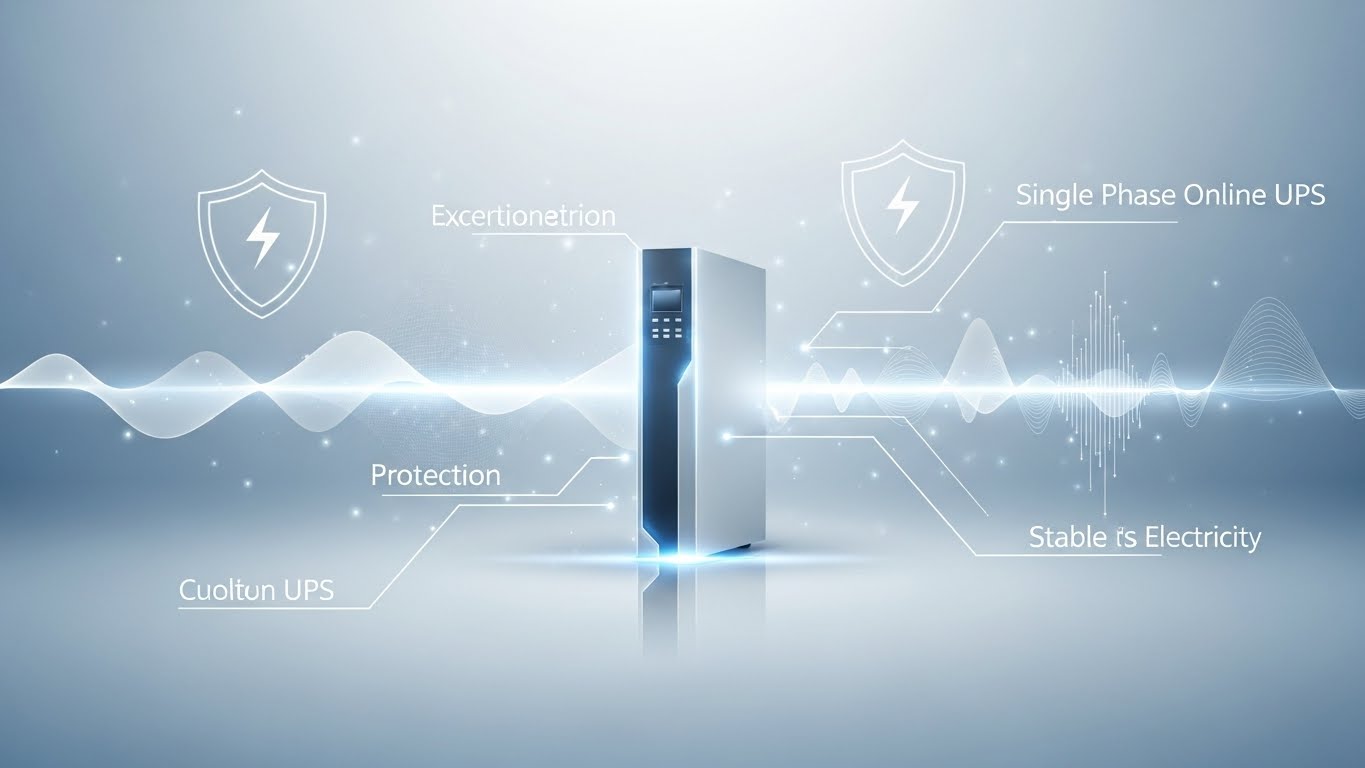

Power quality plays a major role in ensuring stable operations in industries with heavy electrical loads. The 5 Advantages of 3-Phase Online UPS for High Load Environments explain why these systems have become essential for sectors that handle sensitive machines, large servers, and continuous production cycles. Modern facilities depend on clean, reliable power, and the performance of their systems often depends on how well this power is maintained. A 3-Phase Online UPS helps maintain this stability by protecting machines from outages, voltage drops, and sudden spikes.
Businesses today face intense pressure to operate without interruption. A small delay can create financial loss or production downtime. This pressure grows in high-load environments where machines draw large current levels and run for long hours. A 3-Phase Online UPS acts as a shield between the power source and the load, supplying consistent voltage. This approach reduces risk and enhances productivity. While using such a system has clear benefits, choosing the right model requires careful thought. Managers must consider capacity, costs, installation space, and long-term performance before making decisions.
Understanding 3-Phase Online UPS Systems
A 3-Phase Online UPS works on a double-conversion technology. It converts AC to DC, filters it, then converts it back to AC for the load. This prevents power disturbances from reaching machines. The input and output phases run in 3-phase format, which supports heavier loads and provides better balancing.
High-load environments like CNC machining, data centers, industrial automation floors, hospitals, and manufacturing plants need clean power for safe operation. A single-phase UPS cannot manage massive loads. This is why industries choose 3-phase systems.
Advantage 1: Strong Power Handling Capacity in High Load Environments
A major advantage of a 3-Phase Online UPS is its high power capacity. It supports heavy machines without strain. This is ideal for industries that run multiple devices at the same time. Machines like CNC units, industrial motors, and sensitive automation lines need high current. A 3-phase UPS manages this demand smoothly.
How Power Capacity Helps in Real Operations
- Machines can run without voltage dips
- There is no risk of overload during peak hours
- Multi-device environments remain stable
- Large motors get required start-up current
A 3-phase UPS handles load distribution across all phases. This reduces thermal stress and increases equipment life. Unlike single-phase systems, there is no single point of strain.
If you operate a CNC machine, server rack, or medical device setup, power capacity matters. Any drop, even for a second, can damage the machine or interrupt work. A 3-phase UPS avoids these issues.
For more about UPS solutions for industry, you may explore:
https://bansalhitech.com/online-ups/
Advantage 2: Higher Efficiency Levels and Better Energy Management
Energy efficiency helps companies reduce operational costs. A 3-Phase Online UPS gives higher efficiency because it distributes current evenly. The double-conversion process ensures stable power output while reducing energy waste.
The Tradeoffs in Efficiency
Online UPS systems usually consume more internal power compared to offline models. But they deliver cleaner and more stable output. This tradeoff is acceptable in high-load environments where sensitive equipment needs constant protection.
Why Efficiency Matters
- Lower electricity bills
- Reduced heat production
- Longer equipment lifespan
- Less load on cooling systems
Many modern 3-phase UPS models come with active power factor correction. This increases the power quality further. For facilities that run 24/7, even a small increase in efficiency can save large amounts of money.
To explore other power solutions for business use, visit:
https://bansalhitech.com/line-interactive-ups/
Advantage 3: Strong Voltage Regulation for Sensitive Machines
High-load environments face frequent voltage fluctuations. These fluctuations occur due to heavy motors starting, grid issues, or internal wiring conditions. A 3-Phase Online UPS gives strong voltage regulation. It keeps the output stable even when the input voltage varies.
Benefits of Strong Voltage Regulation
- CNC machines run smoothly
- Servers avoid unexpected shutdowns
- Motors operate without vibration
- Medical equipment gets accurate performance
- Production lines experience fewer faults
Voltage stability is crucial for industries that require precise output. CNC machines depend on accuracy. Even a small voltage shift can affect the cut quality. A 3-phase UPS prevents such issues.
In large facilities, machines often turn on and off throughout the day. This creates sudden load changes. A 3-phase UPS handles these changes well by maintaining constant output voltage.
Advantage 4: Enhanced Reliability and Longer Runtime Options
Reliability is a major factor when choosing a UPS. A 3-Phase Online UPS offers strong reliability due to its internal structure and advanced electronics. It reduces the chances of system failure during outages.
Key Reasons Why 3-Phase UPS Is More Reliable
- Advanced double-conversion technology
- Redundant components that prevent failure
- Better heat distribution
- Larger battery banks for longer backup
- Support for external battery cabinets
A 3-phase system handles faults better than smaller UPS designs. This is suitable for environments where downtime is not acceptable. For example, data centers need continuous power for servers. Hospitals depend on UPS systems for smooth operation of critical equipment.
If you want to explore industrial-grade UPS solutions, check:
https://bansalhitech.com/single-phase-online-ups/
Advantage 5: Support for Large-Scale Infrastructure and Industrial Applications
A 3-Phase Online UPS is ideal for large setups. Industries that run several machines at once benefit from the strong support of this system. The UPS supports high-load wiring networks, large server rooms, and complete production lines.
Where These UPS Systems Are Most Useful
- Data centers
- CNC machining units
- Industrial motors
- Large corporate offices
- Healthcare facilities
- Manufacturing plants
Challenges in Implementation
Setting up a 3-phase UPS requires planning. It needs more space and a stronger electrical network. Cooling requirements may also increase. These challenges are normal but must be considered before installation.
Such systems usually cost more than single-phase models. But the long-term reliability and performance compensate for the cost.
Tradeoffs and Challenges When Choosing a 3-Phase Online UPS
Every system has tradeoffs. While 3-phase UPS systems offer many benefits, users must think about the overall setup.
1. Cost Considerations
These systems cost more upfront. They also require strong electrical wiring. But maintenance costs reduce over time due to efficient performance.
2. Space Requirements
A 3-phase UPS unit, along with batteries, takes more floor space. Facilities must plan placement carefully.
3. Load Calculation
Managers must calculate the correct load capacity. Choosing undersized models reduces reliability. Oversizing increases cost.
4. Maintenance Needs
A larger UPS system needs periodic checks. Skilled technicians must inspect the inverter, rectifier, and batteries.
These challenges are manageable with proper planning. They should not discourage businesses from adopting 3-phase UPS systems in environments where they are essential.
Why High Load Environments Need a 3-Phase Online UPS
High load environments require stability. Machines in these environments demand strong and clean power. Voltage drops, frequency shifts, and surges can damage equipment. Workers also lose time during unstable power conditions.
A 3-phase UPS reduces these risks. It increases reliability. It also lowers the chances of equipment breakdowns. Industries that depend on precision tools gain major benefits.
Machine downtime is expensive. Production delays cost money. A proper UPS reduces these risks. It helps maintain workflow.
You can explore more business power solutions here:
https://bansalhitech.com/category/products/
Importance of Considering Environmental Impact
When choosing a high-capacity UPS, businesses should also consider environmental impact. Energy-efficient systems reduce electricity consumption. This reduces the carbon footprint.
Battery technology also plays a role. Modern lithium-ion batteries last longer and reduce waste. UPS efficiency helps reduce heat production. This lowers cooling needs. Reduced cooling also saves electricity.
Companies committed to sustainability should check efficiency ratings before selecting a model.
Internal Linking for Better Navigation
Here are relevant internal links (already added throughout the article):
- Online UPS options: https://bansalhitech.com/online-ups/
- Line Interactive UPS: https://bansalhitech.com/line-interactive-ups/
- Single Phase UPS: https://bansalhitech.com/single-phase-online-ups/
- All product categories: https://bansalhitech.com/category/products/
Conclusion
The 5 Advantages of 3-Phase Online UPS for High Load Environments clearly show why industries depend on these systems. They offer strong power capacity, high efficiency, stable voltage, enhanced reliability, and strong support for large setups. These benefits make them suitable for factories, data centers, hospitals, CNC machining units, and other power-sensitive operations.
Companies must consider cost, space, and maintenance needs before selecting a UPS. But the long-term advantages outweigh these challenges. A reliable 3-phase UPS enhances productivity, reduces downtime, and protects expensive machines.
Choosing the right UPS is an investment in performance and safety. Businesses that operate in high-load environments should evaluate their power needs and pick a model that supports long-term growth.