Introduction
Laboratories depend on sensitive instruments, analytical equipment, computer systems, and environmental monitoring devices to perform accurate and consistent work. Even a brief power interruption can disrupt experiments, interrupt data collection, and affect research schedules. In some cases, unstable power can also damage equipment or compromise samples that require continuous monitoring.
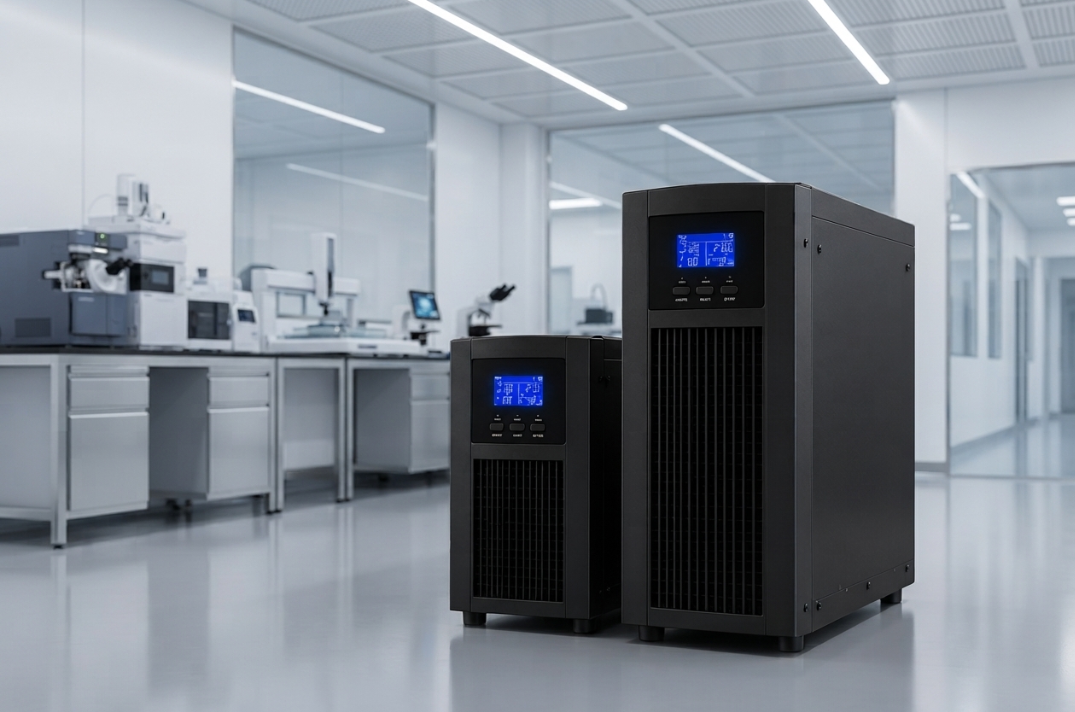
A 3 Phase Online UPS for Laboratories helps protect critical electrical and electronic equipment by providing backup power and conditioned output. When correctly sized and installed, it can reduce power-related disruptions and support laboratory operations.
This article explains seven key benefits of a three-phase online UPS for laboratories and highlights the factors organisations should consider when selecting a suitable system.
What Is a 3 Phase Online UPS for Laboratories?
A three-phase online UPS is a power protection system designed to supply conditioned electricity to connected equipment. In a double-conversion online UPS, incoming AC power is converted to DC and then converted back to AC. This process helps isolate connected loads from many common input power disturbances.
Laboratories may use three-phase UPS systems when their critical electrical loads, power distribution, or operational requirements justify this configuration. The protected equipment may include laboratory IT systems, analytical instruments, control electronics, and selected monitoring systems.
Organisations can explore three-phase online UPS solutions to understand the available options for different power requirements.
7 Benefits of a 3 Phase Online UPS for Laboratories
1. Protects Sensitive Laboratory Instruments
Laboratory instruments often contain sensitive electronic components that require a stable power supply. Power interruptions and electrical disturbances can interrupt measurements, stop instrument processes, or trigger equipment errors.
A suitable three-phase online UPS can provide conditioned power to compatible instruments and their associated electronic systems. This can help reduce disruptions caused by common input power disturbances.
However, not every laboratory instrument should be connected to the same UPS. Researchers and facility managers should check manufacturer requirements, electrical ratings, starting currents, and compatibility before connecting equipment.
2. Helps Prevent the Interruption of Experiments
Many laboratory procedures require continuous operation for a defined period. An unexpected power failure can interrupt testing, delay results, and require a procedure to be repeated.
A 3 Phase Online UPS can maintain power to selected critical loads during an outage. The available runtime depends on battery capacity, the connected load, battery condition, and system configuration.
For laboratories conducting time-sensitive experiments, the UPS should be sized around the equipment that must remain operational. Teams should also establish procedures for longer outages, including generator support or safe shutdown where appropriate.
3. Supports Accurate Data Collection
Modern laboratories rely on computers, data acquisition systems, analytical software, and electronic instruments to record and process results. A sudden shutdown may interrupt data collection or leave a process incomplete.
A UPS can help keep supported IT and control equipment running during short power interruptions. This gives connected systems time to continue operating or shut down in a controlled manner, depending on the available runtime and the requirements of the experiment.
Laboratories with dedicated computing and storage requirements can also assess data centre solutions when planning the infrastructure that supports research data.
A UPS alone cannot guarantee data integrity. Regular backups, suitable software safeguards, and documented recovery procedures remain essential.
4. Reduces the Impact of Voltage Fluctuations
Unstable input power can affect sensitive electronic equipment. Voltage variations and other disturbances may cause instrument errors, unexpected resets, or interruptions to connected systems.
An online UPS with double-conversion technology helps provide conditioned output power to supported equipment. This can reduce the impact of many common disturbances in the incoming electrical supply.
For reliable protection, laboratories should also assess earthing, electrical distribution, surge protection, and the specific power-quality requirements of their instruments. A UPS must be selected according to the equipment manufacturer’s recommendations.
Organisations can review online UPS systems when comparing power protection options.
5. Maintains Critical Monitoring and Control Systems
Some laboratories use electronic systems to monitor temperature, humidity, pressure, access controls, alarms, or other environmental conditions. A power interruption may affect monitoring continuity if these systems lack independent backup.
A properly designed UPS installation can support selected monitoring computers, control electronics, communication devices, and alarm systems. This helps maintain visibility into laboratory conditions during an electrical outage.
The protection plan should distinguish between electronic monitoring and the equipment that controls the physical environment. For example, refrigeration units, freezers, ventilation systems, and other high-power loads may require separate assessment based on their electrical characteristics and backup duration.
6. Supports Reliable Laboratory IT Infrastructure
Laboratories increasingly depend on local servers, network storage, workstations, switches, and other IT equipment. These systems may manage research records, instrument data, internal applications, and collaboration between departments.
A three-phase online UPS can protect compatible critical IT loads when the installation is properly sized. This helps reduce the risk of power-related interruptions to data access and laboratory communication.
Laboratories can assess networking and IT infrastructure requirements alongside their power protection needs. Critical systems should also have appropriate network redundancy and data recovery procedures.
7. Improves Power Planning for Growing Laboratories
Laboratories may expand their research activities, add analytical instruments, or introduce new computing and monitoring systems. These changes can increase power demand and place pressure on existing backup arrangements.
A three-phase online UPS can support growing facilities when its capacity, battery configuration, and electrical distribution match the projected load. Some systems also offer modular configurations that allow capacity to expand in stages.
For example, organisations can evaluate the Easy UPS 3-Phase Modular 50–250 kW if its published specifications suit their requirements.
Before expanding a UPS installation, laboratories should review current consumption, expected future demand, runtime targets, and redundancy requirements. They should also confirm whether the existing system can support additional loads without reducing reliability.
How to Choose the Right 3 Phase Online UPS for a Laboratory
Choosing a UPS requires a clear understanding of laboratory equipment and operating procedures. The cheapest or highest-capacity option is not automatically the most suitable.
Consider these factors before selecting a system:
- Connected load: Calculate the power requirements of the instruments and systems that need protection.
- Equipment compatibility: Check the manufacturer’s recommendations, load characteristics, and any special power requirements.
- Backup runtime: Estimate how long critical equipment must operate during an outage.
- Load prioritisation: Separate essential instruments and monitoring systems from non-critical equipment.
- Redundancy: Decide whether additional capacity or a redundant UPS configuration is necessary.
- Battery maintenance: Consider battery condition monitoring, replacement schedules, and operating temperature.
- Monitoring and alarms: Confirm that the system supports the monitoring features needed by laboratory staff.
- Installation conditions: Review ventilation, electrical distribution, earthing, space, and maintenance access.
- Service support: Evaluate commissioning, preventive maintenance, and technical support.
Not every laboratory device should be connected to a UPS. Equipment with heating elements, motors, compressors, pumps, or high starting currents may require a separate engineering assessment. A qualified power systems professional should validate the final design.
Why Laboratories Should Plan Power Protection Carefully
Reliable power protection forms part of a wider laboratory continuity plan. The right configuration depends on the equipment being protected, the consequences of an interruption, and the time needed to restore normal power.
Bansal Hi-Tech offers power and IT infrastructure-related solutions that organisations can assess against their requirements. Laboratories can review the HPI 33 EVO 10–40 kW three-phase UPS and compare its published specifications with their critical loads.
For temporary installations or projects with changing power needs, online UPS rental options may also be worth evaluating, subject to availability and technical suitability.
A proper assessment should consider instrument compatibility, battery runtime, future expansion, and the required level of operational continuity.
Frequently Asked Questions
1. Why do laboratories need a 3 Phase Online UPS?
Laboratories may need a three-phase online UPS to provide backup and conditioned power to critical instruments, IT systems, monitoring devices, and other compatible loads. The appropriate system depends on the facility’s power requirements.
2. Can a three-phase online UPS protect laboratory instruments?
Yes, it can protect compatible instruments when the UPS is correctly sized and meets the equipment manufacturer’s power requirements. Some instruments may require dedicated power protection or a separate electrical assessment.
3. Can a UPS prevent experiments from being interrupted?
A UPS can help keep selected equipment operating during a power failure. However, its effectiveness depends on available runtime, connected load, and the experiment’s requirements. Longer outages may require additional backup arrangements.
4. Does a laboratory UPS protect research data?
A UPS can reduce the risk of data loss caused by sudden power interruptions by keeping supported computing equipment operational or allowing controlled shutdowns. Regular backups and data recovery procedures are still necessary.
5. Should laboratory refrigerators and freezers use the same UPS?
Not necessarily. Refrigerators and freezers may have compressors and starting currents that require specific electrical assessment. Their runtime requirements may also differ from those of laboratory IT systems and instruments.
6. How much backup time does a laboratory UPS provide?
Backup time depends on battery capacity, connected load, battery condition, temperature, and UPS configuration. Laboratories should calculate the required runtime and confirm it using manufacturer data for the expected load.
7. How often should a laboratory UPS be maintained?
Maintenance should follow the manufacturer’s recommendations and the laboratory’s operational requirements. Typical checks may include battery health, alarms, cooling, electrical connections, and functional testing.
Conclusion
A 3 Phase Online UPS can help laboratories protect sensitive electronic equipment, reduce power-related interruptions, support data collection, and maintain selected monitoring and IT systems. It can also provide a foundation for power protection as research facilities expand.
The most effective solution is one designed around actual laboratory loads, equipment compatibility, and required backup duration. With suitable installation, routine maintenance, and documented outage procedures, laboratories can improve power reliability and operational continuity.