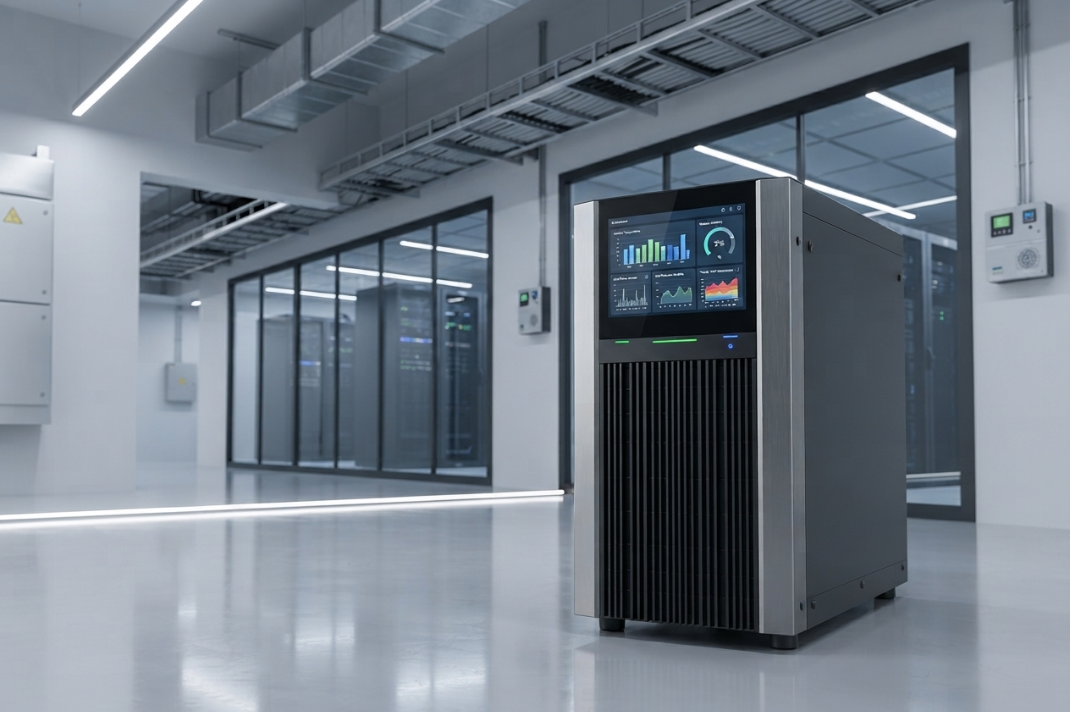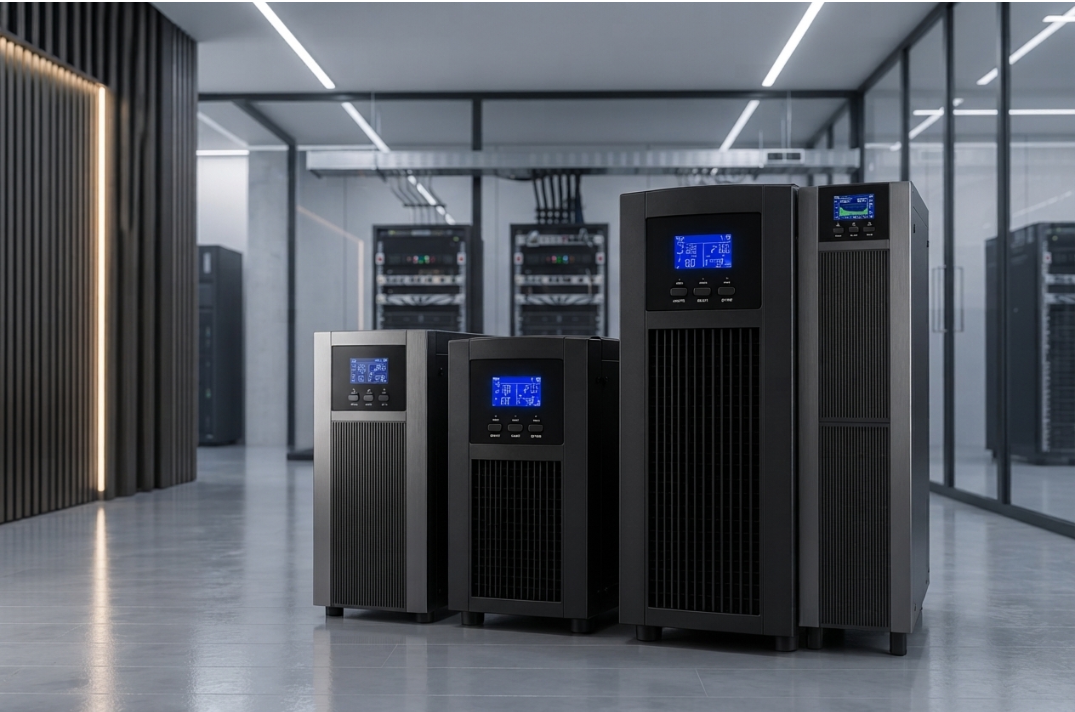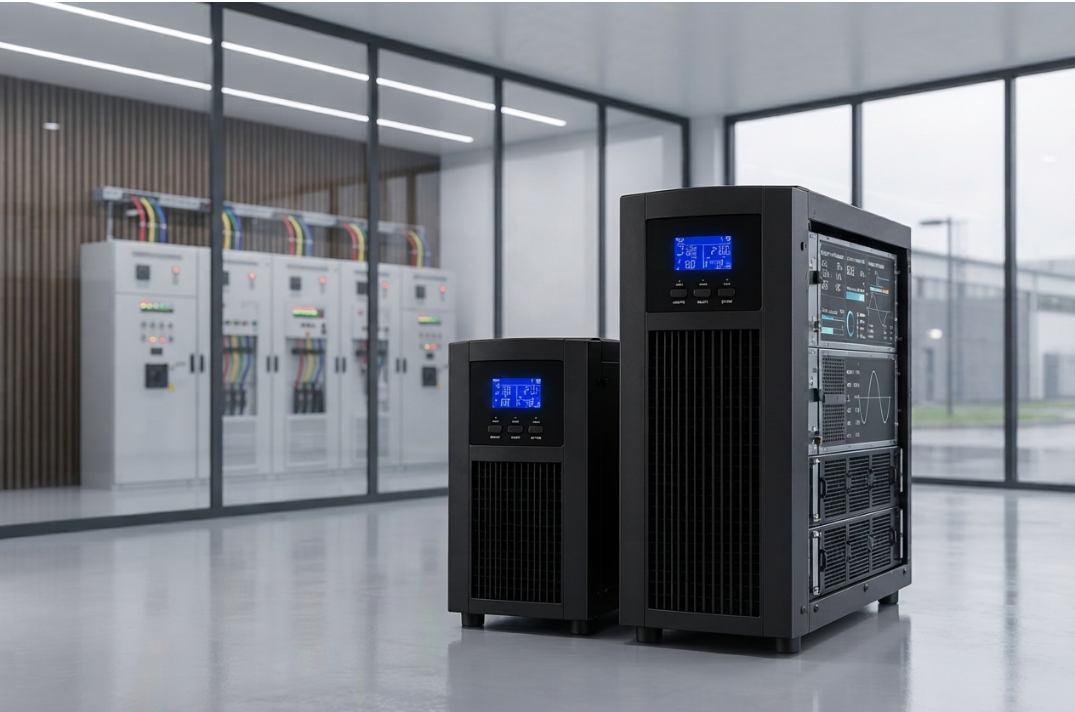
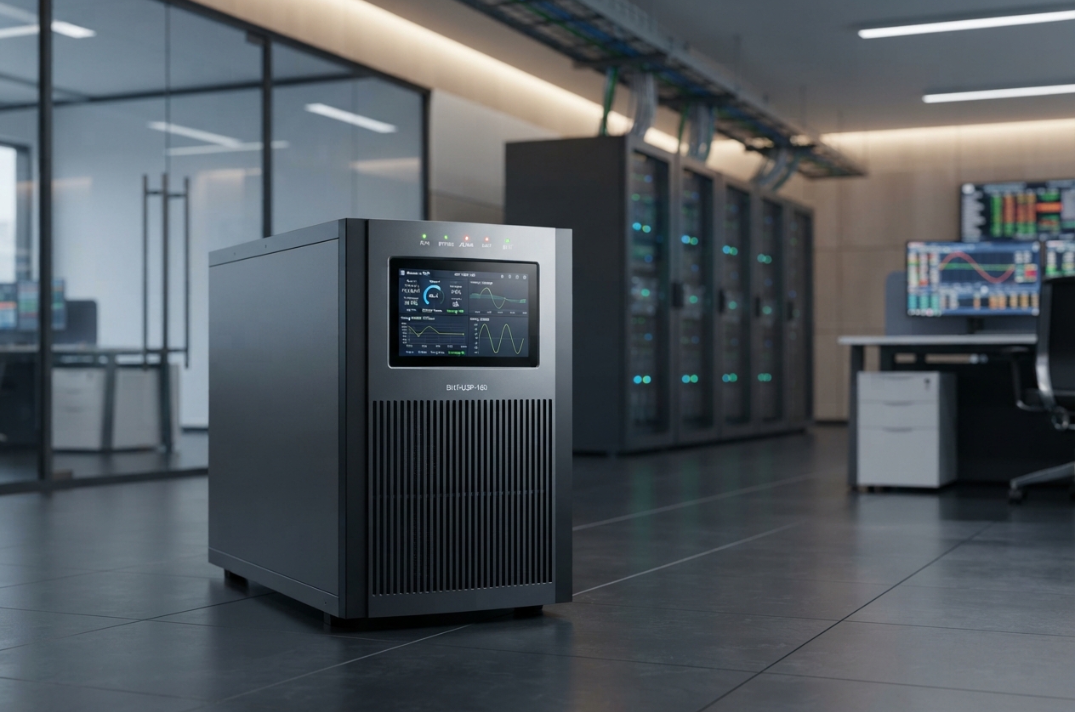
Banks and financial institutions depend on reliable power to process transactions, maintain digital services, protect financial records, and support customer communication. Even a brief power interruption can disrupt internal systems, interrupt transaction processing, or affect access to essential applications. Therefore, a 3 Phase Online UPS for Banking and Financial Operations can help protect critical IT infrastructure and reduce power-related disruptions.
Modern banking environments use data centres, servers, networking equipment, transaction processing systems, security platforms, and digital banking applications. These systems require dependable electrical infrastructure to maintain service continuity. A suitable uninterruptible power supply (UPS) can provide temporary backup power to compatible equipment and help it remain operational during short interruptions.
Bansal Hi-Tech offers power protection and IT infrastructure solutions that financial organisations can evaluate according to their technical requirements. However, a UPS must be selected based on the connected load, required runtime, redundancy strategy, and applicable security and operational requirements.
What Is a 3 Phase Online UPS for Banking and Financial Operations?
A three-phase online UPS is a power protection system that supplies compatible equipment through a continuously operating conversion process. In a typical double-conversion design, incoming AC power is converted to DC and then converted back to AC. This process helps isolate connected equipment from many common input-power disturbances.
A 3 Phase Online UPS for Banking and Financial Operations can be suitable for centralised server rooms, data centres, transaction processing infrastructure, and other critical IT loads. The exact configuration depends on the facility’s power demand and the electrical characteristics of its equipment.
Financial institutions can explore three-phase online UPS solutions when assessing their power protection requirements.
7 Ways a 3 Phase Online UPS Protects Banking & Financial Operations
1. Supports Continuous Transaction Processing
Banks process deposits, withdrawals, transfers, payments, and other financial transactions through interconnected digital systems. Power interruptions affecting these systems can disrupt transaction processing and create additional reconciliation work.
A properly sized UPS can keep supported servers, transaction-processing infrastructure, and associated networking equipment operational during short power interruptions. This can give IT teams time to restore the incoming supply or initiate an orderly shutdown if the outage continues.
However, a UPS alone cannot guarantee that every transaction will complete successfully. Transaction integrity also depends on application design, database controls, network availability, and recovery procedures.
For suitable power protection configurations, financial institutions can evaluate the HPI 33 EVO 10–40 kW three-phase UPS against verified product specifications and actual load requirements.
2. Protects Banking Servers and Financial Databases
Banking applications rely on servers and databases to manage customer information, account records, payment instructions, and internal business operations. An unexpected shutdown can interrupt services and complicate system recovery.
A UPS can supply temporary power to compatible servers, storage systems, and supporting IT equipment. If the outage lasts beyond the available battery runtime, shutdown software can help administrators close selected systems in a controlled sequence.
Financial institutions should also maintain data backups, database recovery procedures, and appropriate access controls. Power protection complements these measures but does not replace them.
Organisations can review data centre solutions when planning the infrastructure that supports banking applications and financial databases.
3. Helps Maintain Digital Banking Services
Customers increasingly use mobile banking, internet banking, digital wallets, and online payment platforms. These services depend on servers, network devices, storage systems, and other supporting infrastructure.
A UPS can help keep compatible IT equipment powered during short electrical interruptions. This may reduce the risk of power-related disruption to digital services when the wider infrastructure remains available.
Nevertheless, online banking availability also depends on internet connectivity, application performance, cybersecurity controls, and the resilience of external service providers. A UPS addresses only the electrical part of the overall reliability strategy.
Financial organisations can assess IT infrastructure solutions when reviewing the technology supporting their digital services.
4. Supports Payment and Card-Processing Infrastructure
Payment processing involves multiple systems, including transaction servers, communication networks, databases, and monitoring tools. Interruptions affecting these components can delay payment authorisation or disrupt supporting operations.
A correctly configured UPS can provide temporary power to compatible payment-processing infrastructure and its essential IT components. This can help maintain operation during short power disturbances or provide time for a controlled shutdown.
Financial institutions should also use appropriate transaction logging, reconciliation processes, and recovery procedures. These measures help identify and resolve incomplete or uncertain transactions after an interruption.
For supporting connectivity requirements, organisations can explore networking and IT infrastructure as part of their broader power and technology planning.
5. Protects Financial Records and Business Applications
Financial organisations generate and manage large volumes of operational records, reports, audit information, and customer data. Power loss affecting computers or storage systems can interrupt data processing and leave some information unsaved.
A UPS can keep compatible systems running temporarily, allowing applications to save data or administrators to shut down equipment safely. This can reduce the likelihood of avoidable interruptions caused by sudden power loss.
However, a UPS does not protect against every cause of data loss. Financial institutions still need reliable backups, data replication where appropriate, access management, and tested disaster recovery procedures.
These measures should form part of a wider operational resilience strategy.
6. Supports Security Monitoring and Communication Systems
Banks and financial institutions use security monitoring, access-control systems, communication equipment, and IT management platforms to support daily operations. Some of these systems need to remain available during a power interruption.
A suitably designed UPS can support compatible monitoring servers, network switches, communication devices, and selected security-system components. This can help maintain visibility and connectivity while the facility addresses an electrical problem.
However, a UPS should not be assumed capable of powering every security device, building system, or high-power load. The protected equipment must be identified and assessed individually.
Financial organisations can also explore online UPS systems when evaluating suitable power protection options for their critical infrastructure.
7. Supports Redundancy and Future Infrastructure Growth
Financial institutions may expand their transaction-processing capacity, introduce new digital services, or increase their server and storage requirements. Their power protection systems should account for current demand and planned growth.
Depending on the reliability objectives, a three-phase UPS may form part of a design that includes parallel UPS modules, redundant power paths, and maintenance bypass arrangements. However, redundancy must be engineered across the entire electrical distribution system. Multiple UPS units do not automatically guarantee continuous operation.
For larger installations, the Keor HPE 60–500 kW three-phase UPS range may be evaluated against verified capacity, configuration, and installation requirements.
Financial institutions should also establish maintenance schedules, battery testing procedures, alarm monitoring, and recovery plans to maintain readiness over time.
How to Choose the Right Three-Phase UPS for Banking Operations
Selecting a suitable UPS requires an assessment of the systems that must remain operational during a power interruption.
Calculate the Critical IT Load
Identify the servers, storage systems, network devices, transaction-processing infrastructure, and monitoring equipment that require backup power. Calculate their actual power demand in kilowatts (kW) and kilovolt-amperes (kVA).
The selected UPS must support both ratings within its specified limits. Consider load variation, power factor, future expansion, and any additional capacity required by the redundancy design.
Determine the Required Battery Runtime
Decide how long the UPS must support the critical load. The required runtime may depend on generator transfer arrangements, operational priorities, and the time needed for a controlled shutdown.
Battery performance depends on the configuration, connected load, battery condition, temperature, and operating environment. Confirm expected runtime using manufacturer data or a qualified sizing assessment.
Evaluate Redundancy Requirements
Banks and payment-processing facilities may have strict availability objectives. Their UPS architecture should reflect the consequences of downtime and the facility’s recovery requirements.
Evaluate whether the installation needs parallel capacity, redundant modules, separate power paths, or maintenance bypasses. Also confirm that connected equipment can use the intended distribution arrangement.
Review Monitoring and Maintenance
Choose a system with monitoring and alarm features appropriate for the facility’s operational needs. Establish procedures for responding to alarms, testing batteries, performing preventive maintenance, and reviewing load changes.
For facilities considering temporary protection or a short-term deployment, online UPS rental services may be worth evaluating, subject to availability, contractual terms, and technical suitability.
Why Consider Bansal Hi-Tech for Banking Power Protection?
Financial institutions need power protection that reflects their IT infrastructure, transaction-processing requirements, availability objectives, and maintenance arrangements. Bansal Hi-Tech offers power-related products and IT infrastructure solutions that organisations can evaluate during the planning process.
A practical assessment should identify critical loads, verify equipment compatibility, calculate battery runtime, and define the redundancy strategy. The final configuration should also be checked against current product specifications and applicable electrical requirements.
Organisations can explore three-phase online UPS options and IT accessories as part of their wider infrastructure evaluation. Product availability, technical specifications, and service arrangements should be confirmed directly before purchasing.
Frequently Asked Questions
1. Why do banks need a three-phase online UPS?
A three-phase online UPS can provide temporary power to compatible critical IT loads and help reduce the impact of electrical disturbances. It may support servers, storage systems, networking equipment, and selected transaction-processing infrastructure.
2. Can a UPS prevent banking transaction failures?
A UPS can reduce the risk of power-related interruptions to supported equipment. However, it cannot guarantee successful transactions because application logic, database integrity, network connectivity, and recovery procedures also affect transaction outcomes.
3. Can a three-phase UPS protect banking databases?
It can support compatible servers and storage systems that host financial databases. Financial institutions should also maintain backups, data recovery procedures, and suitable security controls.
4. How long can a banking UPS provide backup power?
There is no universal runtime. It depends on the UPS model, battery configuration, connected load, battery condition, and operating environment. The required duration should be calculated for the actual installation.
5. Is a three-phase UPS suitable for ATMs?
Some ATM-related equipment may use local power protection, but suitability depends on the ATM model, electrical requirements, and installation design. A central three-phase UPS should not be assumed to be the appropriate solution for every ATM.
6. Does a UPS replace a standby generator?
No. A UPS provides temporary power within its design limits, while a suitably sized generator can support longer outages after starting and transferring the load. The two systems can complement each other in a properly designed installation.
7. What should financial institutions check before selecting a UPS?
They should assess critical load, kW and kVA ratings, runtime, redundancy, monitoring, battery maintenance, expansion requirements, and equipment compatibility. A qualified professional should validate the final design.
Conclusion
A 3 Phase Online UPS for Banking and Financial Operations can help protect selected transaction-processing systems, financial databases, digital banking infrastructure, communication equipment, and supporting IT services from power interruptions. It can also support controlled shutdowns and wider redundancy strategies when properly integrated into the facility’s electrical design.
For financial institutions, dependable power protection should be part of a broader resilience plan that includes secure data management, backup systems, monitoring, and tested recovery procedures. Bansal Hi-Tech can be considered when evaluating UPS and related IT infrastructure options, with final selection based on verified specifications and professional assessment.